Neuromodulation is one of a few neurotechnologies that have moved from the laboratory into routine clinical practice. As of July 2026, more than 250K people had received deep brain stimulation (DBS) implants for disorders such as Parkinson’s disease, and an estimated 20 million transcranial magnetic stimulation (TMS) treatment sessions had been delivered worldwide as of August 2020.
However, despite decades of clinical adoption, the way neuromodulation is implemented in clinical use cases remains surprisingly imprecise. Most neuromodulation treatments still rely on fixed stimulation parameters rather than adapting in real time to neural biomarkers, leaving clinicians to adjust therapy through trial and error. As researchers look to expand neuromodulation applications, the next challenge will be personalizing treatment to deliver stimulation to the right location for the right patient at the right time.
The Current State of Neuromodulation
Neuromodulation is the alteration or regulation of nerve activity via delivery of electrical, magnetic, or chemical stimuli to specific parts of the nervous system. Neuromodulation systems have been commercially available and used to treat patients with epilepsy and Parkinson’s since the early 1960s. Neuromodulation devices and brain-computer interfaces (BCIs), or devices that directly interface with the brain through neural signals, are distinct but overlapping categories. Some neuromodulation devices also function as BCIs by sensing neural signals and using them to guide stimulation.
In a traditional neuromodulation system, sensing electrodes are surgically implanted in target brain regions and connected to a pulse generator that delivers electrical stimulation. DBS devices are the most widely used brain-based neuromodulation device, with over 250K patients having received DBS implants as of July 2026.
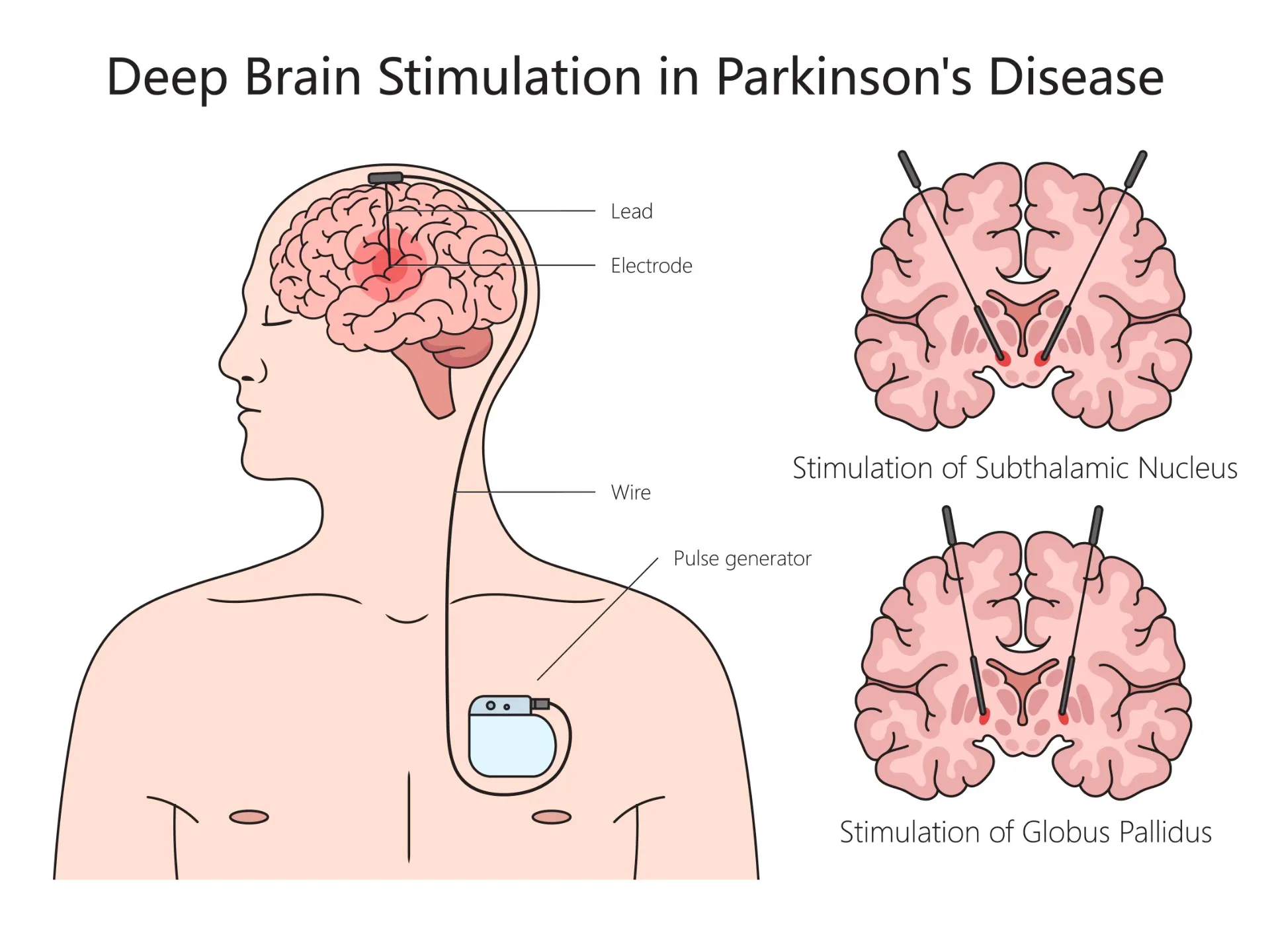
Source: Oleksandr Pokusai
There are two types of neuromodulation devices:
Open-loop: These are traditional neuromodulation devices that deliver continuous electrical stimulation to the nervous system using preset parameters. The stimulation delivered does not change based on the brain’s physiological state and requires manual adjustment by a clinician. This lack of flexibility can limit treatment precision and contribute to unnecessary stimulation or suboptimal symptom control. Examples of open-loop systems include Abbott’s Proclaim XR SCS System, a neuromodulation device that continuously delivers mild electrical pulses to manage chronic pain, and Boston Scientific’s Vercise DBS System, a device that treats Parkinson’s symptoms, dystonia, and essential tremor.
Closed-loop (or adaptive): Developed to address the limitations of open-loop systems, these neuromodulation devices use sensors to monitor brain activity and automatically adjust stimulation accordingly. Recent advances in sensing technology and machine learning have made adaptive neuromodulation systems possible. The Neuropace RNS System and Medtronic’s BrainSense Adaptive DBS are two closed-loop neuromodulation devices that are already being commercially used to treat patients with epilepsy and Parkinson’s, respectively.
There are also different established modalities, or technological methods, to capture brain signals or elicit a neural response. These can be categorized as either recording or stimulating modalities: recording modalities measure neural activity, while stimulating modalities deliver stimuli to the nervous system to alter neural activity and trigger specific responses.
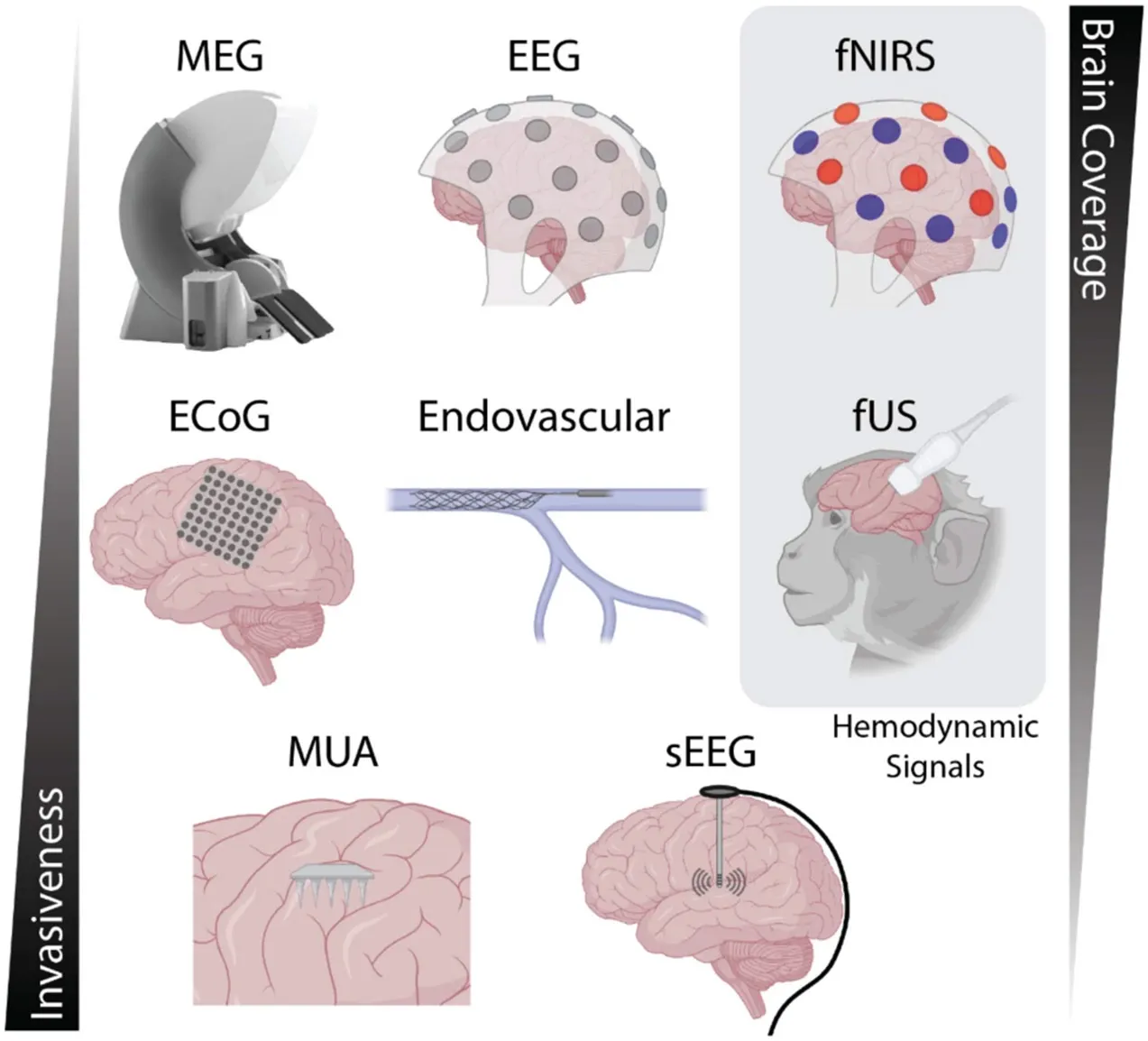
Modalities vary in terms of invasiveness (whether surgical implantation is required), spatial resolution (how precisely a sensor can pinpoint the exact origin of brain activity), and temporal resolution (how quickly a sensor can detect changes in brain activity). The various modalities that are currently in use, whether recording or stimulating, are described in detail in the Appendix.
There has been significant renewed investment in neuromodulation research: annual neuromodulation publications increased roughly fourfold between 2014 and 2023, with the most rapid growth beginning around 2020. Advances in stimulation technology and improved insights into brain circuits are expanding neuromodulation beyond movement disorders and epilepsy. It is estimated that the total addressable US market for BCIs and implantable neuromodulation devices will exceed $400 billion by 2045.
Applications of Neuromodulation
Neuromodulation has had its greatest clinical success in movement disorders. Since DBS was first approved for tremor in 1997, it has become an established treatment for Parkinson’s disease, essential tremor, and dystonia, providing substantial symptom relief for affected patients. Its success demonstrated that directly modulating dysfunctional neural circuits could meaningfully improve symptoms when medication alone was insufficient.
Success in movement disorders has prompted interest in applying neuromodulation to psychiatric disorders. As of August 2025, an estimated 332 million people worldwide suffered from depression, with about 30% of them experiencing treatment-resistant depression, meaning that they experience no symptom improvement after trying at least two antidepressants. Neuromodulation therapies using modalities like TMS have been FDA-approved for treating treatment-resistant depression since 2005.
As of September 2026, nearly all FDA-cleared and clinically established neuromodulation therapies for psychiatric disorders use open-loop stimulation, in which stimulation parameters are pre-programmed by clinicians and only adjusted during follow-up visits. In 2005, VNS was approved for treatment-resistant depression, TMS for depression in 2008, DBS for severe treatment-resistant OCD in 2009, and TMS for OCD in 2018. These therapies have demonstrated clinical benefit: the pivotal 2018 trial leading to FDA clearance of deep TMS found that 38% of patients achieved at least a 30% reduction in OCD symptoms, compared with 11% that received placebo stimulation.
However, despite encouraging clinical progress with open-loop systems, today’s psychiatric neuromodulation remains technically imprecise and response rates remain low. Conventional rTMS still achieves clinical response in only about half of patients with depression. Durability of antidepressant effects can also be a challenge after treatment and remains understudied: a 2019 study found that 67% of patients who responded to initial TMS treatment maintained response three months after treatment, 53% maintained response six months after treatment, and 46% maintained response one year after treatment. Treatment is still largely guided by periodic clinical assessments rather than objective biomarkers or continuous measurements of brain activity. As a result, stimulation cannot be individualized to a patient’s changing neural state.
Why Psychiatry Remains A Challenge
Despite encouraging clinical results, current neuromodulation therapies remain only moderately effective for many psychiatric disorders, underscoring the need to better understand the underlying biology of treatment response. Psychiatric disorders are highly heterogeneous, exhibit substantial symptom overlap across diagnoses, and lack reliable neural biomarkers that can objectively measure disease state or therapeutic response. Without a clear understanding of which neural pathways drive specific symptoms, researchers and clinicians still have only a limited understanding of how different stimulation parameters alter neural activity, which neural changes produce clinical benefit, and why responses vary so widely among patients.
Disease Heterogeneity
Psychiatric disorders are highly heterogeneous, meaning that two patients with the same disorder can exhibit completely different symptoms and treatment responses. Symptoms also often fluctuate over time and across settings. As of September 2025, psychiatric disorders are increasingly understood as disorders of large-scale brain networks rather than dysfunction within a single brain region. These networks consist of anatomically interconnected and functionally coordinated brain regions that support cognition, emotion, and behavior. Abnormal communication within and between these networks is thought to underlie many psychiatric symptoms, shifting neuromodulation research away from targeting isolated anatomical structures toward modulating dysfunctional neural networks, or circuits.
While Parkinson’s motor symptoms, for example, have been linked to dysfunction within the basal ganglia thalamocortical motor circuit, the circuit dysfunctions underlying psychiatric symptoms are poorly understood. Two individuals with the same diagnosis can have entirely different dysfunctional circuits and therefore respond differently to stimulation, limiting the effectiveness of one-size-fits-all targeting. As of 2026, biologically distinct subtypes of depression have been identified, but standard neuromodulation treatment still uses the same stimulation pattern across all individuals.
Lack of Generalizable Neural Biomarkers
Even if researchers can identify the neural circuits underlying psychiatric symptoms, they still need a way to measure those circuits objectively over time. Psychiatry currently lacks validated neural biomarkers that can reliably indicate disease state or treatment response, making personalized neuromodulation difficult.
A biomarker is a neurological or physiological signal, such as a specific brain wave pattern or nerve activity, that is used to track a disease state and guide treatment delivery in real-time. Neuromodulation has been particularly successful for neurological conditions with measurable symptoms, such as Parkinson’s disease, for which reliable biomarkers have been identified for motor dysfunction.
Adaptive neuromodulation for Parkinson’s monitors brain activity patterns known as beta-band oscillations: neurostimulation is triggered when beta activity crosses a certain threshold that is associated with certain Parkinson’s symptoms, and patients experience symptom relief when stimulation suppresses elevated beta activity. In contrast, current psychiatric neuromodulation is largely programmed using clinical symptoms and periodic assessments rather than objective neural biomarkers. While some psychiatric symptoms have been associated with certain brain patterns such as low-frequency oscillations, clinically validated and reliable biomarkers do not yet exist for these disorders.
Due to these limitations, improving the effectiveness of neuromodulation for psychiatric disorders across individuals and populations will require tailoring stimulation to the specific circuit dysfunctions, symptoms, and biomarkers of individual patients, thus driving interest in precision neuromodulation, or identifying disease-relevant circuits and biomarkers that can personalize therapy. Adaptive closed-loop systems are emerging as one promising approach to delivering stimulation only when and where it is needed. Researchers increasingly view the path toward precision neuromodulation as a progression from circuit mapping to biomarker discovery to adaptive stimulation, in which stimulation can eventually respond to a patient’s real-time neural state rather than relying on fixed, open-loop settings.
The Difficulty of Improving Neurological Measurements
Developing more precise and personalized stimulation protocols requires measuring, monitoring, recording, and decoding brain signals to better understand psychiatric circuits, biomarkers, and treatment responses. However, improving brain activity measurements while minimizing the burden of implantation can be difficult due to trade-offs between signal quality and invasiveness.
Because electrical signals become weaker as they pass through the scalp, skull, and cerebrospinal fluid, in general there exists “a correlation between the level of invasiveness of the recording and the signal quality as well as the spatial, spectral, and temporal resolution.” This means that the closer a sensing electrode is to the targeted brain region, the clearer the signals that it can capture. The spatial resolution of more invasive modalities is also greater than that of non-invasive modalities because the sensors can be located more closely to the signal source. In general, more invasive modalities provide higher-quality neural recordings.
Invasive implants do come with greater biological risk. Implanting foreign devices into brain tissue requires cranial surgery and carries risks including infection, hemorrhage, and neuron damage. As of February 2023, there is a 4.9% infection rate among patients with DBS implants. Most infections require additional surgery to remove and re-implant the DBS device after antibacterial treatment. While the benefits may be worth the tradeoff in terms of infection risk for patients with severe neurological diseases, the need to undergo surgery is a major barrier to widespread adoption.
Biological Challenges of Precision Neuromodulation
Connectomic Targeting
One of the first steps toward precision neuromodulation is leveraging connectomics, or the mapping of connections within the brain and nervous system, to identify stimulation targets. Traditional DBS often focuses on stimulating a specific anatomical structure or region of the brain, such as the subthalamic nucleus. The approach of connectomic targeting aims to map and identify neural pathways first and then position stimulation accordingly to alleviate symptoms. This involves examining connections to anatomical locations rather than anatomical locations themselves in order to determine which circuits can actually affect symptoms.

At the same time, there has been a shift in how psychiatric disorders are conceptualized. Depression, OCD, addiction, and anxiety each contain multiple symptom dimensions, such as compulsivity, cognitive control, arousal, and threat sensitivity, that may map onto different neural circuits. NIMH’s Research Domain Criteria formalizes this transdiagnostic approach by organizing mental illness research around dimensions of cognition, emotion, and behavior measured across genes, molecules, circuits, and physiology rather than focusing on diagnoses alone. Combining connectomics and symptom-focused psychiatry could lead to the development of symptom-specific treatments. In a 2020 study, researchers used connectomics to identify two distinct circuit targets that led to improvement in depressive symptoms when stimulated: stimulation of one circuit improved symptoms of dysphoria, while stimulation of the other circuit improved symptoms of anxiety.
However, validating connectomes and circuits requires more than brain imaging alone. While neuroimaging can identify brain regions and networks associated with specific symptoms, neuromodulation also provides a unique opportunity to test causality by directly stimulating circuits and observing whether symptoms change. In this way, neuromodulation serves not only as a therapy but also as a scientific tool for understanding psychiatric disease. In 2025, when electrodes were temporarily implanted across a patient’s cortico-striato-thalamo-cortical network and different locations were stimulated, researchers were able to identify two sites that reduced OCD symptoms, allowing them to personalize the location of DBS implantation for that patient.
Longitudinal Neural Recording
Unlike how Parkinson’s patients respond rapidly and visibly to neuromodulation treatment, psychiatric responses to neuromodulation treatment can take days to weeks to appear. However, psychiatric DBS treatment has historically relied largely on assessing symptoms over periodic patient visits with limited opportunity to observe patients’ neural activity in their daily lives. New surgical advances have yielded devices that can continuously monitor intracranial signals during everyday life, allowing researchers to observe how neural states evolve long-term alongside symptoms and treatment. In a 2023 study, the electrophysiological signals of ten DBS participants were recorded over six months, allowing scientists to identify a biomarker correlated with stable recovery from depressive symptoms. Notably, researchers were able to predict that one patient would relapse into a depressive episode four weeks before this risk of relapse appeared in clinical interviews, demonstrating the usefulness of longitudinal data monitoring for delivering effective neuromodulation for psychiatric disorders.
Using Multi-Modal Biomarkers
Due to the heterogeneity of psychiatric disorders, it is unlikely that a singular neural signal can be used as a biomarker for each psychiatric disorder. Instead, multi-modal biomarkers are emerging. Researchers are increasingly combining multiple sources of information, including electrophysiology, brain connectivity, imaging, and behavioral signals, to better characterize an individual’s disease state and treatment response. In the same 2023 study mentioned above, researchers used measures of electrophysiology (electrical activity of biological cells and tissues), neural network connectivity, and facial expression analysis to personalize DBS treatment for patients with depression.
Technological Challenges of Precision Neuromodulation
Improving Invasive Interfaces
The highest-fidelity neural recordings still require implanted electrodes, but today’s interfaces remain limited by the brain’s biological response to foreign materials. Traditional intracranial electrodes are made of stiff inorganic material; chronic implantation of these electrodes can trigger inflammation, scarring, neuron death, and degradation of recording quality, ultimately limiting the lifetime and reliability of neuromodulation implants.
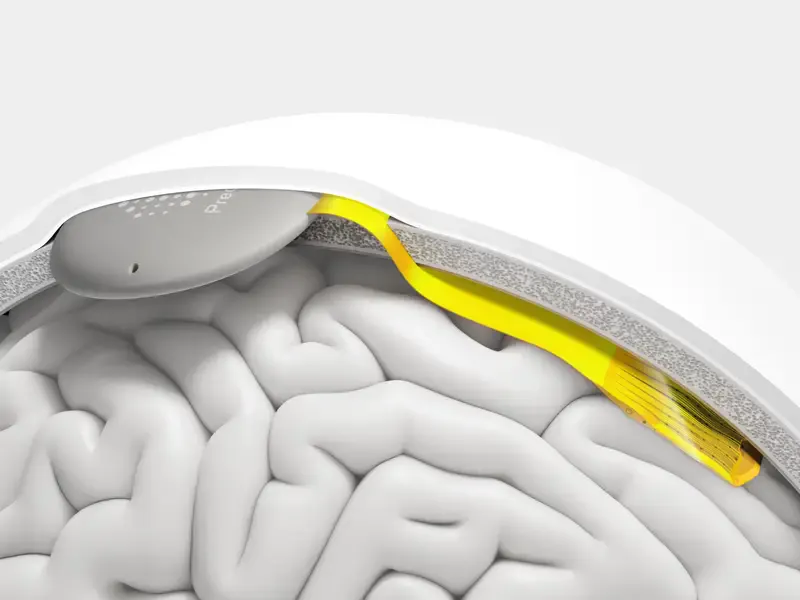
One solution is to make electrodes themselves more tissue-like. Companies like Precision Neuroscience are developing ultra-thin, flexible cortical electrode arrays that conform to the brain’s surface instead of penetrating it. The company’s Layer 7 Cortical Interface is a thin-film micro-ECoG array that rests on the surface of the brain without tissue penetration while providing high-quality neural recordings, achieving 200- to 1000-fold higher electrode density than standard cortical arrays. In April 2025, the Layer 7 Cortical Interface was approved by the FDA for implantation and was adopted by Medtronic in January 2026 for integration into their surgical navigation system.
Researchers are also exploring biohybrid neural interfaces, which would replace the traditional metal-to-brain interface with living biological tissue. Rather than placing electrodes directly against neurons, biohybrid devices incorporate living cells instead of wires at the electrode surface to create a biological bridge between synthetic electronics and the nervous system. One company pursuing this approach is Science Corporation, whose Biohybrid platform embeds living neurons within the device so that the implanted neurons connect with host neurons while electrodes record from and stimulate the embedded neuronal layer. As of April 2026, Science Corporation expects to begin human trials for implantation of biohybrid sensors in 2027.
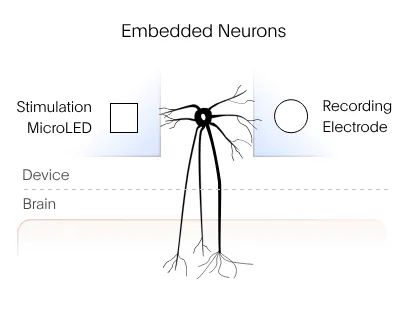
Source: Science Corporation
Improving Non-Invasive Interfaces
Non-invasive neural interfaces avoid the surgical risks of implanted electrodes but generally record lower-fidelity signals than intracranial devices. Researchers are improving the spatial resolution of non-invasive measurements, combining physiological signals, and applying advanced machine learning algorithms to extract richer information about neural states.
One promising technology is functional ultrasound (fUS), an emerging neuroimaging modality that measures cerebral blood flow with much higher spatial resolution than EEG. Several companies are attempting to commercialize ultrasound-based neuromodulation. NaviFUS has developed ultrasound systems to safely transport oncology drugs across the blood-brain barrier, while startups like Attune Neurosciences are investigating fUS as a treatment for neural disorders. Although still early, these technologies show a broader trend toward non-invasive stimulation that minimizes resolution loss.
Researchers are also using multimodal neural interfaces to combine complementary measurements of a patient’s state. One approach combines EEG, which provides high temporal resolution, with fNIRS, which provides hemodynamic data and improved spatial resolution. Using both EEG and fNIRS together can address the trade-off between temporal and spatial resolution in non-invasive systems.
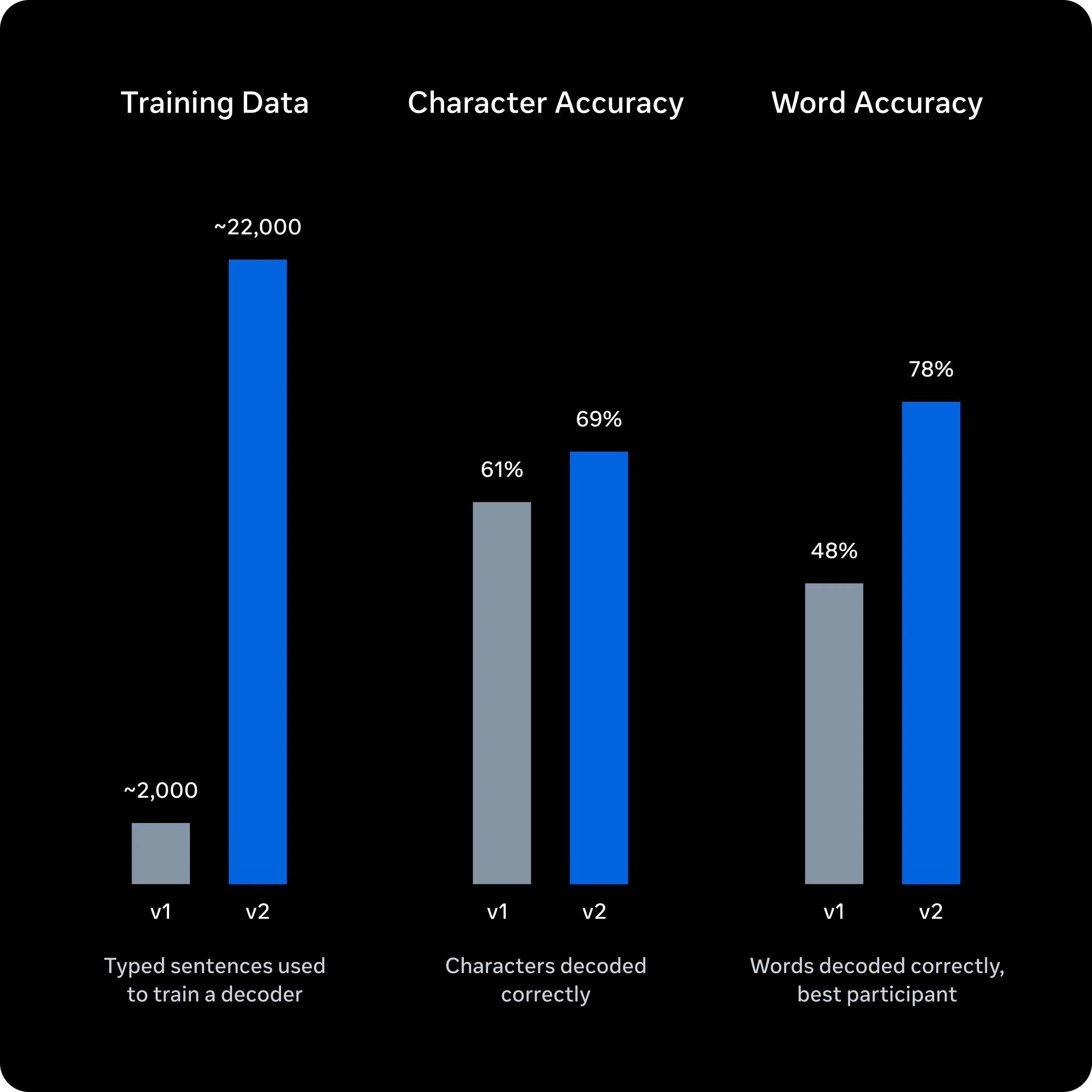
Finally, algorithmic advances have substantially improved the ability to decode useful information from noisy neural signals. Traditionally, decoding neural signals relied on traditional machine learning approaches, involving the steps of preprocessing, feature extraction, and classification. However, modern deep learning models can identify relationships across hundreds of recording channels, combine multiple sensing modalities, and make inferences about cognitive or disease states. In 2026, Meta’s Brain2Qwerty used deep neural networks and large language models to decode sentences directly from non-invasive MEG recordings. Replacing traditional decoding pipelines with end-to-end deep learning increased average word decoding accuracy to 61%, compared with approximately 8% accuracy for other non-invasive methods.
Source: Meta
The Future of Neuromodulation
The rise of neuromodulation has already demonstrated that targeted stimulation can meaningfully improve symptoms of neurological disorders. The next decade will be defined by the personalization and precision of neuromodulation to treat psychiatric disorders. Researchers are beginning to map psychiatric symptoms to specific brain circuits, discover objective neural biomarkers, and develop adaptive systems capable of personalizing treatment to an individual’s changing neural state. At the same time, advances in neural interfaces are improving the ability to safely measure and modulate the brain over long periods of time.
For now, the greatest opportunity for neural interfaces lies in restoring health. But every advance in precision neuromodulation also expands our understanding of how the brain encodes movement, memory, language, and emotion. Those same insights could one day form the foundation for technologies that would allow us to not only repair the brain, but also augment human cognition itself.
Appendix
Recording Modalities
EEG (Electroencephalography): A noninvasive technique that records electrical activity from electrodes placed on the scalp. EEG has excellent temporal resolution, making it well-suited for detecting rapid changes in brain activity, but relatively poor spatial resolution because electrical signals become distorted as they pass through brain tissue and skull. It is inexpensive, portable, and relatively easy to deploy, making it the most widely used noninvasive recording modality for BCIs. Examples of commercial and research EEG devices include Muse S Athena, a wearable headband for everyday meditation and sleep tracking, and Emotiv X Pro, a wireless headset used to capture research-grade brain data.
MEG (Magnetoencephalography): A noninvasive modality that measures the weak magnetic fields generated by neural activity. Like EEG, MEG offers high temporal resolution, but magnetic fields are less distorted by the skull, allowing better localization of neural activity. However, conventional MEG systems require large magnetically shielded rooms and cryogenically cooled sensors, making them expensive, stationary, and impractical for everyday BCI use. Systems such as CTF MEG and Elekta Neuromag have therefore primarily been used in hospitals and research centers for applications including functional brain mapping and neuroscience research.
fNIRS (Functional Near-Infrared Spectroscopy): A non-invasive optical imaging technique that involves shining near-infrared light through the scalp and measuring changes in blood oxygenation as an indirect marker of neural activity. Compared to EEG, fNIRS generally provides higher spatial resolution while remaining relatively portable, making it attractive for wearable BCIs. However, fNIRS devices have a response lag because they measure the hemodynamic response rather than direct neural electrical activity, making them unsuitable for real-time applications. Wearable wireless systems such as Artinis Brite and NIRx NIRSport2 have been used for real-world, mobile studies of brain activity.
fUS (Functional Ultrasound): An emerging non-invasive modality that uses ultrasound to detect changes in cerebral blood flow associated with neural activity. Like fNIRS, it measures neural activity indirectly through neurovascular changes but can achieve much higher spatial resolution and access deeper brain structures. However, ultrasound weakens when passing through the skull, which is a major obstacle for fUS recordings. Many of the highest-quality recordings have therefore required a cranial window, which involves surgically opening the skull. fUS BCIs remain experimental rather than established clinical devices, though companies like NaviFUS are trying to harness this modality to improve blood-brain barrier permeability.
ECoG (Electrocorticography): An invasive technique that places electrodes directly on the brain’s surface. By bypassing the skull and scalp, ECoG provides a higher signal-to-noise ratio and spatial resolution than EEG while avoiding direct penetration into brain tissue. ECoG arrays are commonly used for clinical epilepsy mapping and BCIs that restore motor and speech control. The Neuropace RNS System uses continuous ECoG recordings to detect and respond to seizures.
Intracortical Recording: An invasive recording technique in which microelectrodes penetrate the cerebral cortex to measure electrical activity directly from neurons. Because electrodes are positioned close to individual neurons, intracortical recordings can capture single-unit activity (SUA), multi-unit activity (MUA), and local field potentials (LFPs), providing higher spatial resolution than surface recordings such as ECoG. This high-resolution signal enables experimental BCIs to decode intended movement and speech, but penetrating brain tissue can trigger inflammatory responses that may affect long-term recording quality. Systems using intracortical electrodes include the Utah Array used in BrainGate research and Neuralink’s N1 Implant.
Source: National Library of Medicine
Stimulating Modalities
TMS (Transcranial Magnetic Stimulation): A noninvasive modality in which an electromagnetic coil placed against the scalp generates rapidly changing magnetic fields that induce electrical currents in neural tissue. TMS does not require surgery and can directly modulate neural activity, but conventional TMS primarily reaches superficial brain regions. Repetitive TMS (rTMS) can induce changes in neural activity that outlast the stimulation period, enabling its use in therapeutics. NeuroStar TMS became the first FDA-approved TMS system for major depression in 2008. As of September 2026, more than 9 million NeuroStar treatments have been delivered. In September 2025, BrainsWay’s Deep TMS was cleared for depression, OCD, and smoking addiction.
tDCS (Transcranial Direct Current Stimulation): A noninvasive technique that delivers a weak, constant electrical current between electrodes placed on the scalp to alter the excitability of underlying neurons. Unlike TMS, tDCS generally does not directly trigger neurons to fire; instead, it shifts their membrane potentials to change neuron excitability. The technology is low-cost and portable, but conventional tDCS produces relatively broad stimulation, giving it lower spatial resolution than TMS. Systems such as Soterix Medical’s 1×1 tDCS are used in neuroscience research, while therapeutic applications for conditions like depression are still being investigated.
VNS (Vagus Nerve Stimulation): An invasive peripheral nerve stimulation therapy in which electrodes are wrapped around the vagus nerve and intermittently deliver electrical pulses to modulate brain networks. Unlike DBS, VNS does not require brain surgery and does not target a single brain structure; instead, it indirectly modulates networks through pulses delivered to the brainstem. The LivaNova VNS Therapy System became FDA-approved for drug-resistant epilepsy in 1997 and treatment-resistant depression in 2005, making VNS one of the earliest implanted neuromodulation therapies used in psychiatry.
SCS (Spinal Cord Stimulation): An implanted therapy in which electrodes deliver electrical stimulation to the spinal cord to alter pain signaling. Unlike DBS, it targets the spinal cord rather than the brain and is one of the most effective forms of neuromodulation for chronic pain. Medtronic Inceptiv is a closed-loop SCS system that measures neural responses and automatically adjusts stimulation in real time as the patient’s position changes.
SNS (Sacral Nerve Stimulation): An invasive therapy that electrically stimulates sacral nerves to alter communication among the bladder, bowel, spinal cord, and brain. SNS devices such as Medtronic InterStim are used for conditions such as overactive bladder, urinary retention, and fecal incontinence that involve dysfunctional control of pelvic organs.
DBS (Deep Brain Stimulation): An implanted therapy in which electrodes are surgically positioned within the brain and connected to a pulse generator in the chest. Because electrodes can be placed directly within deep neural structures, DBS provides high spatial precision. It is one of the most established invasive forms of neuromodulation, particularly for Parkinson’s disease, essential tremor, and dystonia, with more limited use for psychiatric disorders such as OCD. Earlier systems such as Medtronic Activa primarily delivered preprogrammed stimulation; newer systems such as Medtronic Percept and Abbott Infinity incorporate features such as directional stimulation and neural sensing.
RNS (Responsive Neurostimulation): A closed-loop implanted system that continuously monitors brain activity and delivers stimulation only when it detects seizure-related patterns. Unlike conventional DBS, which historically delivered preprogrammed stimulation, RNS systems can continuously sense, detect, and stimulate in a closed feedback loop. The NeuroPace RNS System is the first commercially available RNS platform and was FDA-approved in 2013 for epilepsy. It continuously monitors ECoG readings and delivers electrical pulses when abnormal activity is detected.