About a month ago on January 28, Boom Supersonic’s XB-1, in a historic moment, became the first civil aircraft to go supersonic over the continental United States in history. The successful test also made Boom the first private company to successfully conduct a civil supersonic jet flight. The famous Concorde program, which began commercial operation in 1969 and operated for nearly three decades before shutting down permanently in 2003, was not a private program, but rather a joint project between the governments of France and Great Britain.
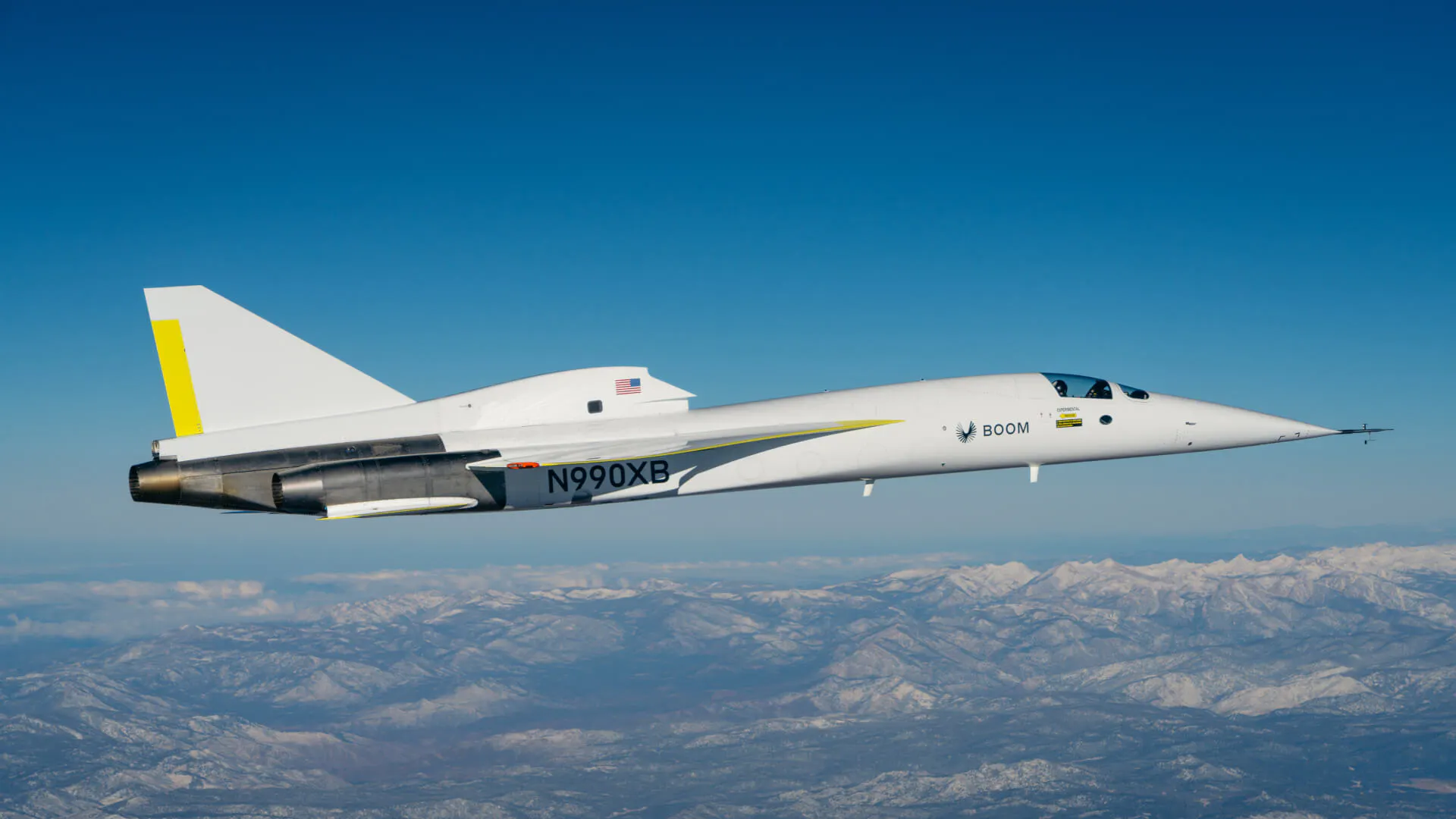
The XB-1 flew up to an altitude of 35 thousand feet before accelerating to Mach 1.1, or about 750 miles per hour — officially breaking the sound barrier. But the XB-1 is just the beginning of Boom’s ambitions; it is a one-third scale prototype of the company’s planned Overture aircraft, which has been pre-ordered by airlines like United with the intent of carrying passengers starting in 2029.
The Overture will be Boom’s first full-scale aircraft for commercial aircraft for commercial use. Designed for up to 80 passengers, it will fly at a cruising speed of Mach 1.7 (1304 mph) over water, meaning it would be able to fly from New York to London in 3.5 hours — half the time it takes with today’s commercial jets. If successful, the Overture would be able to fly more than 600 mostly transoceanic routes without any change to existing overflight land regulations.
Those regulations typically prohibit commercial airplanes from flying at supersonic speeds over land. The reason? The noise from sonic booms is so loud it would be severely upsetting to people down below if they were frequent occurrences; beyond that, sonic booms could potentially shatter windows and cause property damage. And although Boom initially pitched its business to avoid over-land supersonic flight, it recently announced a technological breakthrough that might change the game there, too.
That’s because, a few weeks after the successful supersonic test of the XB-1, the company announced that during the test flight, it had been able to break the sound barrier three times without generating a sonic boom that reached the ground — thereby demonstrating the possibility of quiet supersonic travel for the first time.
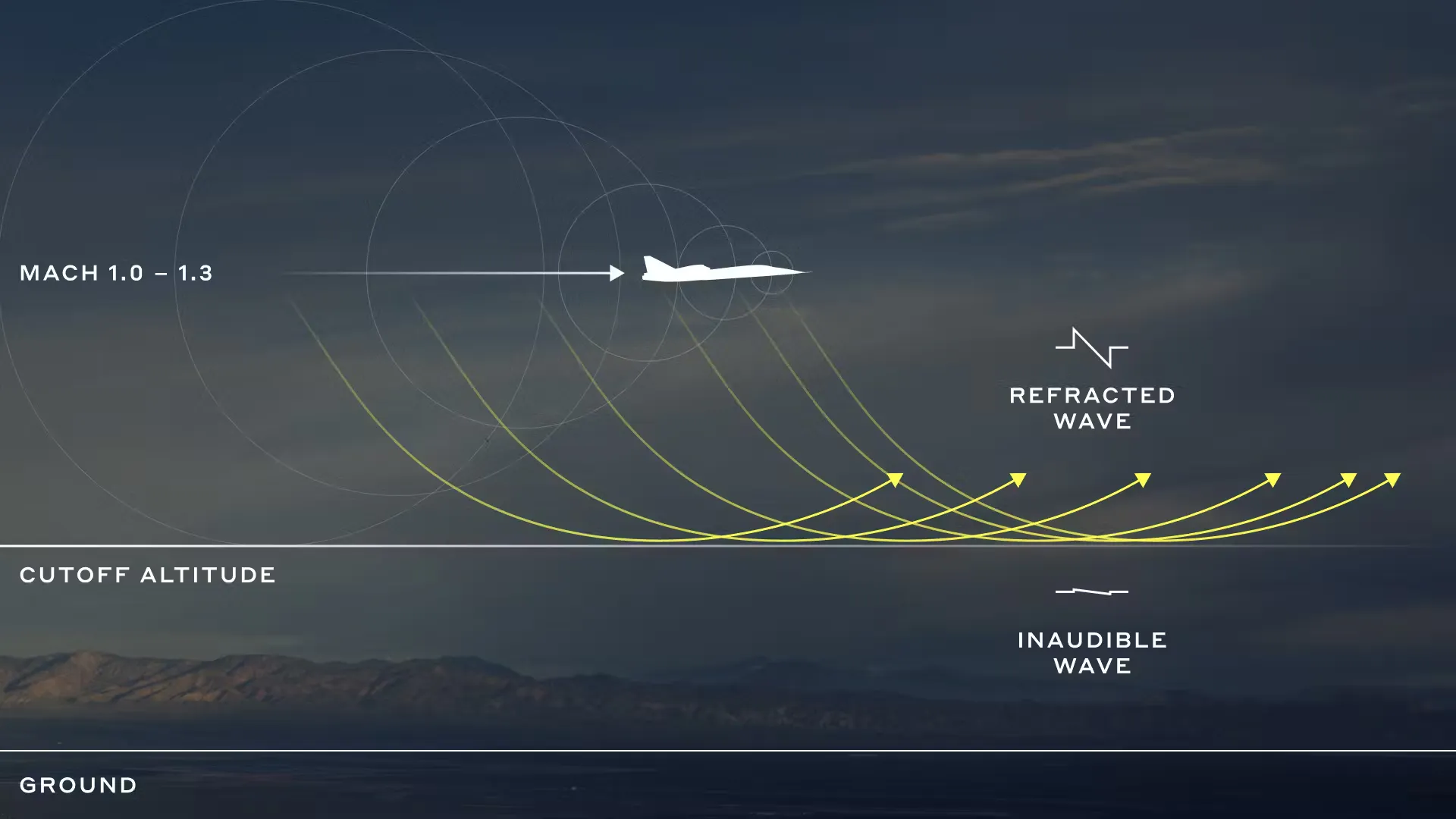
It was able to do this by using a physics principle known as Mach Cutoff, a supersonic flight technique that uses atmospheric conditions to prevent sonic booms from reaching the ground. This breakthrough will allow the Overture to fly over land at speeds up to Mach 1.3 (997mph) — almost 300 mph faster than the top speed of today’s fastest commercial jet, the Boeing 747-8i.
This would allow an overland trip like New York to LA, for example, to be 90 minutes faster; meanwhile, hybrid trips like Chicago to Frankfurt would also be incrementally faster using what the company has dubbed “Boomless Cruise” over land. As it stands, regulation remains in place that would prevent such a trip — but such regulations were enacted before Boom’s technological breakthrough.
All in all, Boom Supersonic’s test flight feels like a watershed moment in an industry that has flourished on the demand side, but stagnated on the supply side and in terms of technological progress. As we showed in our 2025 Tech Trends Report released last month, airline passenger and freight demand has quadrupled during the 1990s, but both the size of the US air carrier flight and the speed of its planes have flatlined. Cost reduction has mostly come from the fact that airline fuel efficiency has doubled over the past 60 years (Boom’s aircraft will be up to 100% compatible with sustainable aviation fuel).
Although Boom and its competitors are a long way from commercial aviation, and although price points are initially bound to be high (with business travel a primary use case), many view the return of supersonic flight with optimism. Among their number is Elon Musk, who responded to Boom CEO Blake Scholl’s complaint about the ban on supersonic flight “regardless of noise profile” with the promise that “this administration will get rid of all regulations that make no sense, like this one.” If everything goes according to plan, as Altimeter Capital’s Brad Gerstner commented, “the US is going supersonic!”.



