The past seventy-five years have been the era of plastics. Since their introduction in the 1950s, plastics have defined the modern era. We have produced over 9 billion metric tons of them in that time frame, as each year, more than 440 million tons are added to the count.
Plastics comprise the clothes we wear, the materials we encase our goods in, and the materials we build our lived environment out of. Few might realize they also feature in everyday goods from toothpaste to shampoo, lipstick, sunscreen, and more.
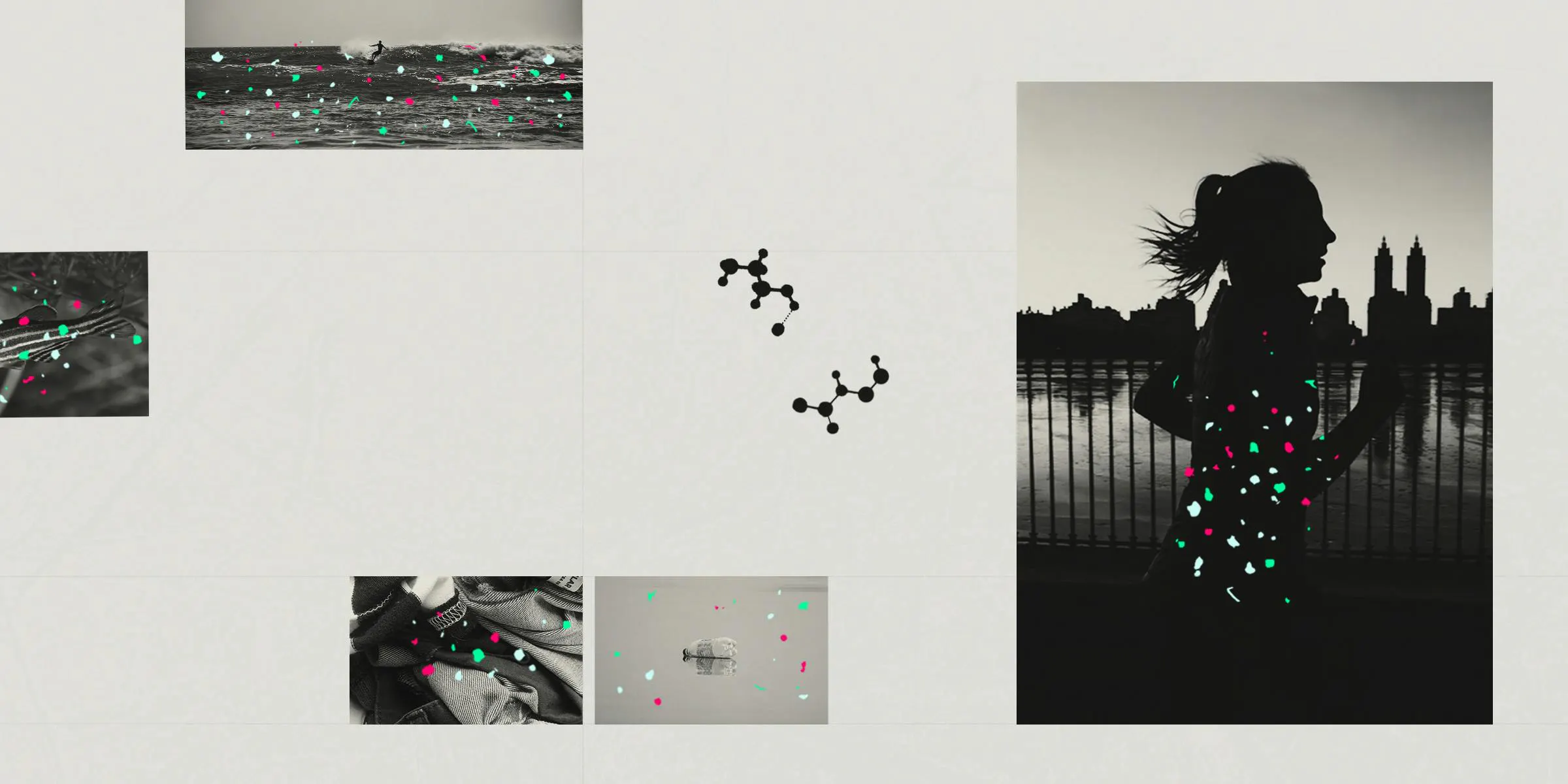
Just as plastics have reshaped our material reality, they have, in the same time frame, redrawn the realities of our natural environment. The cumulative effect of microplastic build-up in the natural world has been nothing short of stunning. Microplastics — defined as any piece of plastic smaller than 5mm — are truly everywhere.
Formed by the weathering of plastic material over time, miniscule plastic fragments that break off, but do not biodegrade easily, have not only proliferated throughout our air, water, and soil but accumulated there and within the organisms that inhabit these mediums.
There are an estimated 358 trillion microplastic particles merely floating on the surface of Earth’s oceans, with far more trillions suspended throughout global waters. As plastics have become widespread in farming, primarily through their use as a kind of mulch, estimates have found that highly contaminated soils contain up to 7% of microplastics by weight. The air inside our homes may contain worrying amounts of microplastic particles. A study conducted in Pakistan showed that roughly four microplastic particles were present in every meter cubed of indoor space.
The prevalence of microplastics isn’t just confined to urban, industrialized areas. They’ve been found in the most remote regions of the Earth, from the snows of Antarctica to the Mariana Trench, even having leached into ancient remains. The detection of plastic polymers in our geological substrate is now considered by scientists to be a core marker of the Anthropocene.
However, the reality is even rather starker than that because it’s not just that plastic fragments are ever-present in our environment, they’re abundant within us as well.
Small microplastic particles are capable of entering the human organism through ingestion, inhalation, and even through skin contact. Studies have estimated that the average human is likely ingesting 39,000 to 52,000 microplastic particles per year, and if inhalation is considered, the figure rises to between 74,000 and 121,000 particles.
Nanoplastics, smaller than a micrometer in size, are so tiny they are capable of crossing cellular membranes and building up within our cells. These small particles have been detected in human blood and breast milk. A 2024 study of 40 men in China shocked the world when it revealed that microplastics were detected in every semen sample tested.
Although we don’t have a comprehensive assessment of how the build-up of these molecules affects our biology, there have been some revealing studies of nanoplastic effects on marine animals. For instance, polystyrene nanoplastics have been found to induce stress response pathways in zebrafish, decreasing their glucose levels, affecting metabolism, and increasing cortisol levels. In small crustaceans like daphnia, polystyrene nanoparticles are believed to inhibit growth and reproduction.
We do know, however, that some additive components in the production of plastics, like bisphenol A (BPA), a compound made in part from petrochemicals, mimic the structure and function of estrogen. Studies have already shown how excess exposure to BPA, by emulating a higher prevalence of estrogen, can impact everything from lowering metabolism, stunting neurodevelopment, and even impairing male and female fertility.
Given the scale of the microplastic problem, there are no easy solutions yet that can fully tackle their removal from the environment. Though a number of pathways have been suggested, from better filters used in water purification to the use of enzymes capable of breaking down microplastic particles to ferrofluids that attract plastic particles and bacteria-sized robots, nothing yet offers the comprehensive answer many are looking for.
Microplastic proliferation is a global issue that may prove to be far more pernicious than even the removal of excess carbon dioxide from the atmosphere. After all, microplastics can be found there, too.
With a problem of this magnitude, likely a number of solutions working together will need to be pursued from better polymerization processes to a more selective method of choosing which monomers and compounds we opt to make plastic products from.
To be quite clear, few of the abundant material comforts we have today would be possible without plastics, however, if their positive externalities are to continue exceeding their negative ones, the way we manufacture and incorporate plastics into our lives will surely need to pivot.