There’s not much that people are talking about in the tech world this weekend other than the surprising (to say the least) ousting of Sam Altman as CEO of OpenAI. In the announcement from the company, Altman’s departure was described this way:
“Mr. Altman’s departure follows a deliberative review process by the board, which concluded that he was not consistently candid in his communications with the board, hindering its ability to exercise its responsibilities. The board no longer has confidence in his ability to continue leading OpenAI.”
As you might expect, the Twittersphere immediately exploded with a robust and salacious cornucopia of speculations. While most are quick to take sides, standing for or against the removal of Altman, the seeming outcome is a good reminder why its best to wait out the speculation.
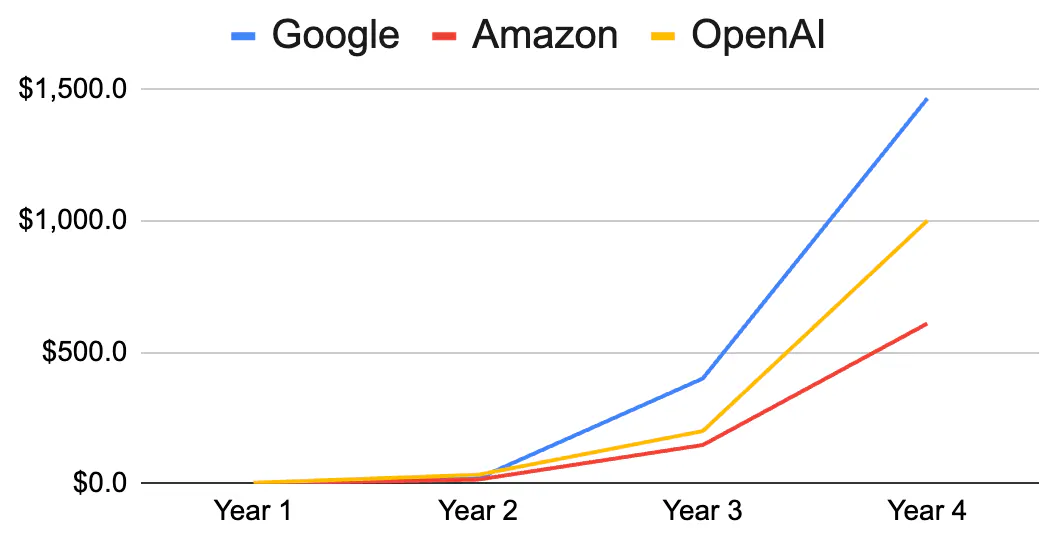
Altman’s meteoric rise as a pillar of the tech elite is second only to the dramatic ascension of OpenAI to the center of the AI universe. From zero to $90 billion in value, approaching $1 billion in revenue. There’s very few companies in the history of technology you can really compare it to. Companies like Google or Amazon that defied gravity to reach over $1 billion if revenue in just a few short years.
As people continue to gossip their way to piecing the story together, one theme continues to circle back: AI safety. After Greg Brockman added his name to the list of departures from OpenAI, the Shakespearean drama started to unfold. The possibility of a coup? The seeming cultural divide between Altman, Brockman, and OpenAI Chief Scientist, Ilya Sutskever.
Finally, late last night Brockman shared an overview of what happened:
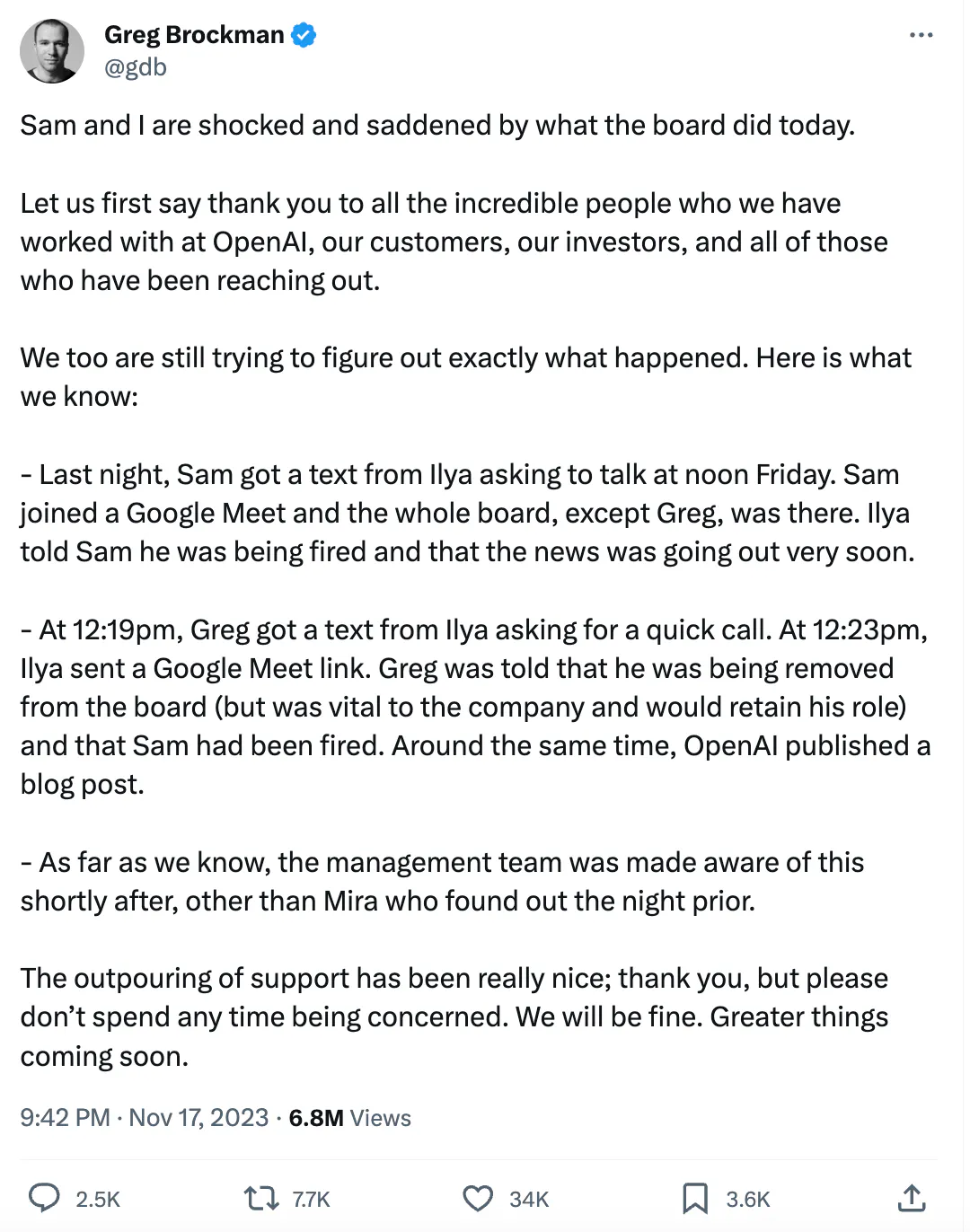
Source: Twitter
At the center of it all? Ilya Sutskever.
In a September 2023 interview, Sutskever described how anxious he feels about the need for AI to feel empathy towards humans:
“The upshot is, eventually, AI systems will become very, very, very capable and powerful. We will not be able to understand them. They’ll be much smarter than us. By that time, it is absolutely critical that the imprinting is very strong, so they feel toward us the way we feel toward our babies.”
The increasing push at OpenAI for profit, speed, and domination falls far short of the existential fears that Sutskever seems to champion. The jury is out as to what really led to Altman’s ouster. A lot of parallels are being drawn to the 1985 firing of Steve Jobs from Apple. But one thing is for sure. Altman, Brockman, Sutskever, and the future of OpenAI will continue to play a huge role in determining the future philosophical divide of AI.