Thesis
About 6 billion people were using the internet as of 2025. Among internet users, 76% participated in some kind of online community as early as 2019. As more content, communication, and relationships move online, some people struggle to find a seamless way to interact with one another. Modern tools allow for communication over voice and text. However, these options can be limiting, especially during interactive social experiences like gaming. Some tools use too much processing power, while others are designed for the workplace.
The shift in social interactions online has led to a growing need for places for people to communicate and congregate online. Mirrored by growth in users of workplace-focused tools such as Slack, which reached 79 million MAUs in 2025, interest communities and non-professional internet spaces have grown exponentially as well. Social network platforms more than doubled their total user base in the last decade, from 2 billion in 2015 to over 5 billion users in July 2025. Within gaming specifically, the total number of gamers worldwide in 2019 was estimated at 2.6 billion, a figure which has increased to 3.3 billion as of 2026.
Discord aims to build the “community” layer of the internet where users can find, join, and interact in servers personalized for custom user experiences. Built around the need to improve digital communication and enable users to create digital communities around their passions, Discord aims to help everyone from gamers to athletes to social media influencers find community by offering a “Community-as-a-Service” product.
Founding Story
Jason Citron (former CEO) and Stanislav Vishnevskiy (CTO) founded Discord in 2015. Citron began tinkering with personal computers even as a kid in the early 1980s. His first encounter with gaming was Super Mario Bros, which he described as "the most amazing thing I'd ever seen in my entire life." He then taught himself QBASIC at the age of 13 and created his first text-based RPG game with the help of a friend. As his father had been an entrepreneur, he realized at an early age that he could create a business by helping older people with their computer issues, and by 16, he had set up a side business writing code for websites.
Citron started a video game studio when he was 23 and launched a game on the iPhone App Store's first day of business in 2008. While the game wasn't commercially successful, Citron eventually pivoted the company into a social network for gamers called OpenFeint, a platform described by Citron as “essentially like Xbox Live for iPhones.” In 2011, the Japanese gaming company Gree acquired OpenFeint for $104 million. It was at Gree that Citron first met Vishnevskiy and he would eventually bring Vishnevskiy on as CTO for his next project.
Citron used money from selling OpenFeint to start another game studio, Hammer & Chisel (now Discord), in 2012. The studio built a game called Fates Forever, an online MOBA (multiplayer online battle arena) similar to League of Legends. It also added voice and text chat into the game, so players could talk to each other while they played. Fates Forever was another commercial flop, but the team pivoted to focus on building out their chat service designed for gamers. This chat service would later become Discord in 2018.
Though the company lacked traction at first, losing out in the gaming community to incumbents Teamspeak and Skype, Discord's hyper-specific customer segment focus (online gaming communities), grassroots marketing strategy (reaching out to the Final Fantasy and other gaming subreddits), and user experience (better tech/functionality than incumbents), Discord quickly became widely used by Esports and LAN tournament gamers. The company grew rapidly in the gaming community through Twitch streamer penetration, first through the adoption of games from independent developers, and by providing an IRC (Internet Relay Chat) for gaming subreddit communities.
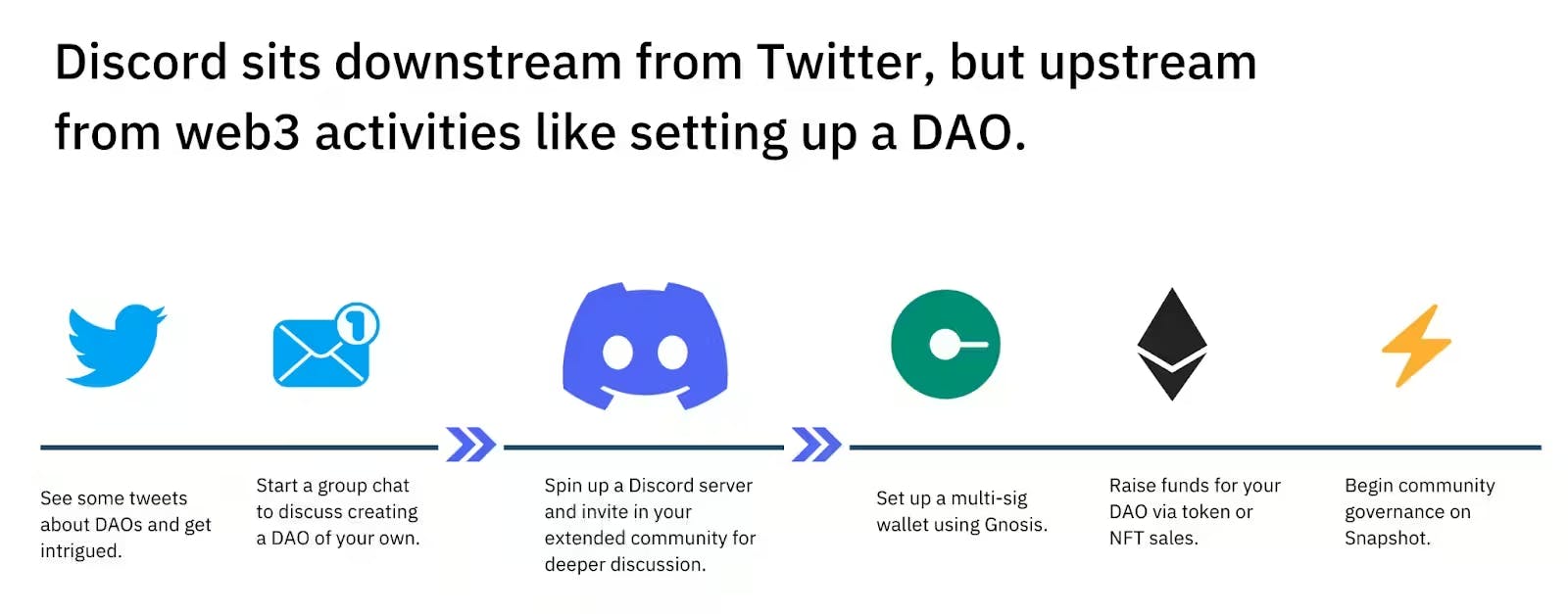
Discord has ambitions to become the #1 platform on the internet to “launch new consumer products,” aiming to grow through the adoption of various decentralized online subcultures into the Discord ecosystem. To this end, Discord has had an open API since the beginning, designed for developers to iterate “bots” and community “quirks” to further personalize the experience for users of the platform. Gaming communities and associated interests remain a main driver of growth. However, in June 2020, Discord began to expand beyond being a gaming-only platform. As a result, the company’s strategy started to include an emphasis on subreddits and interests other than gaming, such as crypto communities and generative AI, with notable examples like Midjourney being primarily built on a Discord server.
Given Discord's origin as a pivot from a game developer, much of Discord's founding team has game design experience and understands gaming subcultures intimately. In recent years, however, as Discord seeks to expand its platform appeal to everyone from gamers to bot developers to AI enthusiasts, the Discord team has become more holistic in its past work experiences. Discord has added Clint Smith in August 2020 as Chief Legal Officer, Tomasz Marcinkowski in March 2021 as CFO, and Kelly Liang in April 2021 as SVP of Partnerships.
Smith was previously Senior Vice President of Corporate Development & General Counsel at DataStax and General Counsel at TrialPay. Marcinkowski was previously Head of Finance at Pinterest and Vice President of Technology Investment Banking at Goldman Sachs. Liang was previously SVP of Partnerships at Verizon Media, Director of Business Development at Google, and Director of Business Development at YouTube.
In April 2025, Jason Citron stepped down from his position as CEO, handing the role to Humam Sakhnini, the former vice chairman at Activision Blizzard who helped lead the gaming company through its 2023 acquisition by Microsoft. Citron stated that he was “more of a builder, an early-stage kind of guy,” and that “hiring someone like Humam is a step in that direction” of a public offering.
Other past team members include former COO Liz Hamren, who left Discord in March 2023 to become CEO of Ring. Before Discord, Hamren was Corporate Vice President of Xbox Product & Engineering at Microsoft and CMO at Oculus. Eros Resmini served as Discord's CMO between 2015 and 2019 before leaving to found the mini fund, an advisory and angel venture capital fund. Tesa Aragones served as Discord's CMO between 2020 and 2021, where she helped lead Discord's first major marketing campaign, “Imagine a Place”, before leaving in September 2022 to become President of North America for AKQA. Before Discord, Aragones was CMO at VSCO and Senior Global Brand Marketing Director at Nike. Leslie Wright served as Discord's interim CFO during pre-2021. Before Discord, Leslie Wright served as CFO of Tutor Universe, YouWeb, and Hammer & Chisel (Discord's development studio).
Product
Discord is an instant messaging service and VoIP (Voice over Internet Protocol) social platform designed to facilitate communication through text messaging, voice/video calls, image/video sharing, and community-based events (livestreaming, Discord-native games, etc). Built on Electron (similar to Slack), the Discord application is multi-platform and available on desktop (Mac, Windows, and Linux), mobile (IOS and Android), and web browsers. Initially designed for gaming communities, Discord has been popularized by various interest communities as the go-to platform for direct personal, community, and influencer communication.
Deriving from its roots as a gaming infrastructure and communication tool, Discord emphasizes its focus on having a casual feel and frictionless communication. For instance, voice chatting in Discord doesn't involve dialing in, sharing a link, or a password. Every text channel has a dedicated space for instant messages open to the entire community server, voice channels allow anyone who drops in to immediately connect and talk, and activities are intentionally low-stakes and collaborative with “join activity” features. As Citron explains, his vision for Discord had always been to produce a “hangout space” on the internet:
“[Create] a place on your computer and on your phone […] where it felt like your friends were just around, and you could run into them and talk to them and [hang] out with them.”
Discord Application
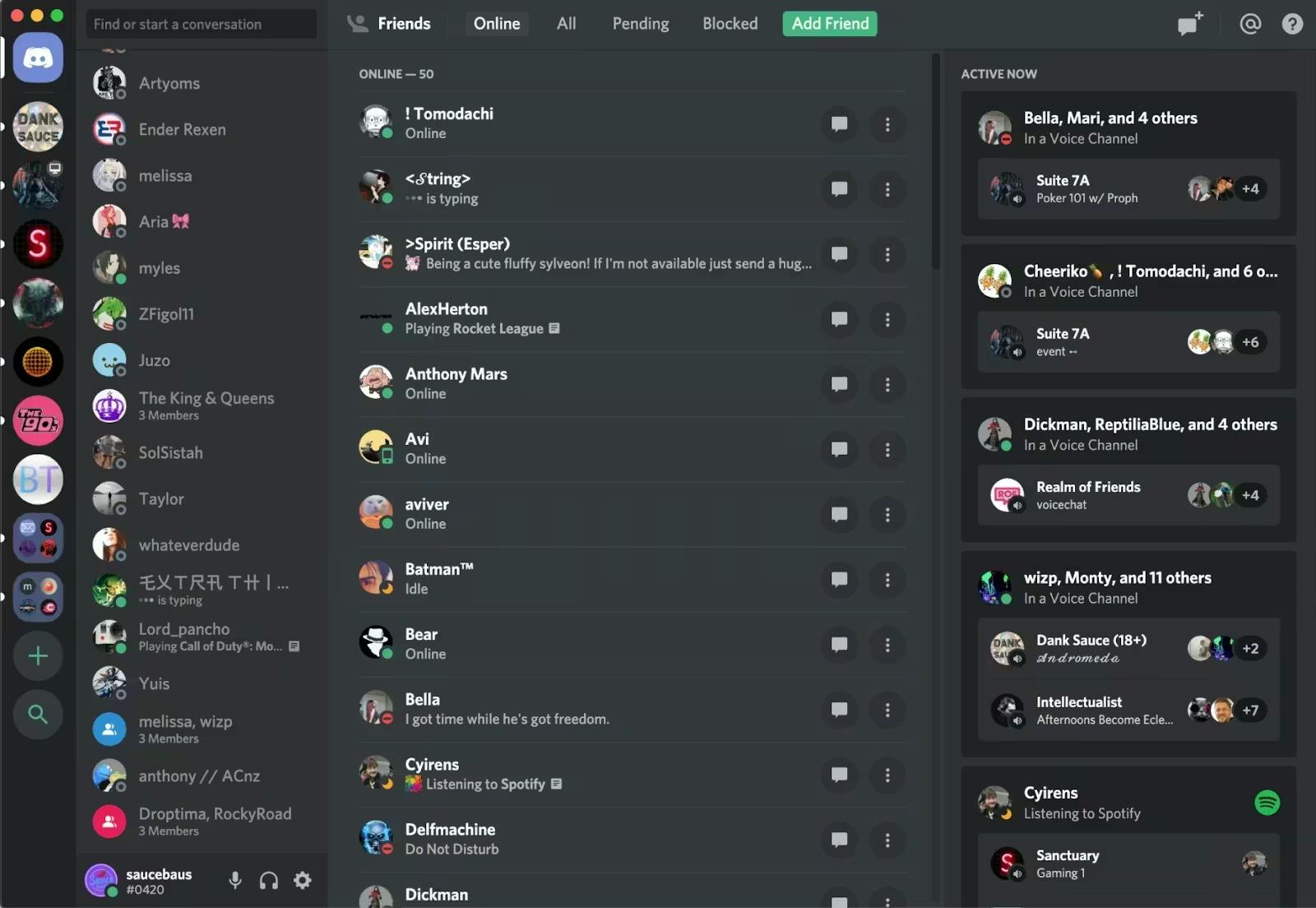
Discord is a social graphing application, fundamentally driven by “invites” shared by friends, family, or online connections to Discord communities called “servers.” Within the application, users can communicate with voice calls, video calls, text messaging, and files in private chats or as part of Discord servers. Users can communicate through the aforementioned methods with other users within and outside of servers, allowing for the continuation of conversations beyond the server's primary interest-based context.
Source: Digital Trends
User Profiles
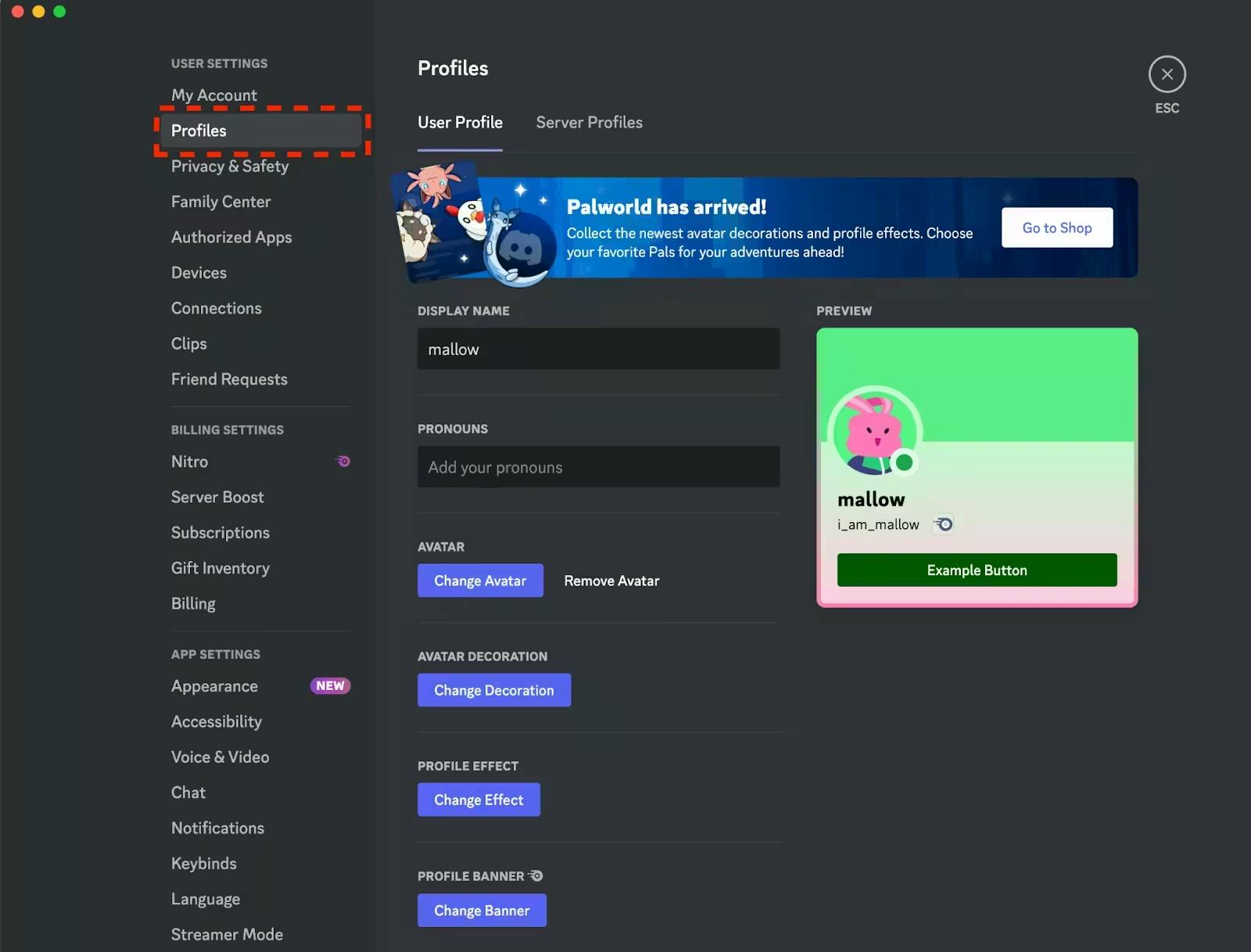
To access any Discord feature, users must create a Discord account with an email address and a unique username. Creating a Discount account allows users to create a user profile that has personalizable features and unlockable perks that can be accessed through Nitro subscriptions. Customizable features include usernames, user avatars, the “About Me” section, profile banners, effects, pronouns, and themes.
Source: Discord
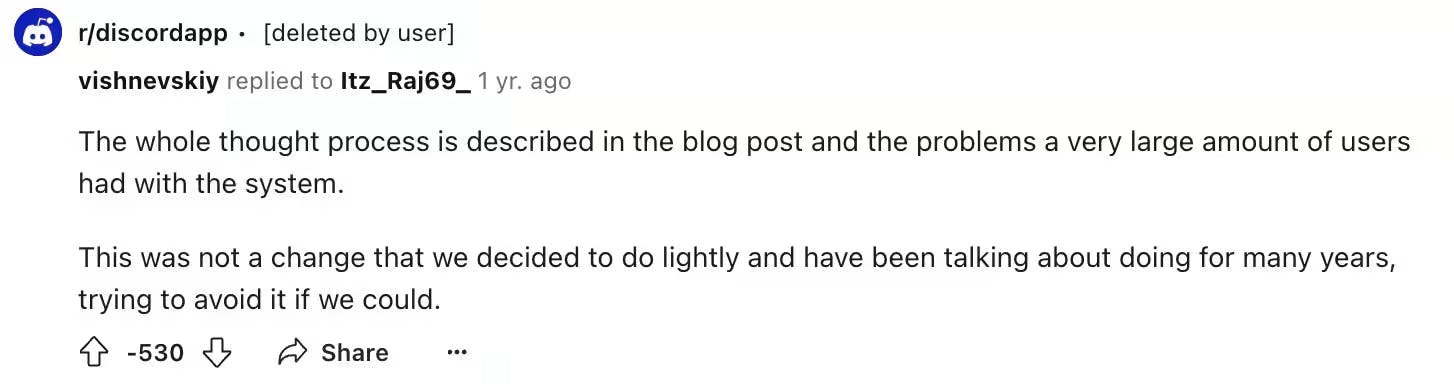
Before mid-2023, Discord usernames were case-sensitive and included a tag known as a discriminator to distinguish between usernames (e.g, Contrary#1234). This allowed users to have the same usernames so long as case letters or discriminators were different. In May 2024, Discord decided to remove tags/discriminators and implement unique usernames/display names, assigning new usernames to unmigrated users. Vishnevskiy explained in a blog post:
“The biggest problem: our current usernames can often be too complicated or obscure for people to remember and share easily, [which means] almost half of all friend requests fail to connect the user with the person they wanted to match with, mostly because users enter an incorrect or invalid username due to a combination of missing discriminator and incorrect casing.”
Though Discord had always emphasized frictionless design and unique identities, in this case, Vishnevskiy believed that Discord had accumulated a “technical debt” that overrode its “uniqueness” identity mandate:
“We also recognize that our current username format has been one of the things that makes Discord unique, and that this change makes our usernames look a lot like those on other platforms. To be blunt, that's kind of the point.”
Source: Reddit
More importantly, though this change drew criticism across social media platforms and on Discord, co-founders Citron and Vishnevskiy backed the change. This signals that Discord is willing to deliver changes (in this case, reducing friction to make it easier for new users to join, similar to other social media) despite pushback from existing users and compromise over the platform's initial identity to build out Discord's platform ambitions.
Discord Servers
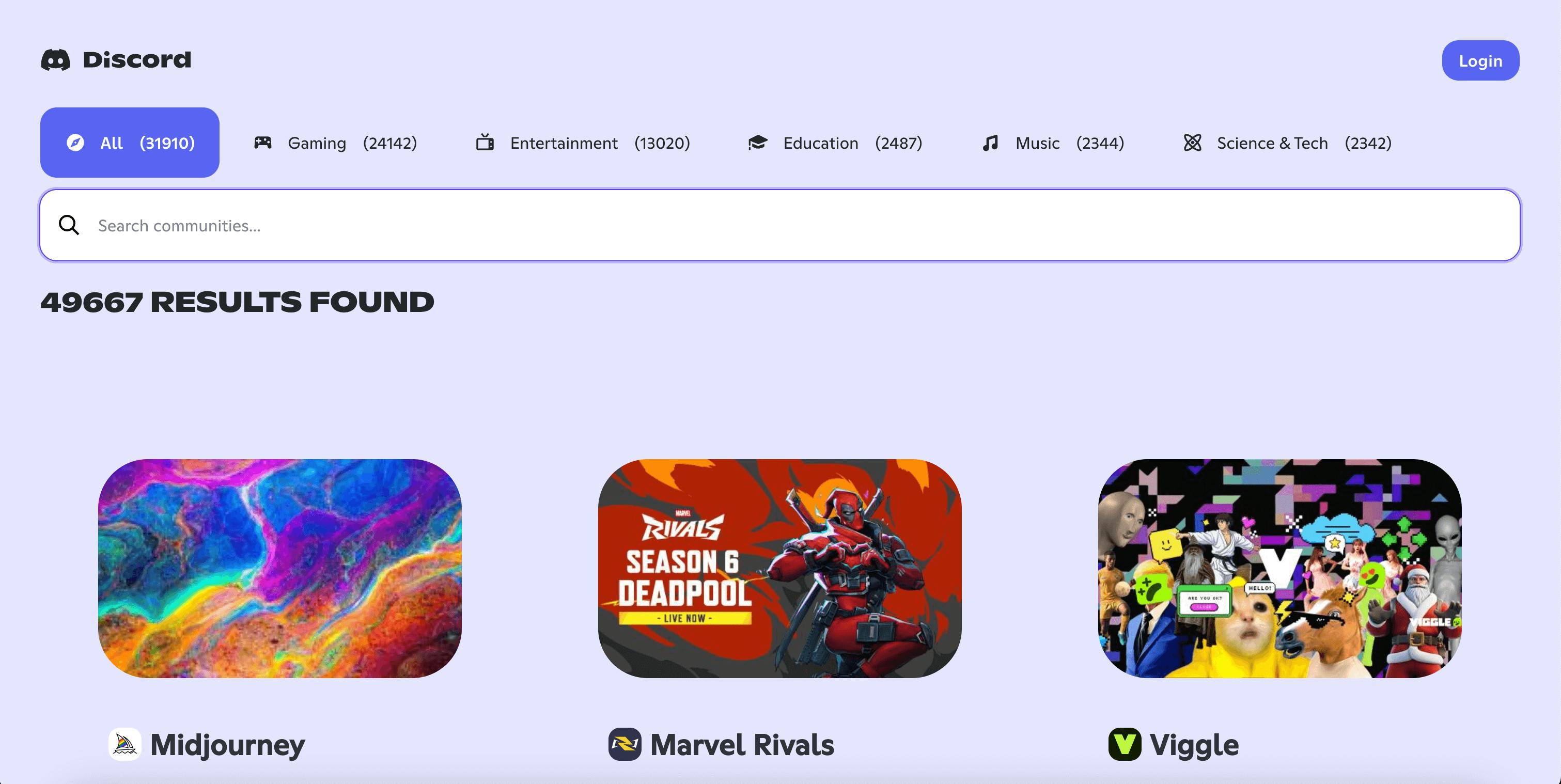
Servers are Discord's main community unit, bundling multiple categories, text, and voice channels into a single location for communities to interact. Any user can make servers and personalize categories, channels, and server visibility as they see fit. Though the vast majority of Discord servers are private, there exist many public servers (“Community Servers”) for various communities and interests that any user can join. As of February 2026, there are over 49K public servers divided across Gaming, Entertainment, Education, Science & Tech, and Music, with the Gaming and Entertainment categories accounting for the majority of server interests.
Source: Discord
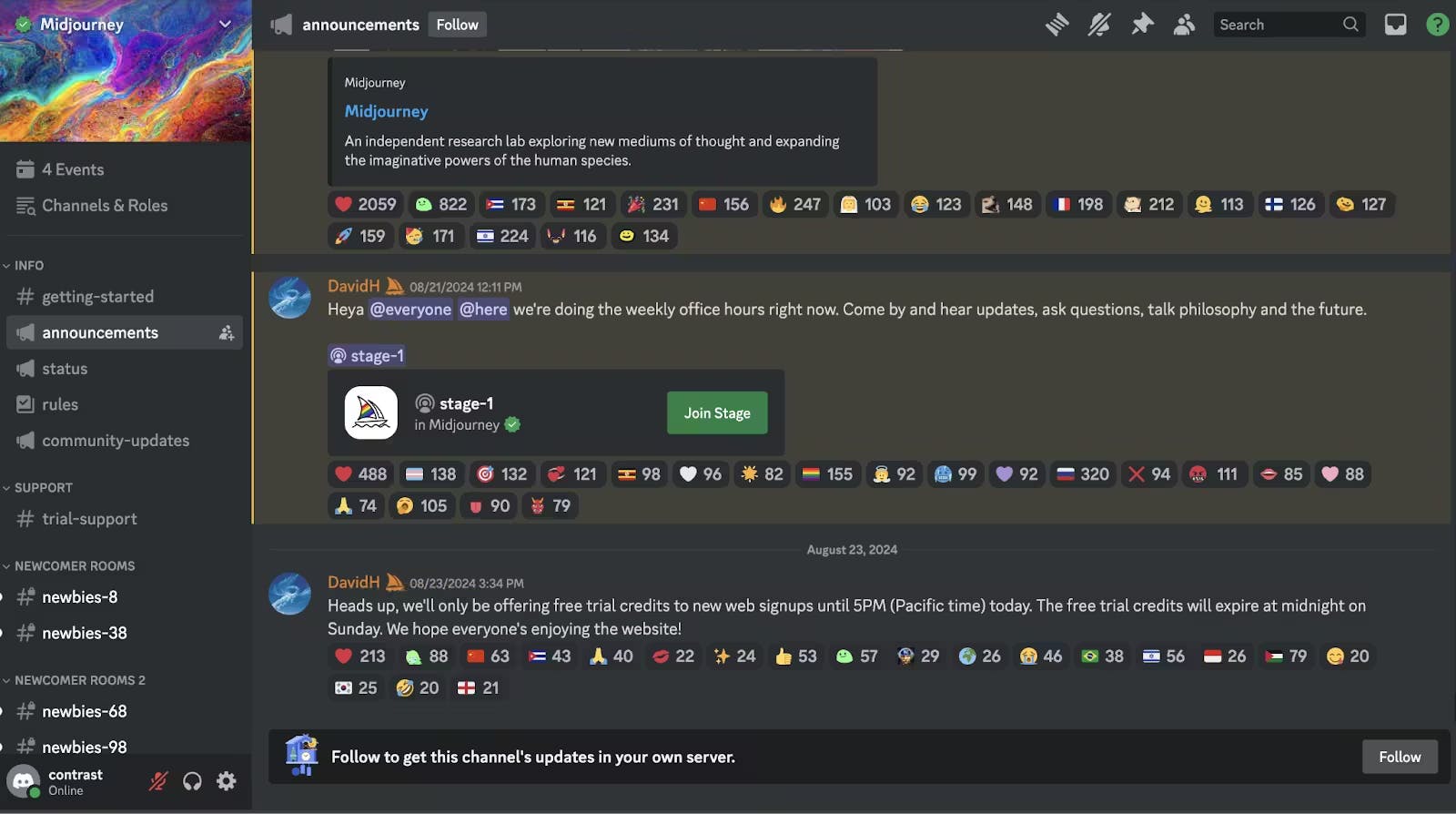
Key server features include:
Server membership of up to 25 million users
Server verification to denote official communities of people/brands (as of February 2026, this feature has been on hold since July 14, 2023)
Assigning “roles” to members that determine user permissions, including channels users have access to, cosmetic options, and designating an internal moderation team
Automatic user management: Community Onboarding (users pick what channels are most relevant to their interests), Rules Screening (set of rules and authentication requirements designed to filter spam, bots, and hostile individuals), and AutoMod (monitors user messages and automatically enforces preset actions)
Specialized engagement channels: Announcement Channels (community updates), Stage Channels (events, talent shows, townhalls), Forum Channels (Reddit-esque text channels), and App Directory (Discord app integrations)
Creator Monetization: Server Subscriptions (fan monthly subscriptions for server perks such as exclusive channels/roles) and Promo Pages (personalizable web page that shares and promotes server subscription types)
Server Boosting to add perks to a Discord server (three-level cosmetic and technical features, including better audio/streaming quality)
Source: Discord
Discord Channels
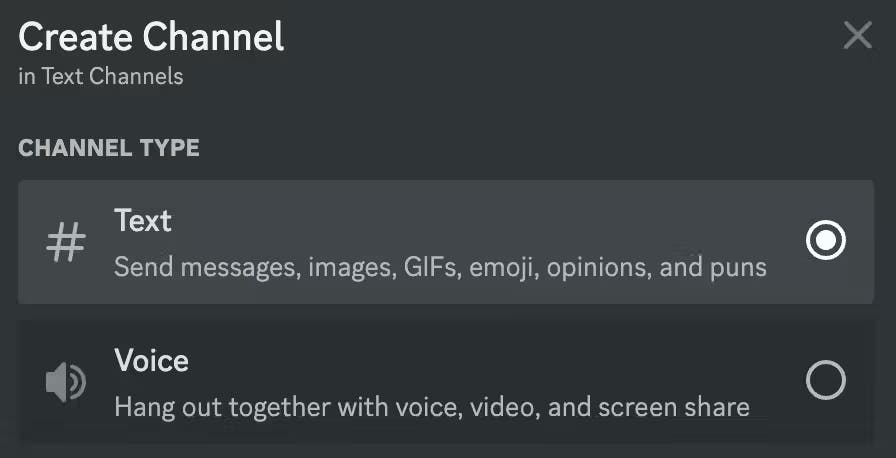
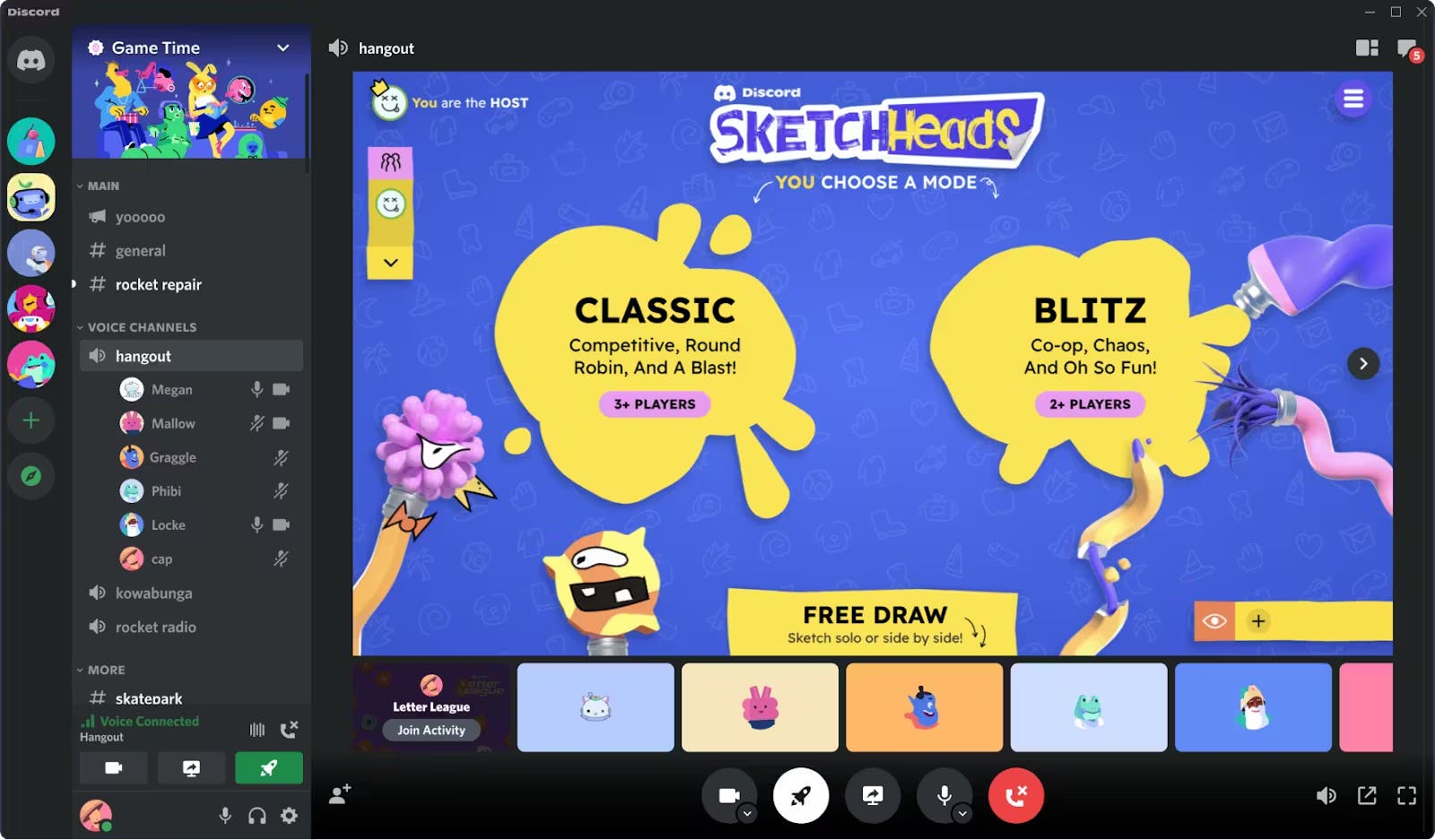
Within Discord servers, there are two main methods of communication: text and voice “channels.” Organized under “categories,” both text and voice channels are persistent chat rooms designed for sharing media. Text channels emphasize text and image-based messaging within a server, often with a channel name about a specific subtopic of the server interest. Voice channels are persistent and always available for users to jump in and out casually with the primary purpose of voice, video, and screen-sharing/live-streaming communication, meant to simulate hopping onto a couch with friends.
Source: Discord
Key channel features include:
Text messaging with built-in multimedia sharing options (images, videos, GIFs, etc)
Voice channels with voice, video, and screen share capabilities
Streaming games and screen shares to interact and watch media with other server users
Watching multiple streams at once and playing different
Starting activities with friends (party games, YouTube, Amazon Music)
Discord bot integrations, capable of multiple tasks (proactive moderating in text channels, broadcasting music in voice channels, etc)
Source: Discord
Friend's List
Though most Discord communications take place in servers and channels, Discord's Friend's List provides users with the capability to take conversations out of community contexts and build online connections directly with other users. Discord's original design allowed any user to send any user a direct message so long as they were on the same server/group chat. Users have since been given the option to block unwanted DMs and users.
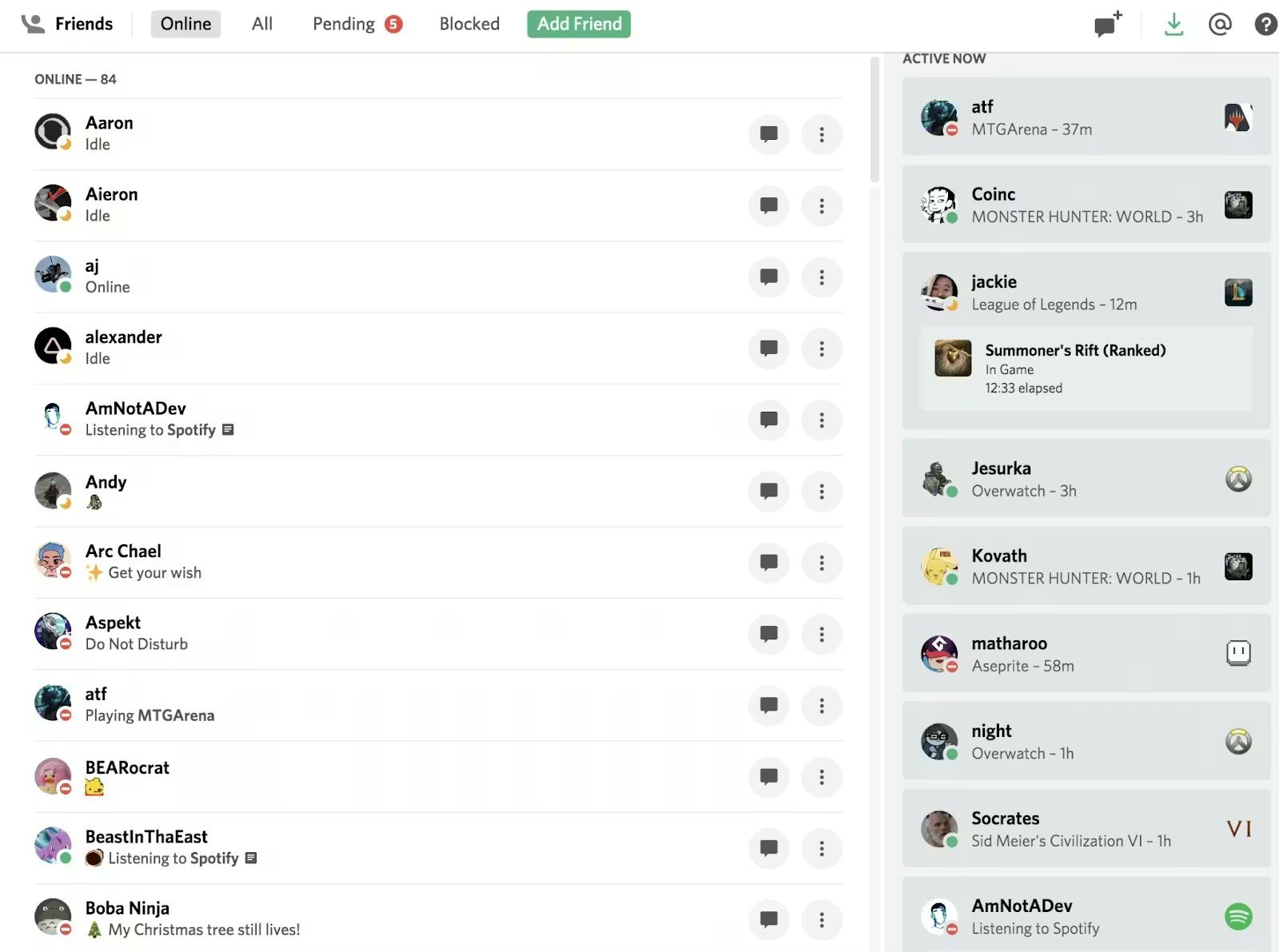
After adding friends on Discord by clicking “send friend request” or by adding a username manually, Friend's List allows for a cohesive view of friend names, online/offline/Do not Disturb status, activity status, and mutual servers. Friend's List also allows users to create group chats independent of servers, with similar features to a regular text and voice channel.
Source: Discord
Discord Developer Platform
Drawing on its history as a gaming infrastructure developer, Discord has been a developer-friendly platform since its 2015 launch. Discord is well known for the Discord bots, applications, and client-side modifications built on top of its open API to personalize community experiences. Discord users can access verified and partnered bots and applications on the Discord App Directory. For non-verified bots, applications, and client-side mods, users can access those directly through third-party websites such as Top.gg and GitHub.
Discord Bots
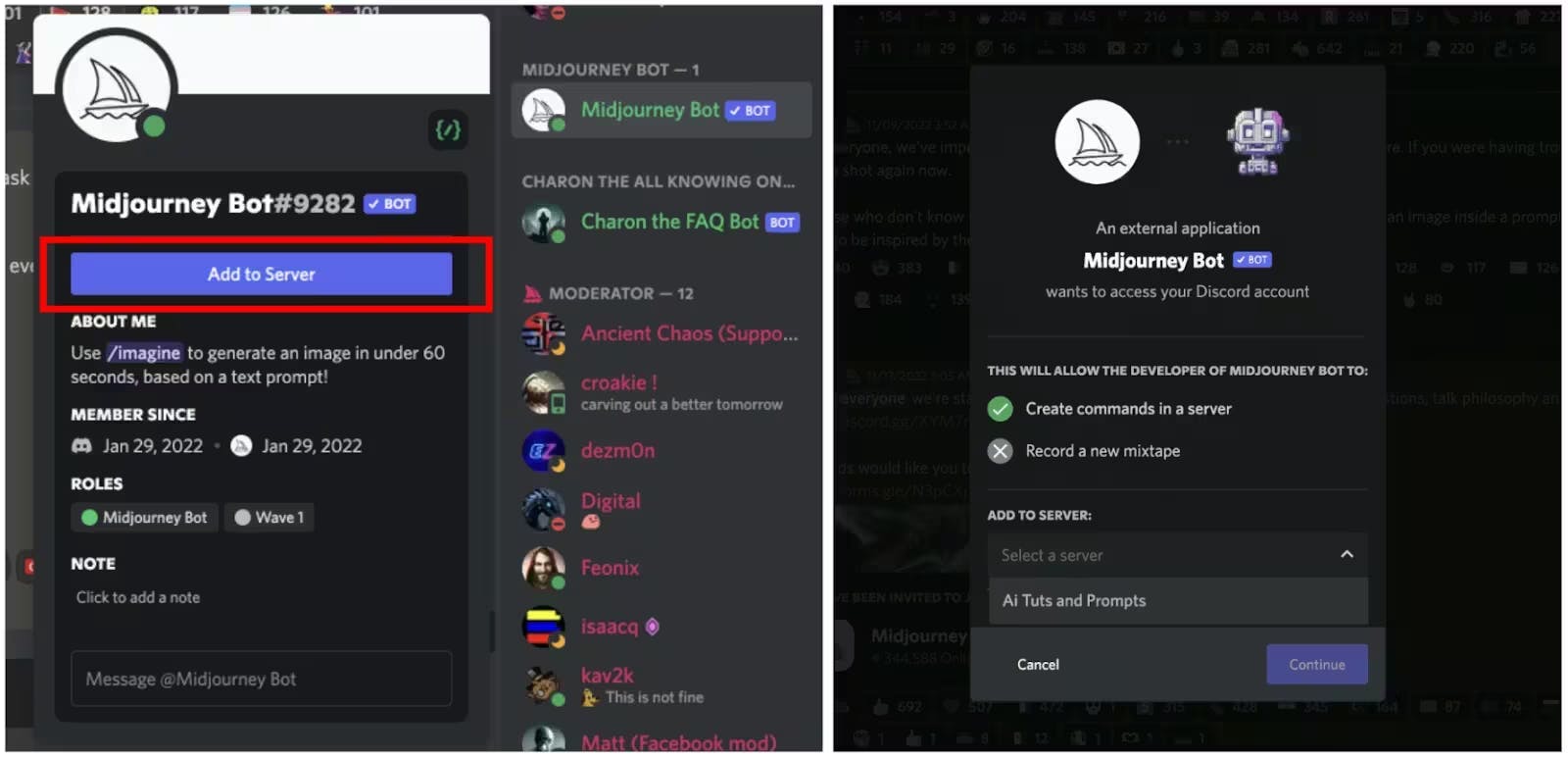
Unlike most incumbent social media platforms, where bots are an active threat to privacy or online authenticity (a notable exception is Reddit), Discord bots are a mainstay of servers and are officially supported across the platform, with a dedicated Discord developer team for user-created bots. For instance, qualified bot developers can apply for verification in their bot's settings in the Developer Portal. To protect user privacy, verification is a requirement for bots to grow past 100 servers. Official Discord bot partnerships include Patreon, Nightbot, YouTube, Twitch, OBS, XSplit, and Discord Streamer.
Like Reddit bots, since Discord bots are built on the Discord open API, bots are installed as third-party tools with specific user engagement in mind. Examples of bot capabilities include automoderating servers, identity verification, RPG games, video game stat trackers, playing music from major platforms, and generative AI.
Source: AiTuts
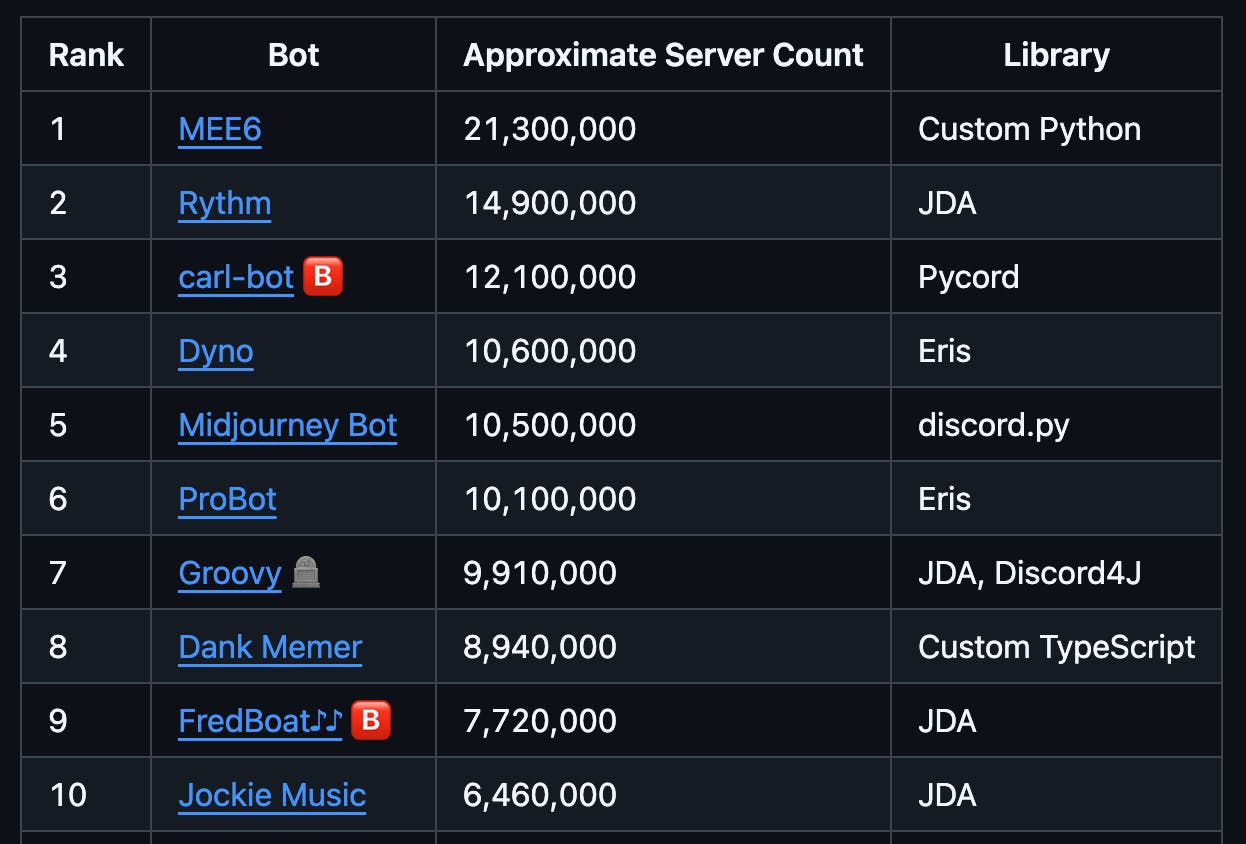
As of 2020, there were over 3 million active bots, and that number has almost definitely grown since then. As of February 2026, the top 3 voted Discord bots on Top.gg, a community-sourced bot quality aggregator, were collectively present on ~24 million different servers. The most popular bots of all time, as ranked by absolute presence on Discord servers, include MEE6 (all-in-one bot), Rhythm (music player), and Midjourney (AI-generated images), which were collectively present on ~170 million servers as of June 2025.
Source: GitHub
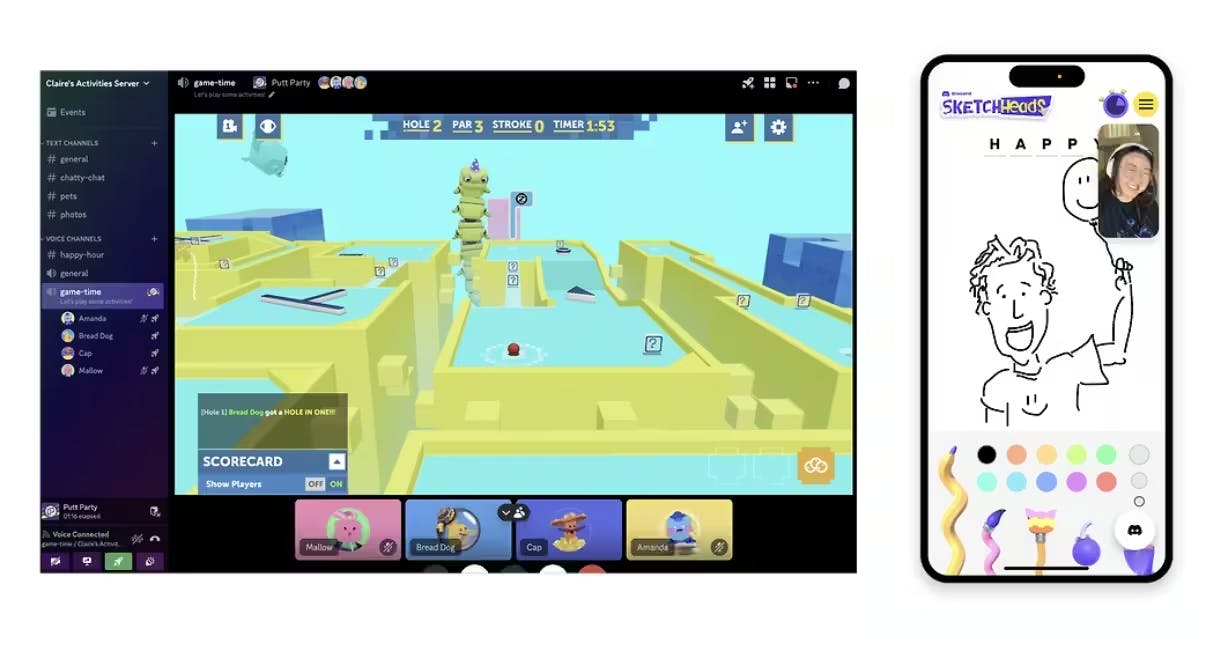
Most applications developed by and released on Discord's API are games or Discord Activities, targeting Discord's large gaming population. These include Discord-developed games such as Putt Party, Sketch Heads, and Jamspace Whiteboard. For 3rd party developers, Discord Activities are built and shipped on the Embedded App SDK, which was introduced by Discord in March 2024. Using this tool, developers can turn eligible games into Activities playable in a Discord voice channel. Prominent examples of 3rd party Activities available to Discord users include Midjourney (an AI image generator platform), FRVR (an AI games and Krunker developer), and Playroom (an AI game developer).
Source: Kante’s Diary
Citron believes that the Embedded App SDK and Discord Applications will capitalize on growing entertainment trends, particularly cross-platform social graphing, to build the first-launch platform for any game. As Discord manages the infrastructure of cross-platform gaming and social graphs to bring the audience to game developers, developers will be able to use their time more effectively to build great games. Citron argues that:
“Because people can be so much more productive and the markets are so much bigger… I think we're going to start to see more games that are focused on niche topics and niche mechanics. One developer could build an entire game like Stardew Valley… but I think it took him like five or six years. You know the next Stardew Valley might be built by one guy in a year and if you imagine what that means: you may get 10 Stardew Valley they may all have different themes and topics… customized to our particular proclivities.”
Discord provides many of these developers a place to launch because its communities are designed to be “niche,” with personalized features and grassroots creations that its users create. Discord solves distribution for developers and, in return, developers build on Discord, creating a virtuous cycle that a16z General Partner Anjney Midha (whose company, Ubiquity6, was acquired by Discord in 2021) calls “Niche at Scale.”
Client-Side Modifications
Client-side modifications (or mods) are modified existing social media apps that often arise when developers and users seek to solve a deficiency or weakness in an existing platform by building an interface on top of the existing application. Examples include Apollo (a Reddit mod that shut down in June 2023 over increases in API pricing), AeroInsta (an Instagram mod with extra features on APK), and YouTube Vanced (a YouTube mod with an ad-blocker on APK that shut down in March 2023 after receiving a Google cease and desist).
Unlike Discord bot or application developers, Discord does not officially support or partner with any 3rd party clients. Popular client-side mods include BetterDiscord, Replugged, and Vencord. These mods come with plugins already installed and methods for users to add their own plugins. Common cosmetic and technical features include themes, improved volume control, and feature imitations of Discord's Nitro subscription.
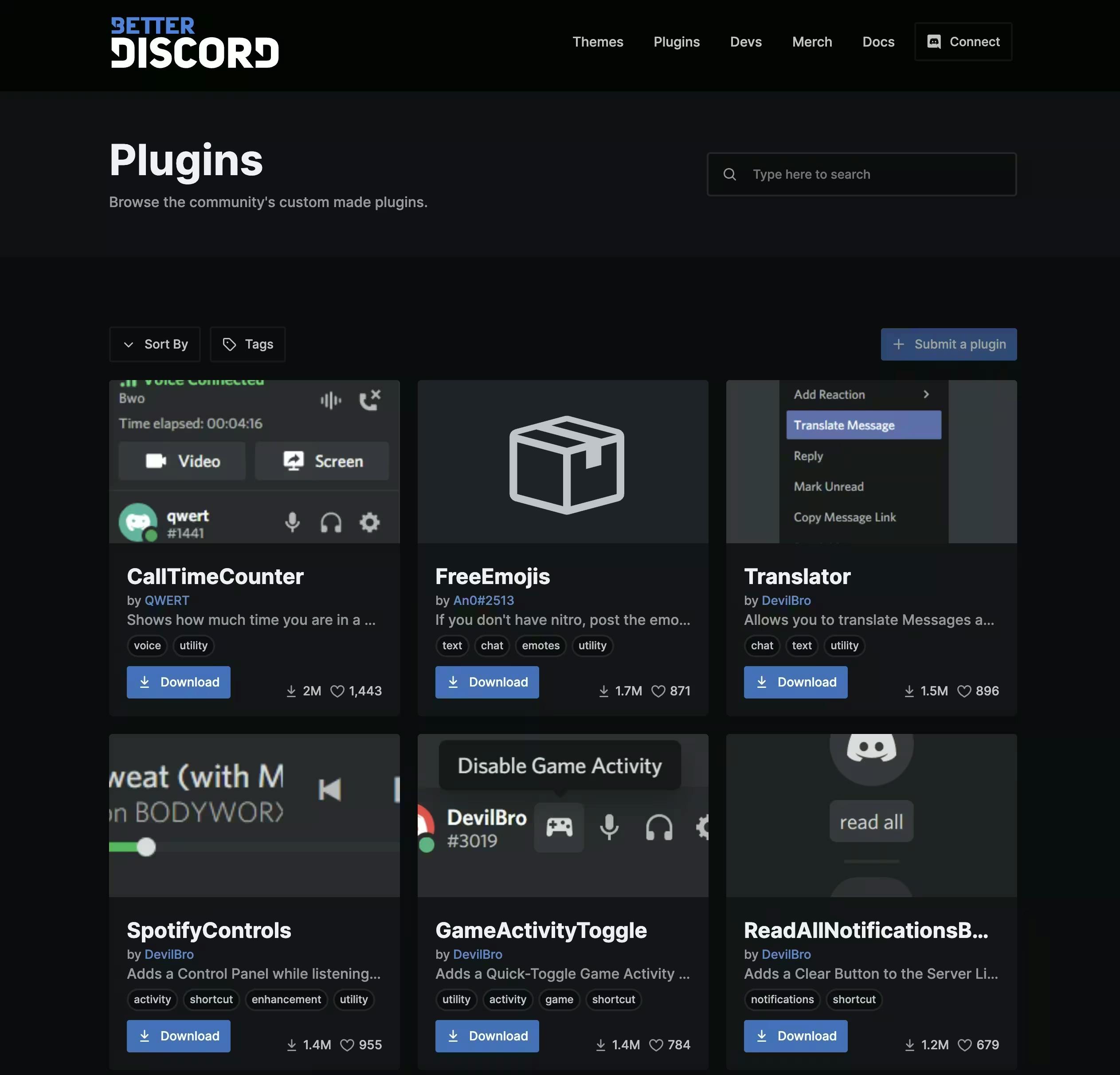
Source: BetterDiscord
Discord has acknowledged the existence of client-side mods like BetterDiscord, but as of February 2026, it has not taken permanent action against any mods. However, Discord has explicitly stated that the use of client-side mods violates its Terms of Service. Industry examples such as Apollo's shutdown due to Reddit API price increases, Google's cease-and-desist letter to YouTube Vanced, and Discord's changes to username creation demonstrate that the official company stance and policy may change as needed.
Market
Customer
Discord Users
Discord is estimated to have had 560 million registered users as of 2023, with 200 million monthly active users. Users are spread across 19 million weekly active servers spanning gaming, investing, politics, anime, and more. Discord originally only served the gamer community, with features like real-time voice chat for group gaming. Over time, Discord began to expand to other communities, and by June 2020, Discord described itself as the “Slack for users' social lives.”
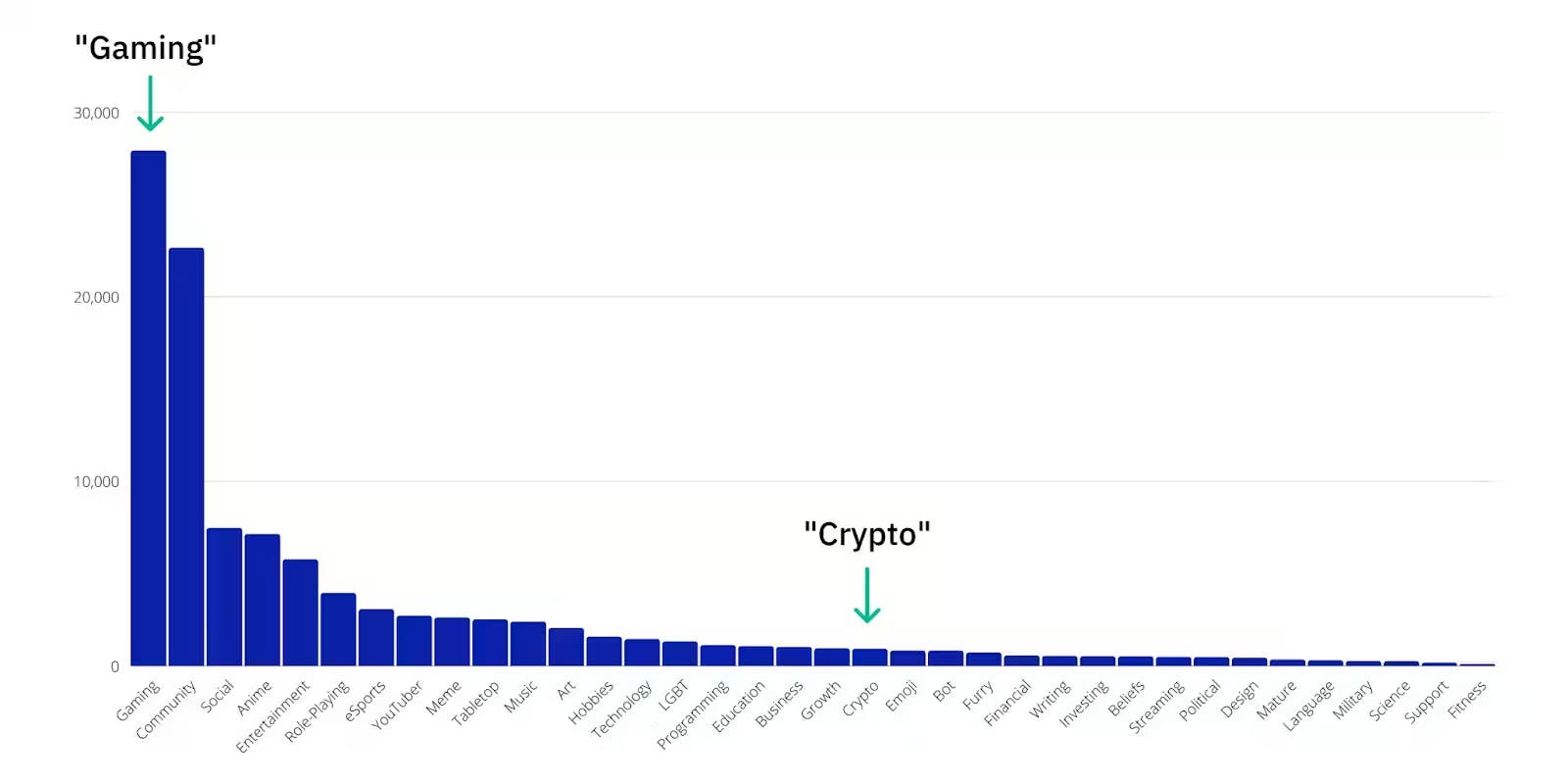
Source: The Generalist
Discord Developers
Discord's Embedded App SDK and Activities Platform do not have publicly available statistics on the number of developers currently building activities and games on Discord infrastructure. As of February 2026, there were over 15K downloadable and server-addable apps in the Discord App Directory. A March 2024 release allowed users to add applications of their choice from different servers to their profiles and use these applications across all of Discord's different spaces, from servers to group chats to DMs. Leveraging these product launches, Discord aims to simultaneously become the OS for developers and the “superapp” of choice for its users.
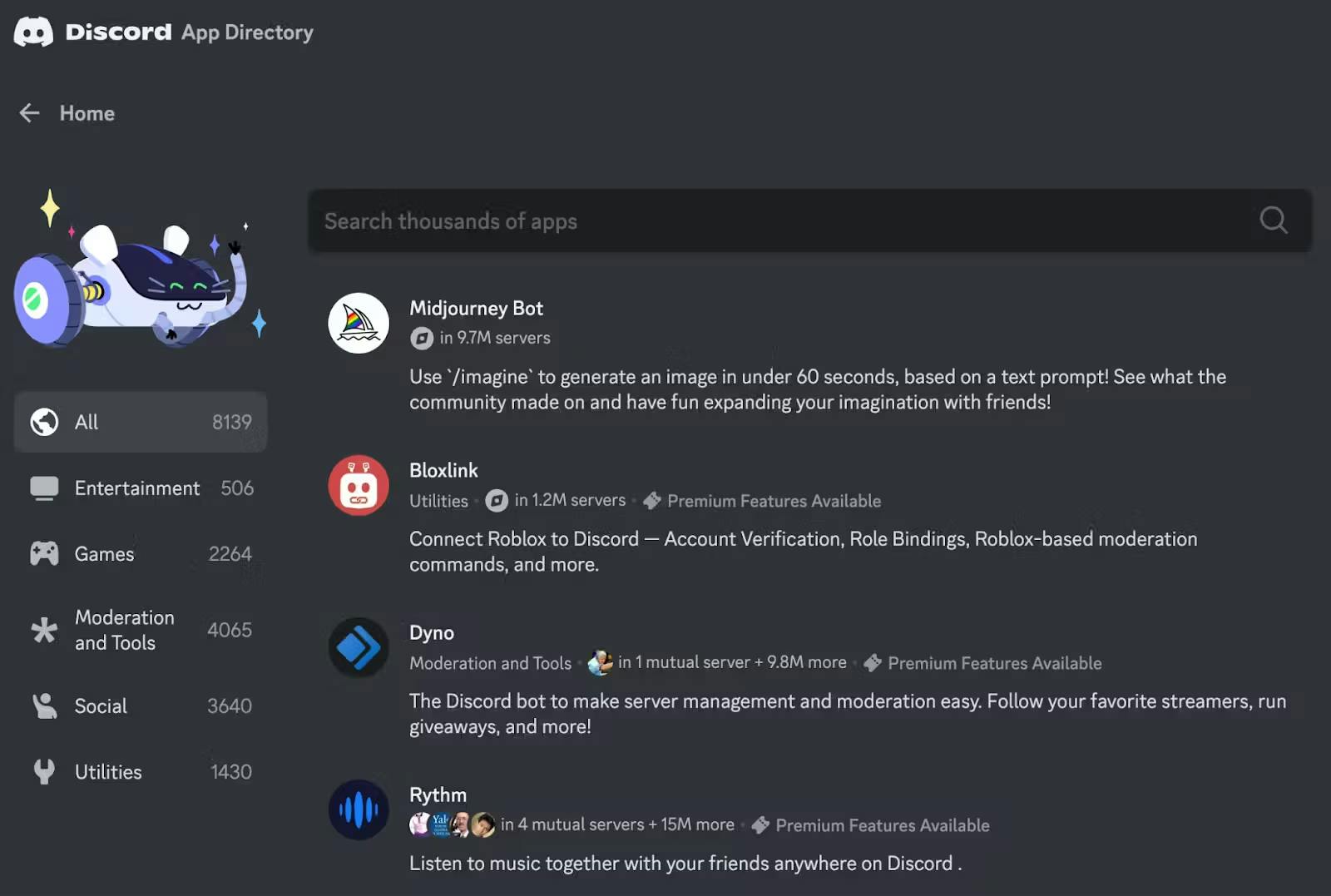
Source: Discord
Market Size
In 2010, there were ~2 billion people on the internet, and only 17% of them were engaged in online communities, amounting to 340 million online community members. As of 2025, that number has grown to 6 billion people online. As early as 2019, over 76% of them were involved in an online community, which implies that there would have been 4 billion total online community members in 2025. While the level of involvement in online communities has exploded, the penetration of tools like Discord still has a long way to go. Of the 4 billion community members we estimated, 1.8 billion of them were using Facebook groups as of 2021.
Within the world of game streaming and communication, the addressable market was estimated at $8.4 billion in 2025. 90% of Discord users used the app for gaming-related purposes as of 2025. The global gaming market is expected to reach $1 trillion by 2032, growing at a CAGR of 11.6%. As Discord builds out its gaming and application platform, it aims to leverage its existing gaming user base to entice developers to build applications directly on Discord. By managing the infrastructure and market developers aim to target, Discord can drastically reduce the time-to-market and length of the feedback cycle for developers, resulting in Discord becoming an increasingly competitive distribution platform.
As Discord expands beyond the world of gaming, it is likely to increase its addressable market by attracting users like the 1 billion people who traded cryptocurrencies in 2022, the global users of generative AI, or the many online communities with over 1 million users whose interests span reading, music, parenting, family history, food, and pop culture.
Globally, the market for social networks is estimated to grow at a CAGR of 25.4% to $900 billion by 2026. While Discord may not feel like a traditional social network, its focus on niche communities is a trend being felt across most major social networks. In the first generation of the internet, users wanted broad access to information, but that's changing as users aim to build a more personalized experience. Facebook's user count declined for the first time in 2022. Now that most people are online, users are gravitating towards more niche communities where they can indulge their interests. Discord’s VP of Sales, Adam Bauer, remarked in May 2025 that “the biggest change we’re seeing is that community is the product […] It’s not about follower counts anymore.” As of May 2025, 90% of Discord servers are smaller groups of just five to 20 people. Mark Zuckerberg had previously acknowledged this shift towards niche communities much earlier, in a 2019 Facebook developer conference:
“I believe the future is private. We should have private messaging, groups, payments, and private ways to share location–the private parts of our social network will be more important than our digital town squares.”
Competition
Though Discord has carved a space of its own in internet consciousness, it constantly competes for user attention, retention, and revenue with various social media, VoIP platforms, and application distribution platforms.
Community Communication Platforms
Twitch: Founded in 2006 and headquartered in San Francisco, California, Twitch is a live streaming platform focused on video game streaming, esports, and creative content. Twitch offers direct-to-audience communication features such as chat and voice channels, allowing streamers and their communities to interact in real-time through personalized community emotes, rewards, and interactions. Although its communication features are less versatile than platforms like Discord, Twitch's extensive user base of 240 million MAU as of November 2025 and integrations within the gaming industry make it a peer competitor in the communication and community space. Twitch was acquired by Amazon for $970 million in 2014.
Reddit: Founded in 2005 and based in San Francisco, California, Reddit is a social news aggregation, web content rating, and discussion website. Known as “the front page of the internet,” Reddit hosts communities, known as subreddits, where users can discuss various topics, share content, and communicate with one another. Although not primarily designed as a communication tool, Reddit's upvote/downvote system and threaded discussions provide a centralized platform for community interaction and discourse. Reddit's IPO raised $750 million in March 2024 and was valued at $26.7 billion as of February 2026.
Steam Chat: Introduced in 2018 by Valve Corporation as a competitive offering to Discord, Steam Chat is an integrated communication service within the Steam gaming platform. Steam Chat provides text, voice, and group chat functionalities tailored to gamers, allowing for in-game communication with friends and gaming communities. Steam Chat's primary focus is on enhancing the social experience within the Steam platform, making it a specialized tool for Steam ecosystem gamers rather than a general communication platform.
Guilded: Founded in 2017 and based in San Francisco, California, Guilded is a VoIP communication platform designed specifically for gaming communities. Similar to Discord, Guilded offers features such as team management, calendar scheduling, and chat functionalities, including voice, video, and text channels. As an independent product group under Roblox, the platform has positioned itself as a direct competitor to Discord, with future users required to sign up for Guilded through their Roblox accounts. Guilded was acquired by Roblox for $77 million in 2021. Guilded was formerly backed by key investors Matrix Partners, Susa Ventures, SV Angel, Initialized Capital Management, and Y Combinator.
TeamSpeak: Founded in 1999 and based in Chula Vista, California, TeamSpeak is a VoIP software designed for audio communication between users on a chat channel. TeamSpeak is particularly popular among gaming communities for its low latency and high-quality voice communication, making it ideal for competitive gaming environments. Unlike many modern platforms, TeamSpeak allows users to host their own servers, providing greater control and customization. In December 2019, TeamSpeak announced a partnership with Overwatch League, the official esports league for the game Overwatch. However, as of March 2025, it lacked social features compared to competitors.
Slack: Founded in 2009 and based in San Francisco, California, Slack is a collaboration and communication tool primarily used in professional contexts. While it shares some similarities with Discord, such as chat channels and voice communication, Slack focuses on workplace collaboration in professional organizations. Slack was acquired by Salesforce for $27 billion in 2020.
Skype: Founded in 2003 and based in Luxembourg, Skype is a telecommunications application specializing in video chat, voice calls, and instant messaging. Initially popular for personal and professional communication, Skype offers a range of features, including group video calls, file sharing, and screen sharing. Before and after the COVID-19 pandemic, Skype's usage has declined with the rise of newer platforms like Zoom and Microsoft Teams. Skype was acquired by Microsoft for $8.6 billion in 2011. Skype had previously been acquired by eBay for $2.6 billion in 2005 and sold to Silver Lake in 2009. However, in February 2025, Microsoft announced it would be shutting down Skype in favor of Microsoft Teams.
Game Distribution
Steam: Founded in 1996 and based in Bellevue, Washington, Steam is a digital distribution platform for PC gaming. Developed by Valve Corporation, it was initially launched as a service for automatic updates of Valve games. Currently, the Steam platform offers a wide range of services, including multiplayer gaming, video streaming, community content, and communication services. Steam's vast library includes thousands of games, software, and downloadable content from various genres. Considered the gaming distribution incumbent, Steam accounts for an estimated 70% to 85% of all PC gaming market share. Valve is ~50% owned by its co-founder, Gabe Newell, and one unverified estimate placed its 2024 revenue at $13 billion.
Epic Games: Founded in 1991 and based in Cary, North Carolina, Epic Games is a prominent video game and software developer and game distribution platform. Launched in 2018, the Epic Games Store has become Steam's primary competitor, aiming to compete on more favorable revenue cuts to entice developers to move onto Epic's platform (Steam takes a 20-30% cut, Epic takes a 12% cut). Known for offering developers access to Unreal Engine, more favorable revenue splits, and regularly providing free games to users, Epic Games offers games such as Fortnite, Unreal Tournament, and exclusive titles like Metro Exodus and Borderlands 3.
Roblox: Founded in 2004 and based in San Mateo, California, Roblox is an online platform and game creation system that allows users to design, share, and play games created by other users. Roblox is particularly popular among younger audiences and offers a vast array of user-generated games across various genres. The platform operates on a freemium model, with in-game purchases available through the virtual currency Robux. As of 2024, Roblox has 85.3 million DAUs and over 400 million MAUs. Roblox's IPO raised $856 million in March 2021 and is valued at $46.6 billion as of February 2026.
Apple App Store: Launched in 2008 as part of Apple's iOS ecosystem, the Apple App Store is a digital distribution platform for mobile apps and games. As of 2023, the App Store offers ~3.8 million apps and games across various categories, including productivity, entertainment, and education. The platform is known for its stringent app review process and high-quality standards, nicknamed Apple's “Walled Garden.” Developers earn revenue through app purchases and in-app purchases, with Apple taking a 30% commission on sales.
Google Play Store: Launched in 2012 as part of Google's mobile ecosystem, Google Play Store is Google's official app store for Android devices. As of 2024, the Google Play Store offers ~2.4 million apps, games, music, movies, and books, making it one of the largest digital distribution platforms in the world. Developers earn revenue through app purchases and in-app purchases, with Google taking a 30% commission on sales.
Business Model
Discord operates on a freemium model. Unlike most social media platforms, Discord has pursued an ad-less monetization strategy, with CTO Vishnevskiy asserting that “We have intentionally pursued a business model that does not rely on monetizing our users' data.” Though the vast majority of Discord's core features are free, the company augments its feature set and existing perks to expand paid offerings. Discord generates revenue from three distinct sources: Nitro subscriptions, server boosting, and game distribution.
Nitro & Nitro Classic
In 2017, Discord introduced its “Nitro” package, a premium subscription priced at $9.99 per month or $99.99 per year, offering features like personalized profiles, custom emojis, larger file uploads (up to 500MB), high-resolution video and audio, and two server boosts. A cheaper option, Nitro Basic, is available for $2.99 per month or $29.99 per year, providing similar but lower-tier benefits, including Super Reactions, custom emoji, a Nitro badge, and a 50MB file upload limit. As of April 2024, Nitro subscriptions made up the majority of Discord's revenue.
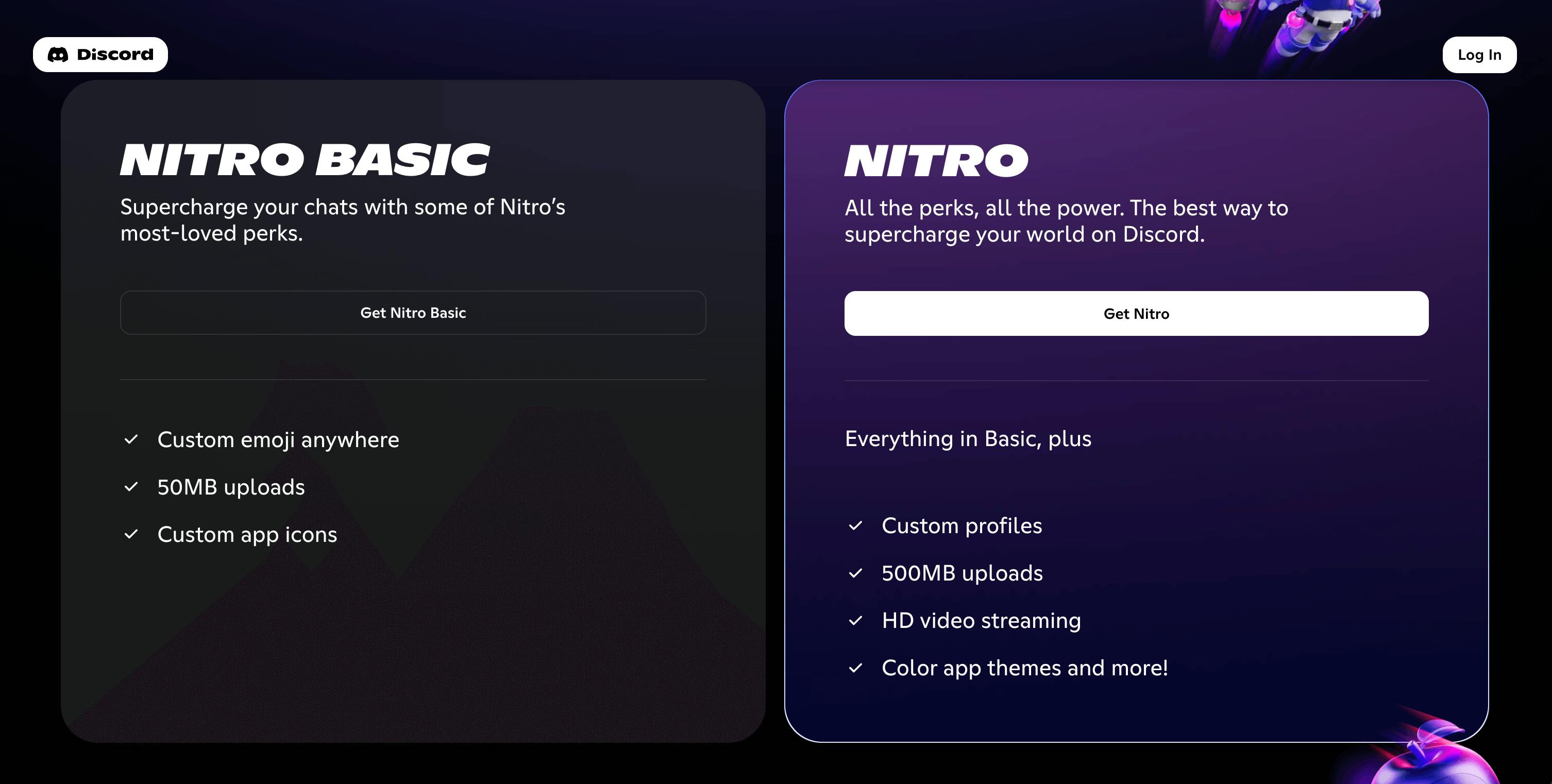
Source: Discord
Server Boosting
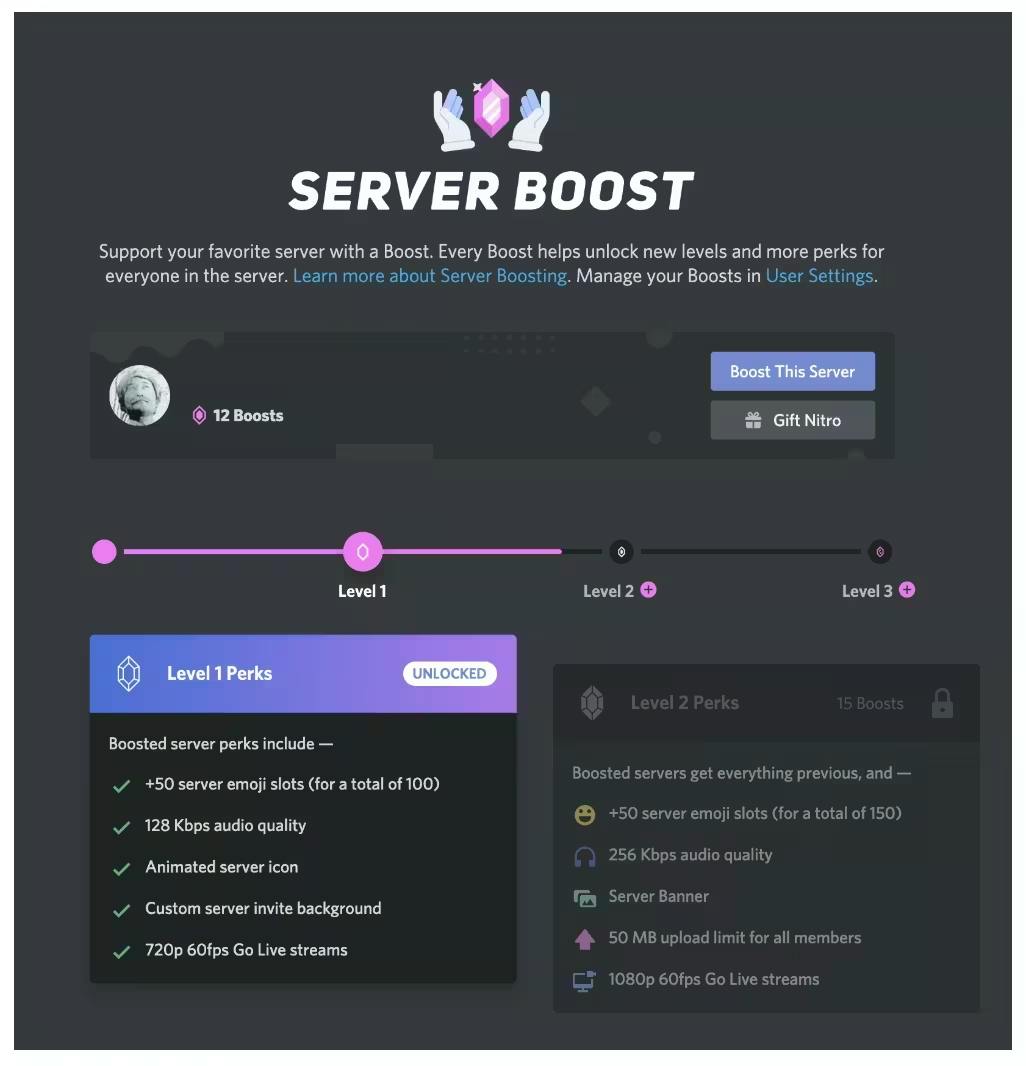
Server Boosting allows a community to increase the functionality and performance of their Discord Server. Servers can be boosted to three different levels and include extra perks. A server boost costs $4.99 per month. Nitro subscribers receive a 30% discount for server boosts, along with two free boosts.
Server Boosting refers to users adding specific perks to a Discord server. All server boosts fall into three levels. Each level has all the perks of the previous level plus extra features. Level 1 server boost perks include over 50 emoji slots, 128 Kbps audio quality, a custom splash background, and an animated server icon. Level 2 server boost perks include 150 emoji slots, 256 Kbps audio quality, a server banner, and a 50MB upload limit for non-Nitro members (server only). Level 3 server boost perks include 250 emoji slots, 284 Kbps audio quality, a 100MB upload limit for non-Nitro members (server only), and a vanity URL.
Source: Discord
Shop
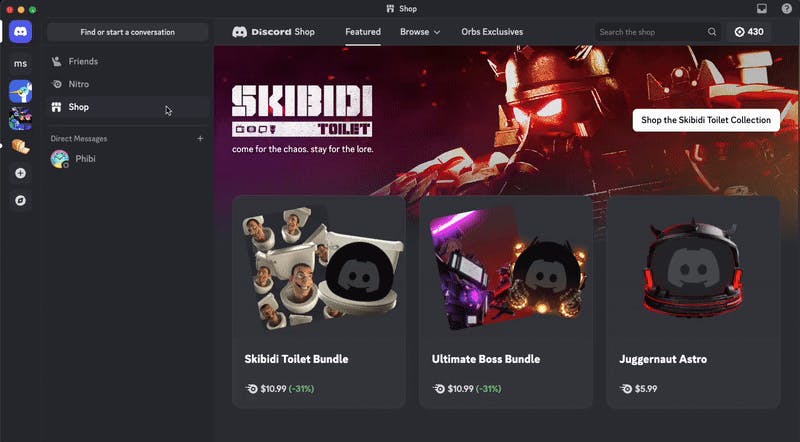
In 2023, Discord launched Shop, an in-app store where users can purchase Bundles, Avatar Decorations, Nameplates, Profile Effects, and other items for profile customization. Nitro members can purchase items at a discounted price, and users can also gift Shop items to friends. Since its launch, Discord has expanded its Shop feature to accept its virtual currency, Orbs, and support purchases of in-game items.
Source: Discord
Integrated Ads & Partnerships
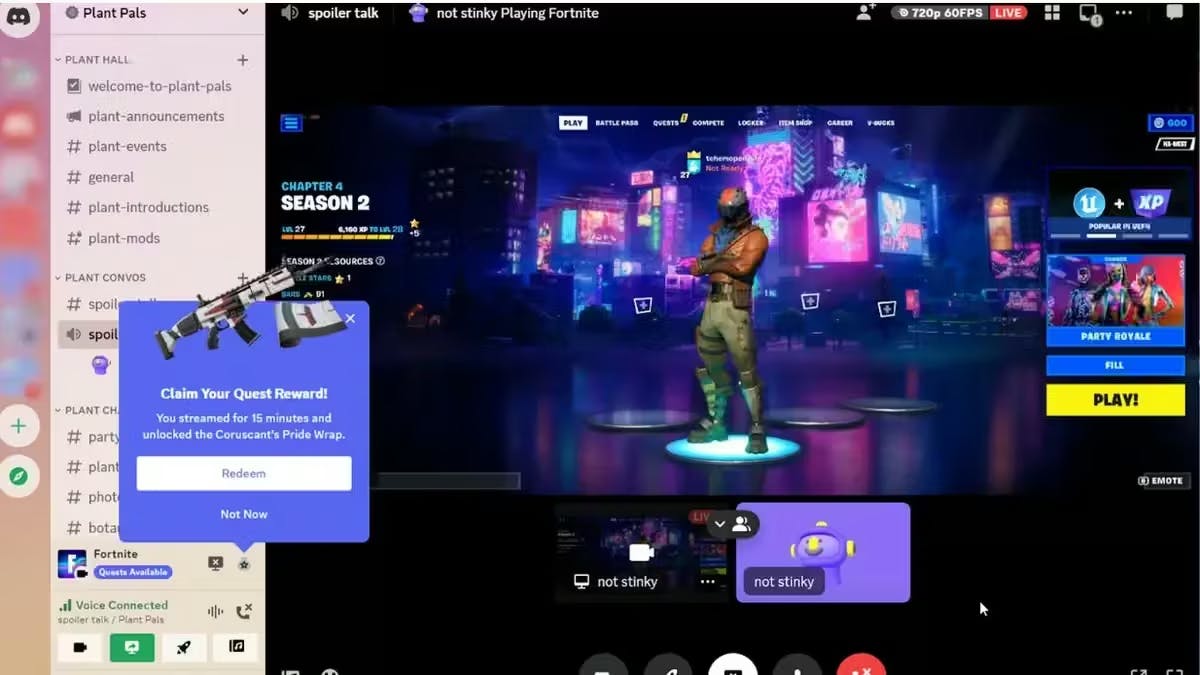
As of 2024, Discord was generating the majority of its revenue from subscription-based purchases through Nitro that unlock additional cosmetic and technical features within Discord. In 2024, Discord introduced “gaming-oriented” ads designed to carefully fit into a streamlined Discord environment without disrupting the user experience. Some of these features have taken the form of “sponsored quests” and themed shop items/customizations. Discord Senior Vice President Peter Sellis described quests as opt-in experiences:
“Quests will show up tastefully in Discord where you can opt-in to stream your game to friends and win rewards for playing. Developers and publishers who sponsor Quests will work with our team to build an experience that showcases their game and offers a reward tailored for their game… The second thing we’re announcing today is themed items in our Shop in partnership with game developers… We've come up with a way to make this happen by working with developers to bring themed profile effects and avatar decorations to the Shop. And most importantly, we’ll be sharing the revenue of those purchases with developers so they can make additional money from their amazing creativity through Discord.”
Source: CNET
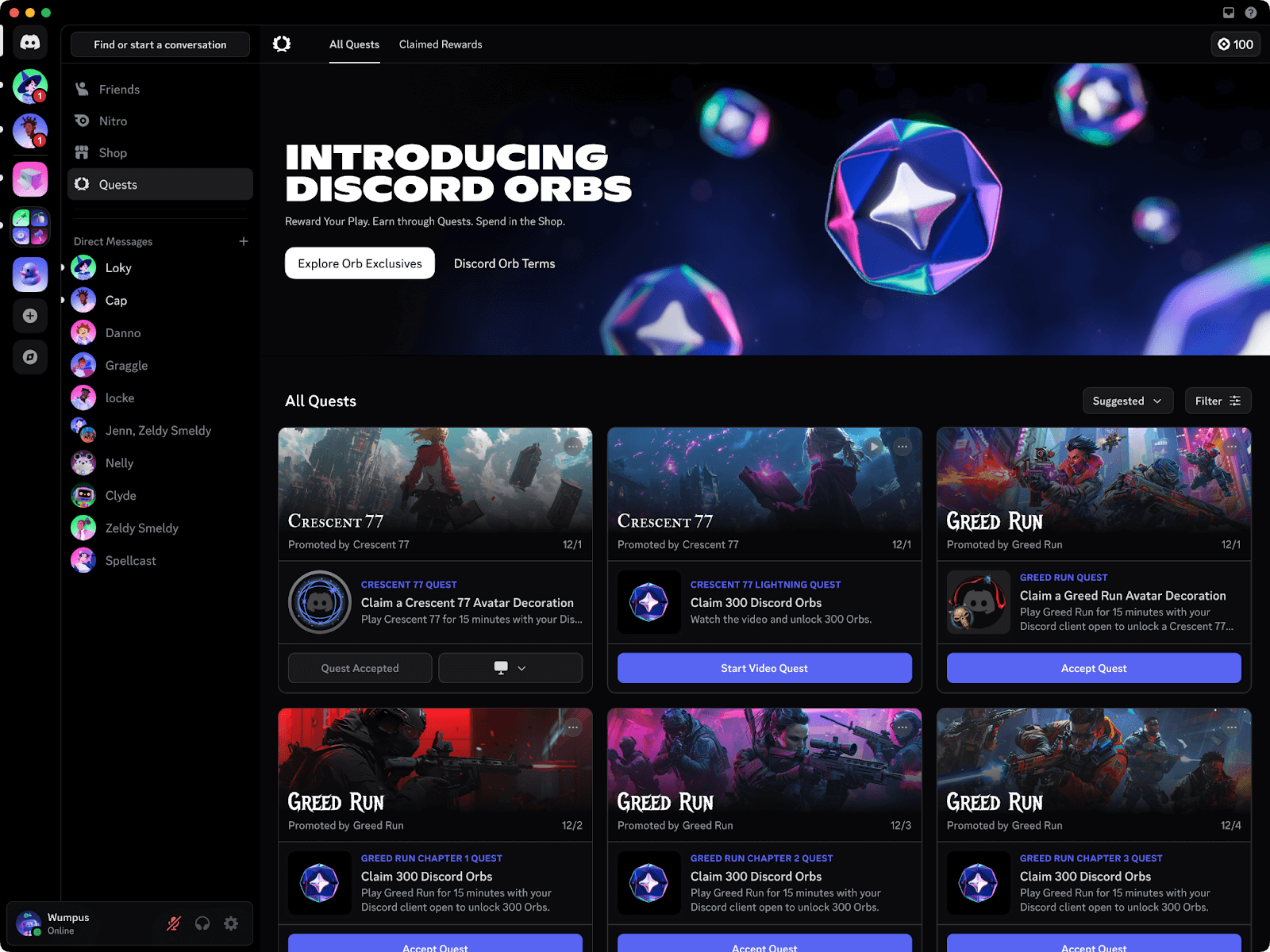
In July 2025, Discord launched a virtual reward system called Orbs, which users could earn from completing Quests and then use to redeem digital items in Discord’s Shop. Introduced to encourage non-subscribers to try Nitro, the introduction of Orbs proved popular with test users, driving a 16-fold increase in first-time Discord Shop purchases, with 79% of buyers having never previously made a purchase.
Source: Discord
Discord continued building out its advertising features through its release of Arena Quests in October 2025, which allows brands to sponsor games and reward users based on the length of time spent playing the game. As of February 2026, Discord offered Arena Quests, Play Quests (ads targeting former or prospective gamers that reward them for playing certain games), and Video Quests (video ads like trailers or game launches to drive game awareness). Quest participation is completely voluntary, and users can disable Quest personalization at any time.
Discord has been cautious about rolling out advertising to “protect not only the platform, but [their] partners as well.” An internal Discord survey found that over 50% of users who have seen or interacted with a Quest in the past month said that it improved their experience on Discord, with many players proactively seeking out new Quests to complete.
Game Distribution
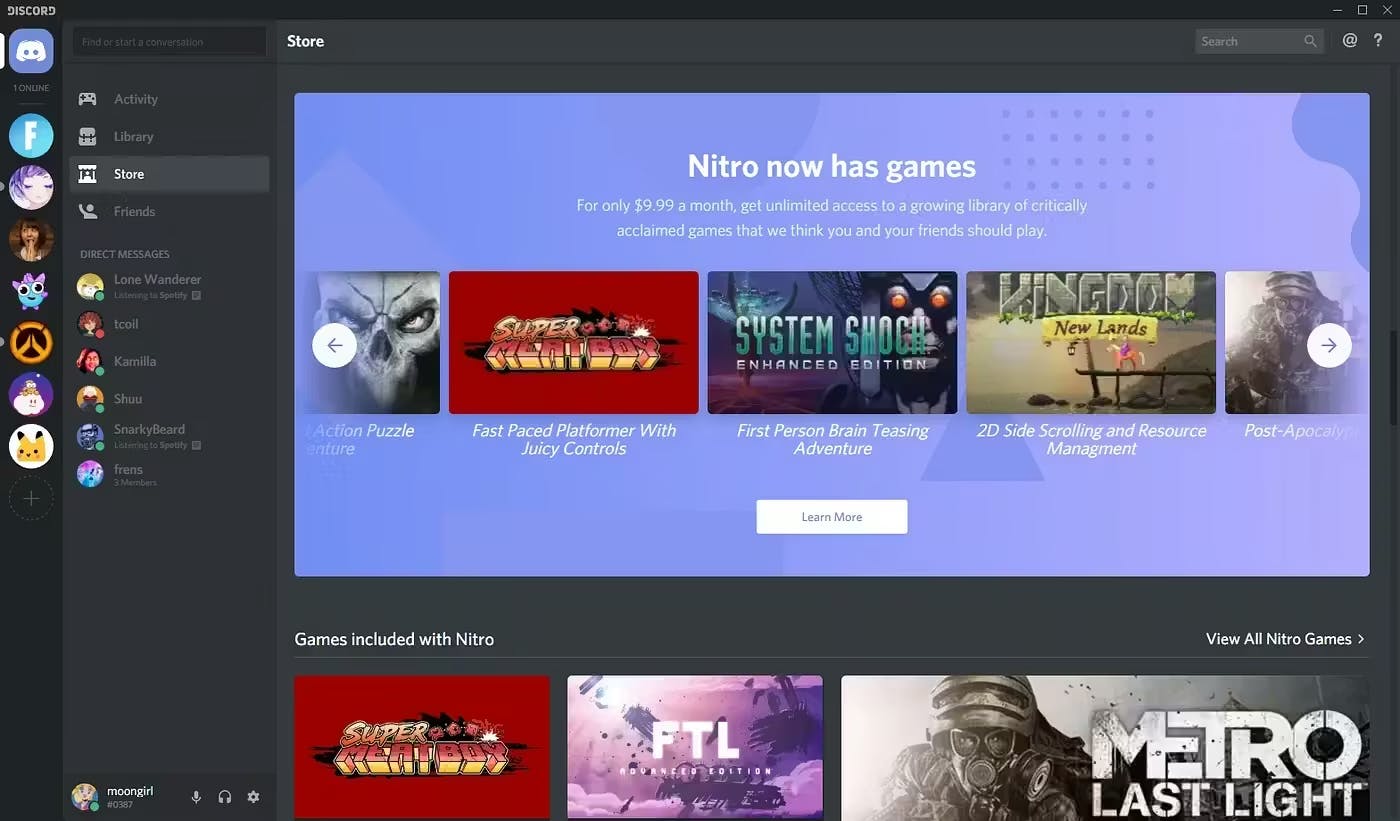
In 2018, Discord launched a game store called Discord Store to compete against Steam. The store was exclusive to Nitro subscribers, giving them access to titles like Dead Cells and Into The Breach. However, the store never gained traction with users and was phased out just a year after its launch.
Source: Medium
Discord quickly pivoted into a new developer model (the aforementioned Discord Activities and applications), partnering with game developers through its servers exclusively. Unlike traditional game distribution platforms, Discord offers game developers a unique opportunity to build a community while building their games, allowing them to sell directly to their communities during a game's development.
Discord also offers a suite of commerce tools to help game developers sell their games through verified servers with a 10% revenue cut. Similar to how Shopify's tools help online businesses, Discord provides game studios with tracking capabilities to analyze communities on servers with daily metrics, analytics, attribution tracking, and tools to run private alphas or betas directly through Discord.
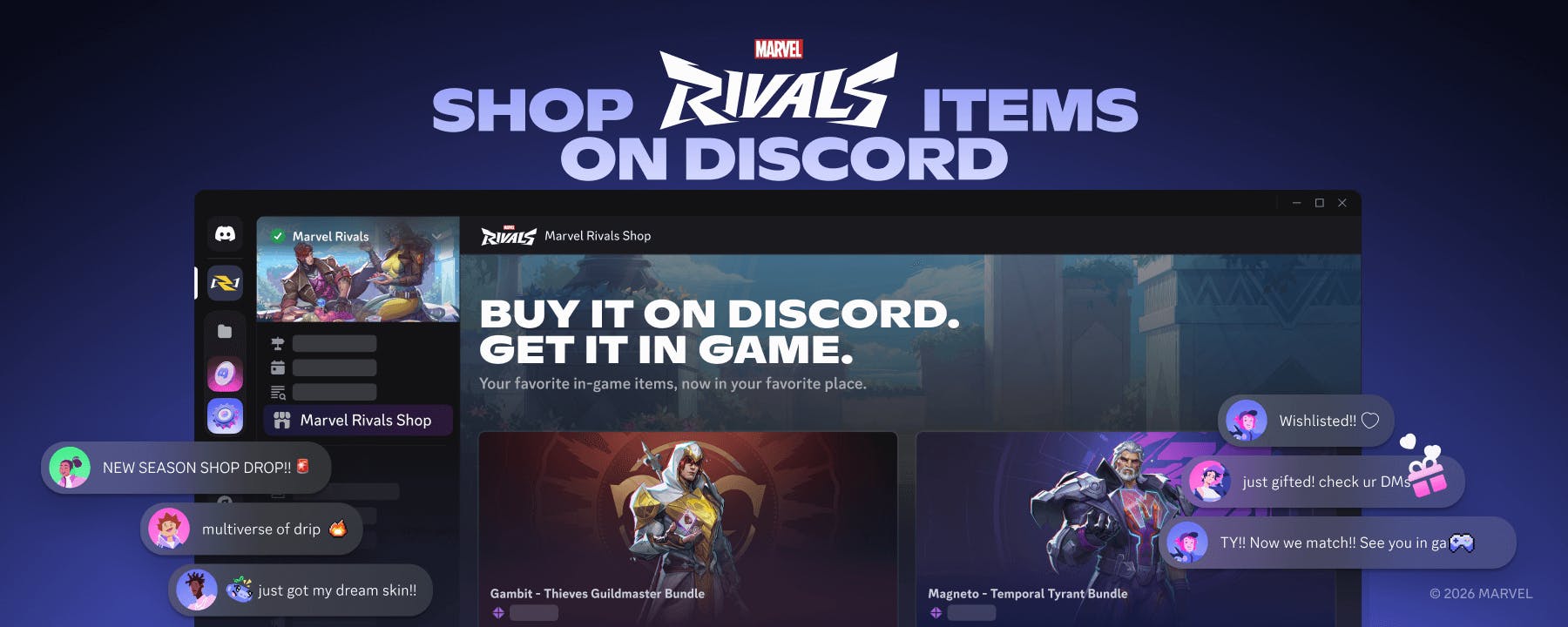
In December 2025, Discord partnered with popular video game Marvel Rivals to launch a new commerce feature that allows users to buy and gift in-game items directly on Discord without leaving the platform. Users can create wishlists and send digital game items like costumes and bundles through Discord direct messages. Most notably, users do not have to play Marvel Rivals to be able to gift in-game items. Given that nearly 20% of Discord Shop purchases are gifts as of December 2025, this feature enables Discord to capture more transactional revenue while helping game developers reach audiences beyond their existing server communities.
Source: Discord
Traction
As of February 2026, Discord is the seventh most used communication app on Google's Play Store and the sixth most used on the Apple App Store. Originally a grassroots gaming-centric communication app, as Discord grew through “word of mouth” on the internet, it began to enter the mainstream and compete against incumbent social media platforms. Historically, Discord's growth has been heavily influenced by social media and macro consumer trends.
Discord was at the center of the COVID-19 pandemic as text, live voice, and video chats in digital spaces became the main method of communication, especially among younger users. Further compounded by the 2020-2022 cryptocurrency boom on decentralized social media platforms, the dovetailing trends resulted in the company reaching over 150 million monthly active users in 2021, up from 56 million in 2019. Global interest in Generative AI and the release of developer products for building applications have further increased Discord's user base, with the Midjourney Discord server alone adding nearly 20 million users as of February 2026.
Source: The Generalist
Discord has wide adoption among younger audiences, with an estimated 28% of teenagers using Discord as of 2023. The platform’s grassroots, bottom-up culture has made it an appealing space for people to gather and organize outside of traditional institutions.
Notably, during nationwide protests in Nepal in 2025, youth organizers used a Discord server of more than 160K members to host open debates and virtual polls to collectively select former chief justice Sushila Karki as their country’s next leader. Supporters viewed the Discord approach as more transparent and participatory than the traditional practice of politicians choosing leaders behind closed doors, highlighting Discord’s role as a digital space for decentralized communities.
Discord’s ARR grew from $115 million in 2019 to $428 million in 2022. In 2023, the company is estimated to have 560 million registered users with a 2023 ARR of $600 million. One unverified estimate indicated Discord reached $879.4 million in 2024 ARR, and was expected to break even in 2024 in terms of profitability.
Discord has signed partnerships with companies such as Midjourney (an AI image generator platform), FRVR (an AI games and Krunker developer), and Playroom (an AI game developer) to bring the company's ambition of becoming the decentralized community platform of the internet to life. In 2025, Meta announced that Discord would be available as one of five native apps on Quest in 2026.
Valuation
As of February 2026, Discord had raised $995.4 million in total funding, with $500 million raised at a $14.7 billion valuation in a September 2021 Series I round led by Dragoneer. Other investors include Benchmark, Coatue, Dragoneer, Bessemer Venture Partners, Tiger Global, Greenoaks, Index Ventures, IVP, Greylock, Accel, Spark Capital, and Tencent.
Discord's $14.7 billion valuation in its Series I funding represents a 40x revenue multiple of its 2021 revenue, $373 million. Based on the 2024 estimate of Discord’s revenue of $879.4 million, the company’s prior $15 billion valuation would represent a 17x multiple. However, as of February 2026, secondary markets and mutual fund markets estimated that Discord’s valuation was likely in the range of $7.6 billion to $8.6 billion. That would represent a valuation multiple of 8.6-9.8x 2024 revenue.
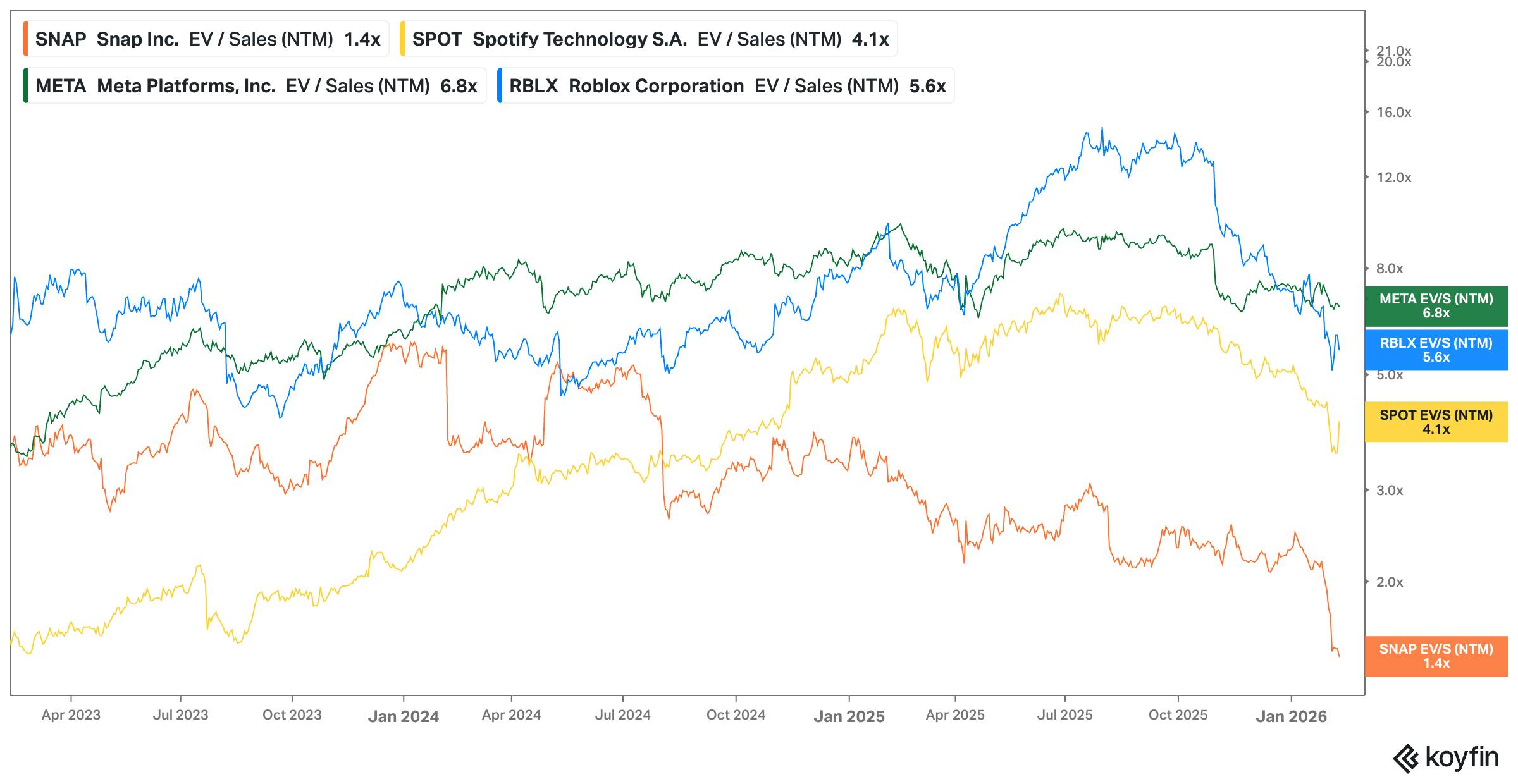
As a proxy, Meta, Roblox, Spotify, Reddit, and Snapchat are comparable consumer technology companies that are publicly traded. Using these companies as a benchmark gives us a range of LTM revenue multiples from 1.4x to 6.8x as of February 2026.
Source: Koyfin
In 2021, Discord rejected a $12 billion acquisition proposal from Microsoft. In January 2026, Discord filed confidentially for an IPO and is reportedly working with Goldman Sachs and JPMorgan Chase on a listing.
Key Opportunities
Online Community & Gaming Focus
In 2020, fueled by the platform’s broad adoption during the pandemic, Discord pivoted from primarily focusing on gamers to focusing more on general communities, including anime, tech, education, investing, and cryptocurrency. By focusing on more than the social aspects of the gaming community, Discord targeted a much larger market consisting of all potential online communities.
However, Vishnevskiy admitted in 2025 that this broader focus created its own set of problems, stating that “[it] wasn't clear exactly who we were building for, because now Discord was a community product for everyone, and that drove a lot of distractions.” As a result, in 2024, Discord announced its plan to refocus on gaming:
“After taking stock of the world now that the pandemic is largely behind us, and learning directly from you about how Discord can be even more useful, we’ve recognized the need to narrow our focus from broadly being a community-centric chat app to being a place that helps people deepen their friendships around games and shared interests.”
As of 2024, Discord is eyeing a deeper penetration of the gaming market through game distribution, with developers pursuing game development directly on Discord infrastructure and selling to Discord audiences.
This push toward gaming infrastructure is already taking shape. In August 2025, Discord announced a partnership with NVIDIA that would bring cloud-streamed gaming directly within Discord. Through NVIDIA’s GeForce NOW cloud gaming service, gamers will be able to discover and play new games directly within Discord without any additional downloads, installs, or launchers, a capability that was demonstrated with popular game Fortnite at gamescom 2025.
Through Discord's Developer Platform, Embedded App SDK, and Activities Platform, Discord can build the operating system for game developers and challenge existing incumbents through its network of decentralized, niche-interest servers across the Discord ecosystem. Building on the Discord App Directory, users will be able to play and engage with these applications across all of Discord's ecosystem, creating a virtuous cycle for developers and users.
Microtransactions
Discord is already enabling microtransactions within servers for game publishing. There is a significant opportunity to increase that capability. For example, some communities run a VIP server, where users can pay a monthly fee for exclusive stock trading tips and advice. However, if everything runs through third-party integrations like PayPal, Twitch, and Patreon, Discord doesn't get a cut of those transactions. Building integrations directly into Discord is a key opportunity for the platform to fully monetize the potential of microtransactions on the platform. Discord has begun moving in this direction through platform-led initiatives such as its 2025 partnership with Marvel Rivals, which enables native in-game purchasing and gifting without users leaving the platform. Without broader native monetization levers, Discord risks continuing to capture a fraction of the value that other social platforms do.
Key Risks
Inability to Monetize Users
Compared to its social media peers, Discord has a relatively low monetization rate. Despite a large and growing user base, the platform has struggled to convert a meaningful percentage of its users into paying customers. Platforms like Facebook, Twitter, and YouTube have implemented various strategies that drive consistent revenue through advertisements, premium subscriptions, and content creator monetization.
Discord, on the other hand, has largely avoided ad-based revenue models and may continue to struggle in monetizing its users versus social media peers due to a platform-wide insistence to avoid advertisements and a unique user identity that eschews privacy violations and user friction. As of February 2026, one unverified estimate placed Discord’s average revenue per user (ARPU) at $2.54, which is significantly lower than that of major social media platforms like Meta, whose ARPU was $44.60 in 2023.
While Discord has a meaningful opportunity to increase its value capture by enabling microtransactions and tasteful platform advertisements, execution must balance Discord user experiences accustomed to a largely free platform with feature rollouts. Overcompensating on either side, with underwhelming uptake of paid features or degraded free experiences, will create challenges to Discord monetization.
Safety and Content Moderation
Discord is used by many different people across its various communities. In any (and all) online community of that size, there will inevitably be some bad actors. Content moderation has therefore been a persistent challenge for the platform. In 2017, Discord created a Trust and Safety team, which has since grown to ~15% of the company's headcount. The company has also invested in technical solutions by acquiring Sentropy in July 2021 to identify online harassment and hate speech using AI and launching AutoMod in June 2022 to help servers automatically identify and manage inappropriate activities. In Discord’s 2024 H1 transparency report, 365K accounts were disabled for violating platform policies, including child safety, hateful conduct, violent extremism, and other prohibited content.
These moderation challenges are especially acute given Discord’s large youth audience. With an estimated 28% of teenagers using Discord, the social app has come under intense regulatory scrutiny around its child safety policies. In January 2024, lawmakers questioned Citron and other social media executives about what they were doing to protect children from online sexual abuse. In April 2025, the state of New Jersey sued Discord for failing to protect minors on its platform and “recklessly [exposing] children to graphic violent content, sexual abuse and exploitation,” listing six criminal cases in which adults had used Discord to exploit children.
Following the lawsuit, Discord introduced a new age verification process using face and ID scanning to restrict minors’ access to sensitive content. However, this approach also drew some backlash after a data breach in October 2025 exposed government IDs from roughly 70K users, raising additional concerns about privacy and trust.
Like other large social platforms, Discord faces the inherent challenges of moderating vast amounts of user-generated content at scale. As the platform continues to grow, content moderation is likely to become increasingly complex and resource-intensive, as Facebook previously experienced. If Discord cannot effectively deal with moderation issues, it may drive users away from the platform.
Community Trust
Discord’s grassroots, community-first culture has been central to its growth, particularly among gamers, who make up about 90% of the platform’s 200 million monthly active users. However, as the company prepares for a future IPO and expands advertising and monetization efforts, some users have expressed concern about potential “enshittification” and a shift away from user interests. CTO Vishnevskiy has publicly acknowledged these risks, stating:
"I'm definitely the one who's constantly bringing up enshittification […] It's not a bad thing to build a strong business and to monetize a product. That's how we can reinvest and continue to make things better. But we have to be extremely thoughtful about how we do that.”
Vishnevskiy has also noted that the risk of losing user trust is a frequent internal topic of discussion and cited internal pushback as evidence of an ongoing culture of dissent, such as employee resistance to proposed crypto integrations in 2021. However, as Discord scales and faces increased pressure to generate revenue, preserving this culture of experimentation and internal dissent may become more challenging. If users perceive that commercial priorities are overtaking community interests, Discord risks eroding trust and customer loyalty, potentially weakening one of its most important competitive advantages.
Summary
Originally born out of a desire to create a better gaming infrastructure, Discord has grown from a platform catered specifically to gaming communities into a multifaceted platform that promotes “niche at scale.” As a community-based VoIP platform, Discord has carved out its own space on the internet as a casual and conversational hangout place. Under a freemium model, Discord aims to maintain its core identity of free-spirited gaming with friends while monetizing users through game distribution, premium subscriptions, and advertisements as it prepares for a future IPO.