Perspective

Hype Cycles Versus Progress Cycles

By Kyle Harrison

Updated

January 13, 2024

Reading Time

2 min

Technology evolves in waves. Innovation drives adoption, and soon what previously only existed as science fiction suddenly becomes commonplace. We’ve seen this before with the internet, mobile devices, and now we’re increasingly seeing it with AI.
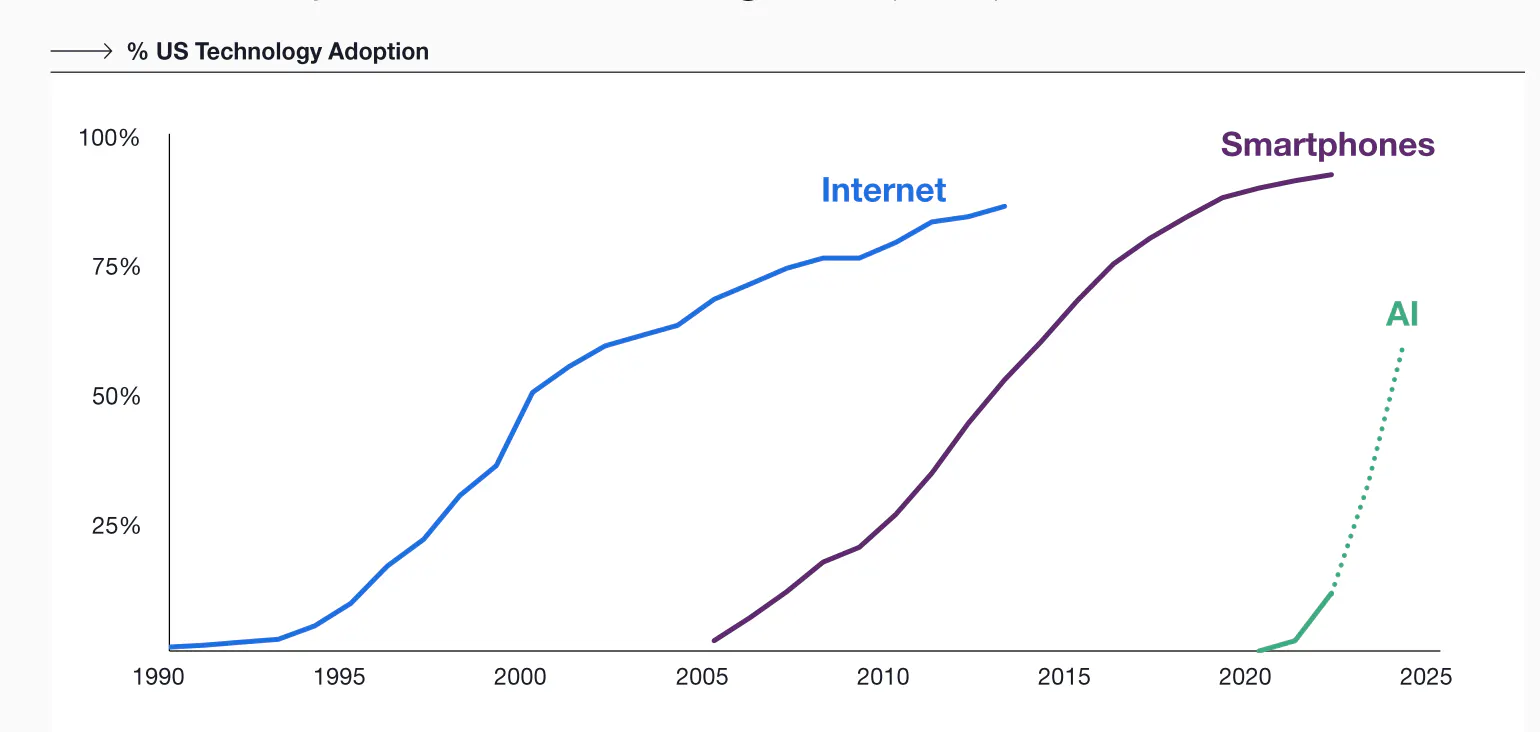
Similar to the waves within specific types of technology, there are also waves across particular industries. Often, the volatility in both asset prices and hype are counter-cyclical to when the most interesting work is done in a category. Coinbase was founded in 2012, but rode the hype waves of crypto in 2017 and 2021. OpenAI and Anduril were founded in 2015 and 2017 respectively, but are clearly riding waves of hype in AI and “American Dynamism” today.

Often, investors and talented people alike too frequently get caught up in tracking hype cycles, rather than cycles of technological progress. Think of the people who rebranded quite quickly from web3 in 2021 to AI in 2022. Instead, the most successful outcomes often occur in counter-cyclical periods of time.

Take one example of a potential wave that is, arguably, currently experiencing a downturn: biotech.

One of the best reflections of this is Illumina, a biotech company that operates in a broad swath of development and manufacturing to integrated systems across genetics and biology. The company’s market cap reached a high of ~$76 billion in 2021, before declining significantly over the last two years to ~$21 billion.
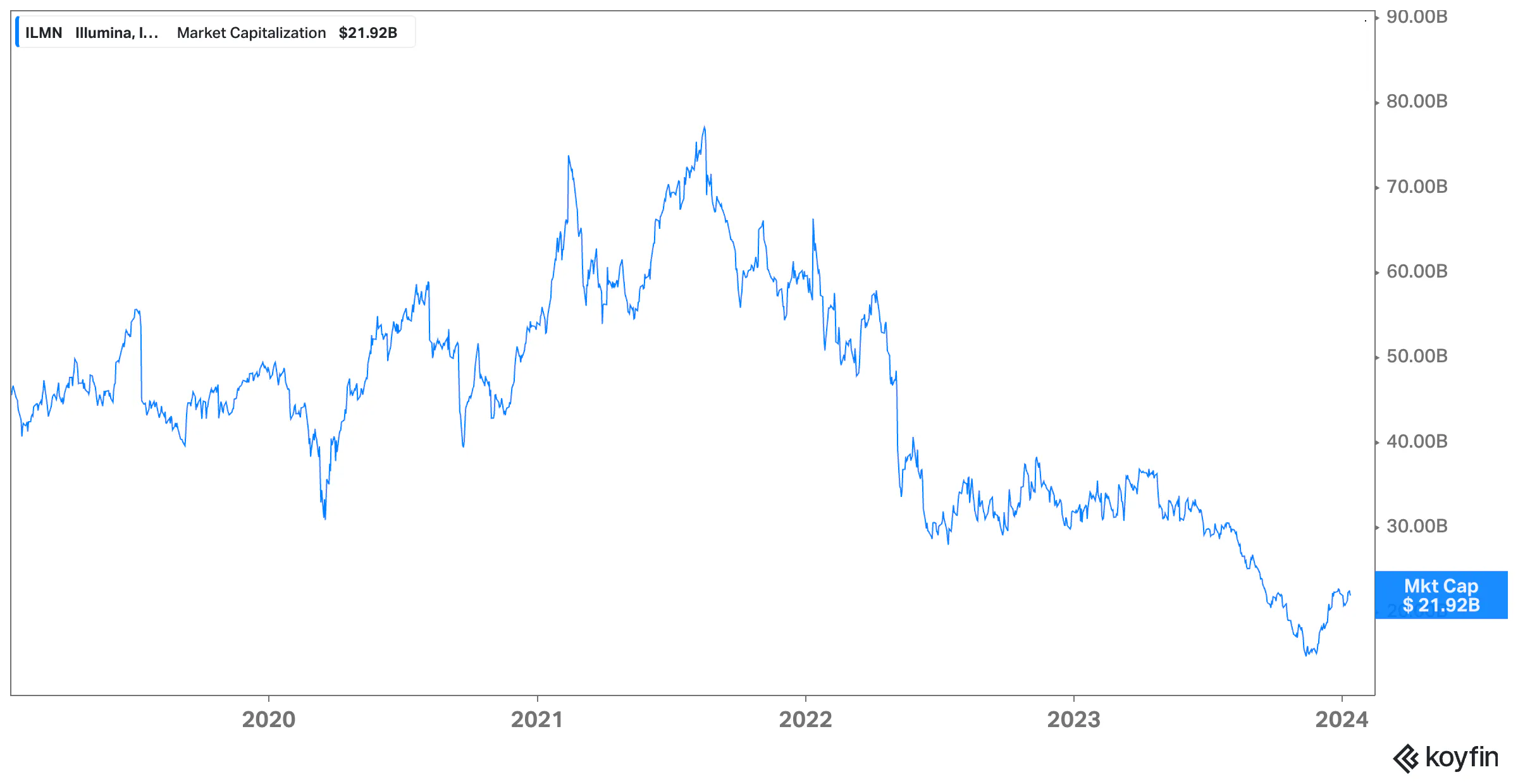
Despite the company’s performance, and the broader skepticism of the category, there are still significant opportunities arising in the category. Noah Smith describes it this way:

“We usually think of biotech as distinct from innovation in electrical and mechanical applications, but the two are beginning to merge. Computation is essential to modern drug discovery and chemistry in general, and AI looks like it’ll be another important tool. Meanwhile, biological experimentation is increasingly making use of robots in the lab.But the biotech revolution that’s unfolding right now isn’t just downstream of those other technologies — it’s the result of decades of massive work and deep-pocketed investment that’s now coming to fruition.MRNA vaccines, the heroes of the Covid pandemic, are now being applied to a ton of other diseases. A new mRNA vaccine for malaria promises to help conquer humanity’s most deadly chronic illness. And a new mRNA vaccine for pancreatic cancer — which you actually take as a therapy after you’re diagnosed, not before — promises to save a lot of lives from one of the deadliest cancers. Other cancers are probably also treatable this way.Another technology that’s just now coming to fruition is genetic engineering, especially via CRISPR. The FDA just approved a drug that actually goes in and reengineers the cells in a living human body to treat sickle cell anemia. Other such drugs are in the pipeline. Genetic engineering is also proving useful for modifying bacteria and other organisms for useful purposes, such as producing fuel or fighting cancer. Of course all of this is in addition to the potential for reengineering the human species itself, but that’s still on the horizon.A third major area of technology whose potential is still on the horizon, but could be realized in the near future, is synthetic biology. This year, scientists synthesized the DNA to make an artificial yeast cell. Synthetic biology could eventually be used to create all kinds of custom-built organisms to do various jobs.”

As powerful and attention grabbing as the latest hype cycle is, there is often more opportunities identifying those areas where fewer people are paying attention, but significant technological progress is being made. Even within AI, there are a myriad of use cases that aren’t getting the attention they deserve!

Important Disclosures

This material has been distributed solely for informational and educational purposes only and is not a solicitation or an offer to buy any security or to participate in any trading strategy. All material presented is compiled from sources believed to be reliable, but accuracy, adequacy, or completeness cannot be guaranteed, and Contrary LLC (Contrary LLC, together with its affiliates, “Contrary”) makes no representation as to its accuracy, adequacy, or completeness.

The information herein is based on Contrary beliefs, as well as certain assumptions regarding future events based on information available to Contrary on a formal and informal basis as of the date of this publication. The material may include projections or other forward-looking statements regarding future events, targets or expectations. Past performance of a company is no guarantee of future results. There is no guarantee that any opinions, forecasts, projections, risk assumptions, or commentary discussed herein will be realized. Actual experience may not reflect all of these opinions, forecasts, projections, risk assumptions, or commentary.

Contrary shall have no responsibility for: (i) determining that any opinions, forecasts, projections, risk assumptions, or commentary discussed herein is suitable for any particular reader; (ii) monitoring whether any opinions, forecasts, projections, risk assumptions, or commentary discussed herein continues to be suitable for any reader; or (iii) tailoring any opinions, forecasts, projections, risk assumptions, or commentary discussed herein to any particular reader’s objectives, guidelines, or restrictions. Receipt of this material does not, by itself, imply that Contrary has an advisory agreement, oral or otherwise, with any reader.

Contrary is registered with the Securities and Exchange Commission as an investment adviser under the Investment Advisers Act of 1940. The registration of Contrary in no way implies a certain level of skill or expertise or that the SEC has endorsed Contrary. Investment decisions for Contrary clients are made by Contrary. Please note that, although Contrary manages assets on behalf of Contrary clients, Contrary clients may take any position (whether positive or negative) with respect to the company described in this material. The information provided in this material does not represent any investment strategy that Contrary manages on behalf of, or recommends to, its clients.

Different types of investments involve varying degrees of risk, and there can be no assurance that the future performance of any specific investment, investment strategy, company or product made reference to directly or indirectly in this material, will be profitable, equal any corresponding indicated performance level(s), or be suitable for your portfolio. Due to rapidly changing market conditions and the complexity of investment decisions, supplemental information and other sources may be required to make informed investment decisions based on your individual investment objectives and suitability specifications. All expressions of opinions are subject to change without notice. Investors should seek financial advice regarding the appropriateness of investing in any security of the company discussed in this presentation.

Please see www.contrary.com/legal for additional important information.

Authors

Kyle Harrison

General Partner @ Contrary

Kyle leads Contrary’s investing efforts for companies from seed to scale. He’s previously worked at firms like Index and Coatue investing in companies like Databricks, Snowflake, Snyk, Plaid, Toast, and Persona.

See articles

© 2026 Contrary Research · All rights reserved

Privacy Policy

By navigating this website you agree to our privacy policy.

