Disclosure: Contrary was an early investor in Zepto through one or more affiliates. Materials included in this report include a mix of private conversations and public sources and do not constitute investment advice.
Thesis
The Indian economy, among the largest and fastest-growing on earth, is expected to grow 6.9% in 2026. For comparison, this is nearly three times as fast as the US, which is forecasted to grow 2.4% in 2026. India’s economic growth is likely to bring many Indians to online commerce for the first time in the coming decade. Hundreds of millions of Indians are expected to enter the ecommerce market by 2027, with the market growing at 25% to 30%.
In particular, Indian grocery delivery is growing even faster than ecommerce more broadly. Valued at $8.8 billion in 2024, it is expected to grow a further 45% from 2025 to 2030, driven by economic growth and rising internet penetration. Quick commerce is a subcategory of grocery delivery in which delivery occurs within an hour of a customer’s order. This is a fast-growing category, both globally and in India, where the quick commerce sector is projected to grow from $6 billion in sales as of 2025 to $100 billion by 2035.
Zepto* is a grocery and consumer-product rapid-delivery company founded on the idea that faster delivery could lead to better, rather than worse, unit economics. In other markets globally, rapid delivery from dark stores has been associated with high valuations and high burn rates. GoPuff in the US, Rappi in Latin America, Gorillas in Europe, Getir in the Middle East, and Airlift in Pakistan (which shut down) were all at some point valued at more than $5 billion, but have struggled to become profitable over the long run.
Zepto’s foundational idea is that faster fulfillment improves both customer retention and unit economics by increasing order density per store and labor efficiency per rider. To support this, the company has built a network of more than 1.1K dark stores across India’s largest cities as of 2026 and uses routing software and demand forecasting to keep average delivery times near 10 minutes.
Since 2022, Zepto has moved beyond groceries into pharmacy, prepared food through Zepto Café, and household goods, with each category designed to increase order frequency and store utilization. In 2025, the company also launched Zepto Atom, a subscription analytics tool for brands, and expanded its retail-media offering, adding higher-margin revenue streams alongside commerce. The model remains unproven at national scale, but Zepto’s expansion shows how rapid delivery can evolve from a single-product service into a broader platform for daily essentials.
Founding Story
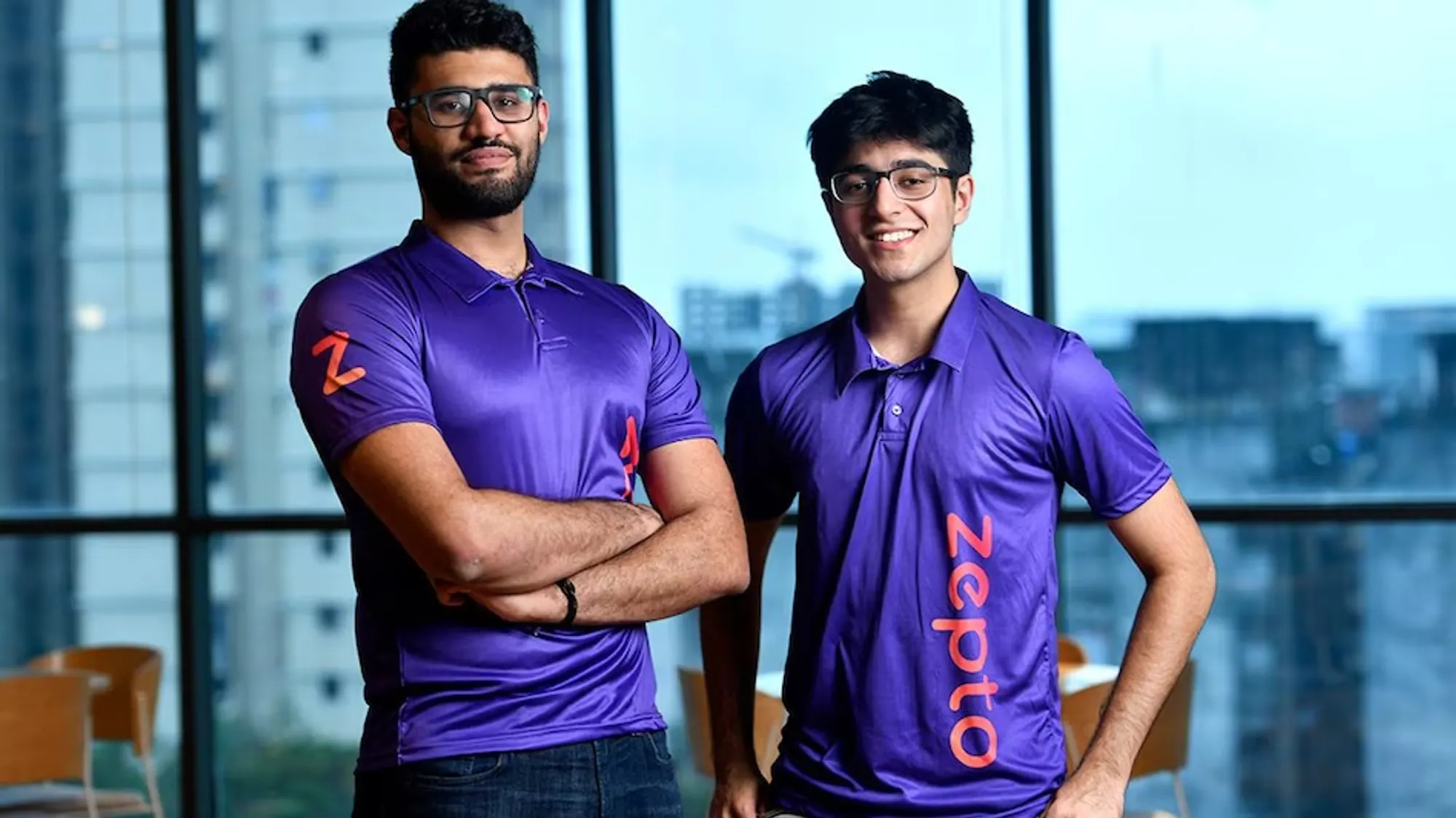
Aadit Palicha (CEO) and Kaivalya Vohra (CTO) founded Zepto in 2021. Childhood friends who grew up together in Dubai, the two were introduced to technology early through their engineer fathers. Both were fascinated by building products from a young age and often collaborated on small projects throughout their school years. By 17, they had launched GoPool, a ride-hailing app for schoolchildren.
As they prepared to graduate, Palicha and Vohra wanted to turn their shared hobby of building into a full-time career. Inspired by stories from Silicon Valley and the Y Combinator community, they applied to Stanford University as a pathway into the startup ecosystem and were both admitted, planning to enroll in 2020. When the COVID-19 pandemic forced classes online, they reconsidered the value of attending virtually and decided to take a gap year to build something instead.
While living in Mumbai during lockdown, they noticed the severe inefficiency of grocery delivery. Online platforms often took up to a week to deliver, and local “kirana” stores (the Hindi word for “grocery”) were unable to meet the growing demand. To help their community, they began informally delivering groceries to neighbors via a WhatsApp group, which quickly outgrew its capacity. Recognizing the demand, they built a simple app to coordinate orders and partnered with nearby kirana stores to fulfill them.
This project evolved into KiranaKart, launched in 2020 as a grocery pickup-and-drop platform. With early backing from Contrary, which provided ₹4 million (~$50K) in seed funding, the pair began manually onboarding local store owners across Mumbai. They handled every part of the business themselves, from customer support and order packing to delivery and sales. While running these experiments, the two began to worry that scaling such a model would be a serious challenge and might never lead to profitable margins, even at scale.
Source: Business Today
After receiving additional funding from Y Combinator and others, Palicha and Vohra noticed a trend in KiranaKart’s customer-retention rates. On average, KiranaKart delivered groceries within 45-60 minutes, but in some cases it completed a delivery in 10-15 minutes due to proximity. The two realized that engagement and retention among customers who received groceries in the 10-15 minute window were significantly higher than for customers with longer waits. In 2021, Vohra described the effect this had on the business:
“Simply put, customers love a rapid delivery experience. The data speaks for itself — once we started delivering in 10 minutes, our NPS shot up and has constantly remained at around 85 with a 50%+ week-on-week user retention rate, which shows the incredibly strong customer love for our product.”
The two founders therefore decided to stop working with kiranas, verticalize the entire operation to enable scalable rapid delivery, and re-launch as Zepto in April 2021. The company has since raised more than $2.6 billion in funding as of July 2026 and built a network of more than 1.1K micro-distribution centers across major cities in India, with tens of thousands of delivery drivers.
Product
Zepto’s business rests on four core products: the customer app, the dark-store network, Zepto Café, and Zepto Atom. The app is where customers browse, select items, and place orders, while dark stores are micro-warehouses that handle inventory and pack orders for delivery within short timeframes. Zepto Café extends the model into prepared food, operating dedicated kitchens inside select dark stores to deliver coffee, snacks, and meals within minutes. Zepto Atom serves brand partners, offering analytics on sales and demand patterns across the platform. Together, these connect customer experience, fulfillment operations, food delivery, and brand insights.
Zepto Platform
Source: Google Play
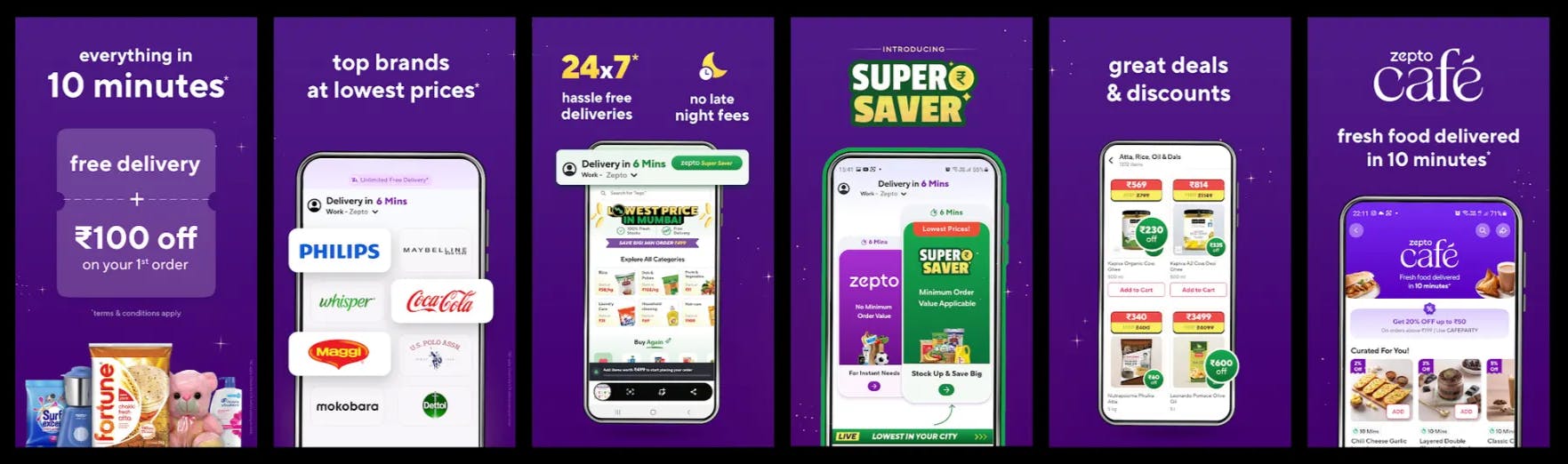
Zepto operates as a digital platform accessible via both its mobile app and website. Customers can browse categories such as fruits, vegetables, dairy, household essentials, and personal care, then place orders through either interface. Zepto also launched Zepto Pharmacy in August 2025, expanding its reach into medicine delivery.
Zepto has expanded its catalog to more than 45K products, covering groceries, beverages, personal care, and small electronics. To help users navigate this scale, Zepto applies personalized search ranking powered by deep-learning models. These systems re-rank search results based on customer cohorts and past behavior, surfacing frequently repurchased items and improving product discovery.
Orders are fulfilled entirely within the digital platform, allowing customers to track delivery progress in real time after checkout. Zepto originally built its brand on a 10-minute delivery promise, but it dropped the specific time-bound claim in January 2026, after a government order to instant-delivery platforms over rider safety.
Despite removing the "10-minute" tagline from its marketing, the company maintains a high-speed infrastructure; as of 2024, it reported a median delivery time of 11 minutes and an average distance of 1.5 kilometers from warehouse to front door. The app also incorporates membership features such as Zepto Pass, which offers delivery benefits and loyalty incentives that tie customers into the platform.
In November 2025, Zepto began piloting two new verticals to expand beyond grocery. Super Mall introduces higher-value categories such as home décor, electronics, and fashion into the app, using early discounts to gauge whether users will shift discretionary purchases to Zepto. It also began trialing Zepto Diagnostics, an at-home testing service within its Pharmacy category. Through a partnership with Orange Health Labs, users can book blood tests with 60-minute sample collection and a six-hour turnaround.
Dark Stores
Source: Zepto
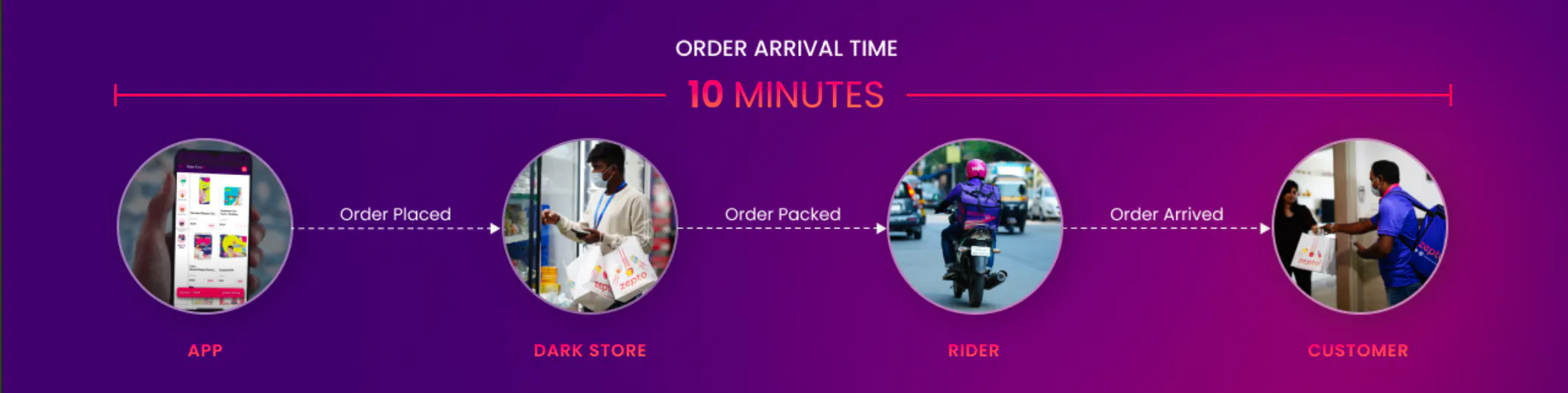
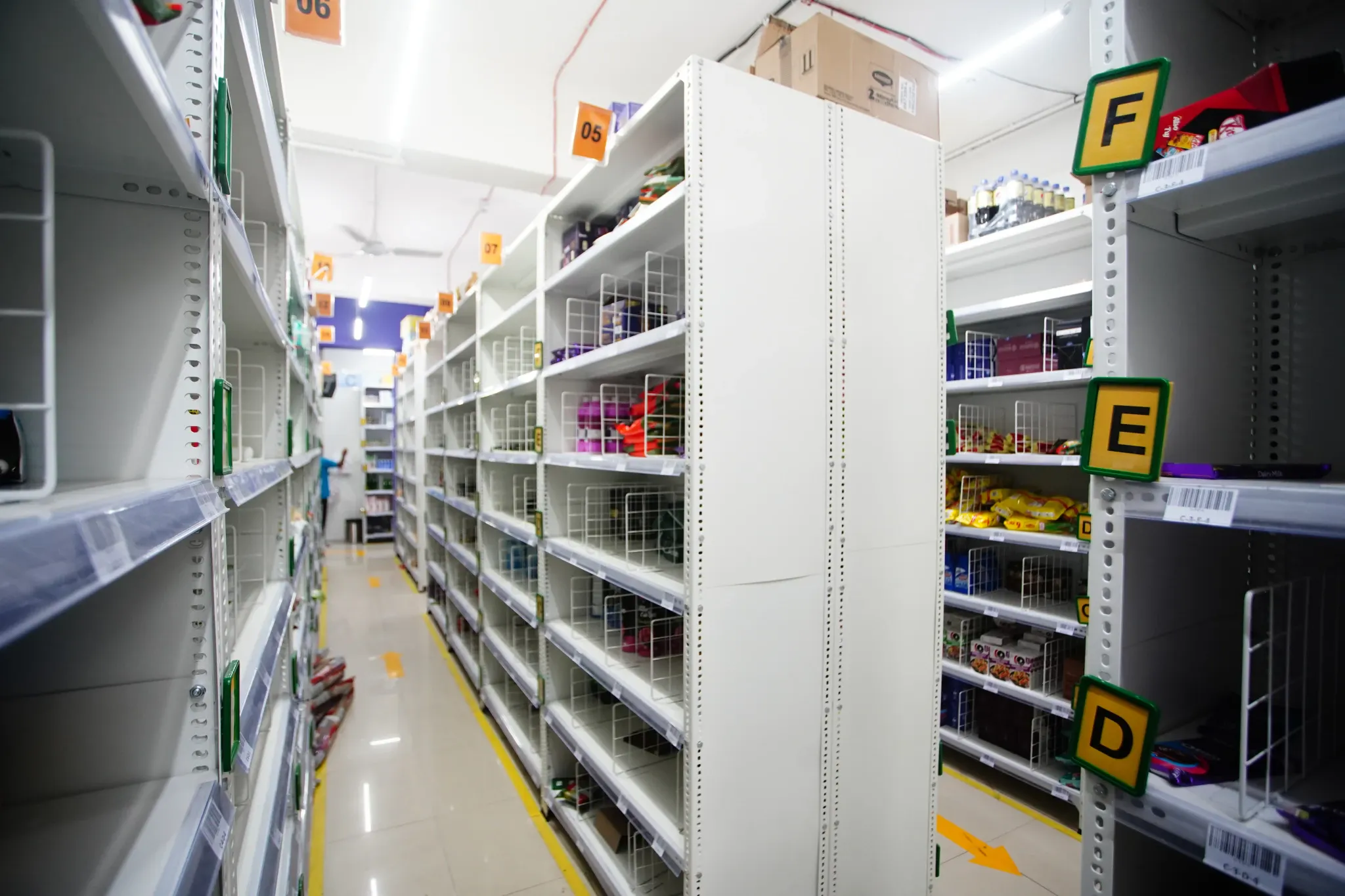
Dark stores are approximately 2.5K-3K square-foot micro-warehouses tightly packed with goods. Instead of serving customers directly, each site is staffed by employees who quickly pack goods for drivers to pick up. This lets Zepto assemble orders quickly and reduces front-of-house costs. In 2023, the cost to run dark stores was less than 10% of company revenue, and the average dark store could ship 2.5K orders per day.
Because a dark store needs less space than a normal storefront, Zepto can build a dense network of sites across a city, keeping delivery radii short. As of October 2025, Zepto operated in ten of India’s major urban centers, including Mumbai, Pune, Delhi, Noida, Gurgaon, Ghaziabad, Kolkata, Hyderabad, Chennai, and Bangalore, which covers seven of the country’s ten largest cities. To support this, Zepto has built over 1K dark stores, replenished as needed by larger mother-warehouses.
As consumer preferences vary from location to location, each dark store carries items specifically catered to the customers it serves. This hyper-local assortment improves turnover and reduces waste. The model also benefits drivers: since stores serve compact zones, couriers rarely finish their routes far from home, helping Zepto avoid excessive overtime and overpayment.
Operational technology has been central to the model's efficiency. Zepto deploys warehouse-management software that maps optimal picker paths, forecasts demand at the PIN-code level, and re-optimizes store layouts around fast-moving products. High order density and rapid turnover keep dark stores viable. While dark stores have occasionally been scrutinized for zoning or food-safety issues, Zepto has leaned on its technology to maintain speed and consistency.
Co-founder Aadit Palicha has described these in-house innovations as decisive in driving early traction:
“We don’t want our competition to know what is happening inside our dark store… We have optimized to a point that within 76 seconds of an order being placed, the order is packed and made ready for pickup. So, the tech we use is a trade secret, and we wouldn’t want anybody to get wind of it. The SOP is to not let anybody in. There are tighter aisles, and SKUs of frequently ordered products are accessible.”
Source: TechCrunch
Zepto Café
Zepto launched Zepto Café in April 2022, a private-label food-delivery service that delivers cafe-style items like coffee, snacks, and meals within 10 minutes. The cafe offers more than 140 items, including breakfast dishes, snacks, freshly brewed coffee, and pastries. Zepto Café was initially embedded within the broader Zepto app, but launched its own app in December 2024.
Zepto Café operates out of the same hyperlocal dark stores that power its grocery service, but with dedicated kitchen setups at select locations. These kitchens are equipped with speed ovens and coffee machines, allowing staff to prepare hot and cold beverages, snacks, and light meals on demand. Once ready, cafe items are dispatched alongside grocery orders.
Zepto Atom
Source: Zepto
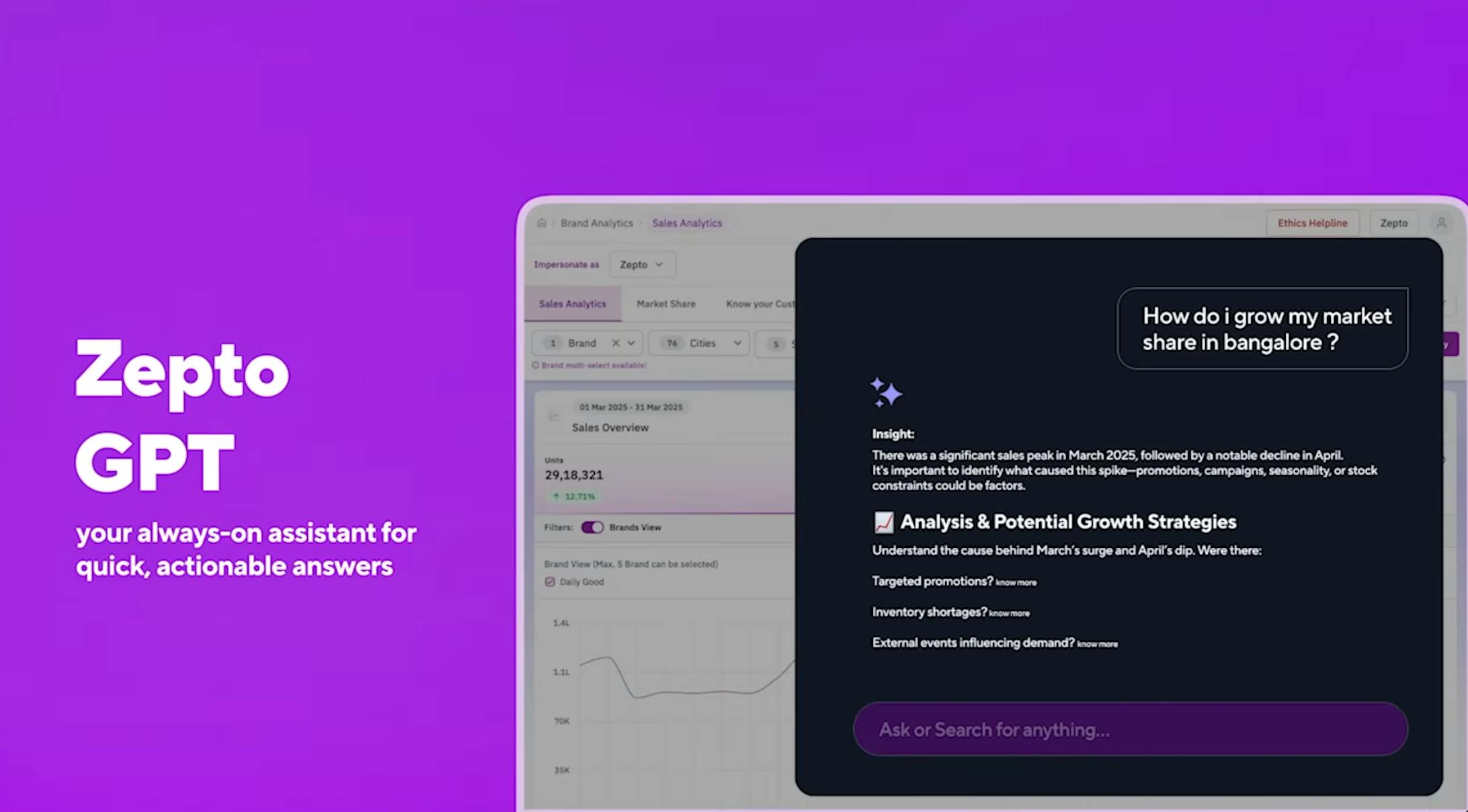
Zepto launched Zepto Atom in May 2025 as a subscription-based analytics platform for consumer brands that use its quick-commerce network. Atom gives brands visibility into sales and customer behavior at the PIN-code level, rather than broad city or regional averages. The platform provides real-time dashboards, updated every minute, on metrics such as units sold, impressions, and conversion rates.
Atom includes an AI-driven assistant, Zepto GPT, that lets brand managers query the system in natural language. Zepto GPT uses Atom’s datasets to generate recommendations and data reports. Brands can apply these insights to evaluate promotional campaigns and identify underperforming products by geography. For smaller and mid-sized brands without large analytics teams, Atom lowers the barrier to using granular performance data.
Market
Customer
As of July 2026, Zepto reported 48 million annual transacting users, up from 10.6 million annual users in 2024. In June 2025, it reportedly fulfilled 1.5 million daily orders, rising to an average of 2.3 million daily orders by the time of Zepto’s updated IPO filing in June 2026. Its customer base is concentrated in Tier 1 and Tier 2 cities such as Mumbai, Bengaluru, Delhi-NCR, and Hyderabad.
The majority of users fall between the ages of 20 and 40, with the 25-34 bracket accounting for 36% and the 18-24 bracket accounting for 29%. These groups include working professionals, students, and young couples who prioritize convenience in day-to-day purchases and tend to care most about price, which is why Zepto leans heavily on promotions and discounts. Men represent 64% of the customer base and women 36%. Customers skew mid- to high-income and mobile-first, and usage patterns show high repeat activity, supported by loyalty programs and in-app personalization. These traits have led Zepto to focus on an app that is easy to use across demographics, with consistent delivery times and competitive pricing.
Market Size
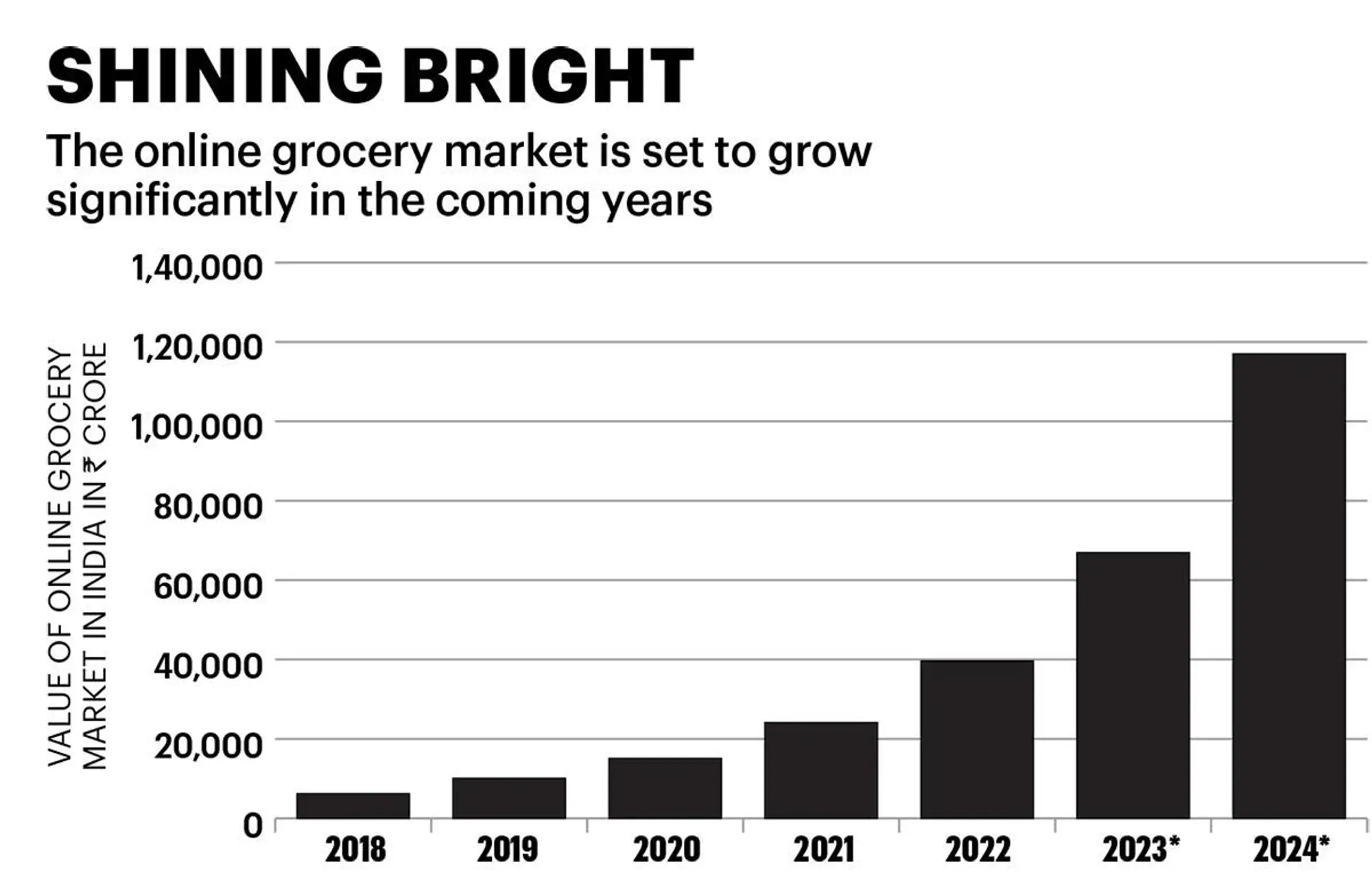
India’s quick-commerce sector, estimated at $6 billion in 2025, is expected to scale to roughly $100 billion by 2035. That would make quick commerce close to one-fifth of the country’s total ecommerce market, up from about 5% as of August 2025.
Quick-commerce gross merchandise value (GMV) in India rose from $1.5 billion in 2022 to an estimated $6-7 billion in 2024. It continued to grow, reaching an estimated $10-11 billion by 2026, supported by more than 20 million annual active shoppers and a workforce exceeding 400K as of March 2025. As a result, quick commerce accounted for 70% to 75% of e-grocery GMV in 2024, up from about 35% in 2022.
Source: Business Today
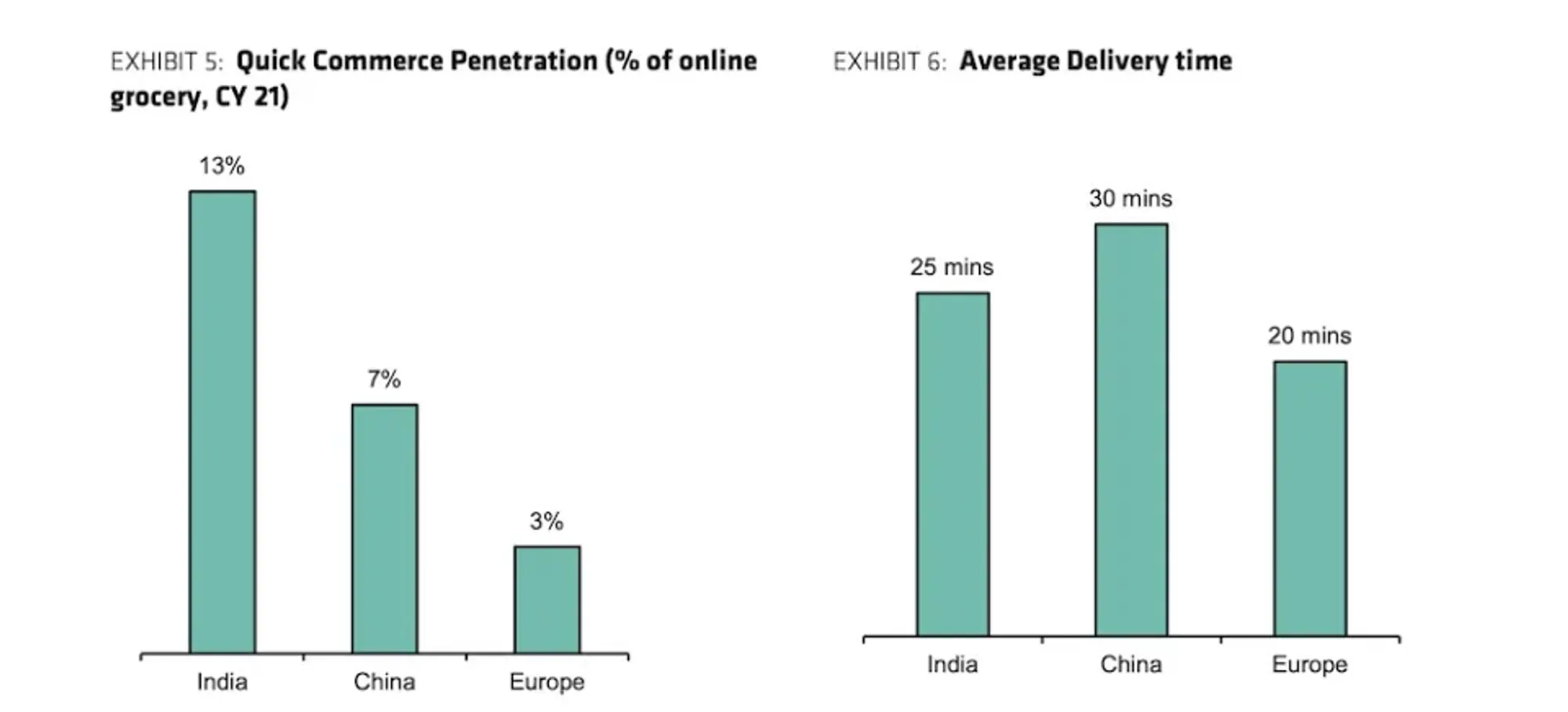
Indian consumers have embraced quick delivery faster than consumers in other regions. In May 2022, the share of grocery delivery in India attributed to quick delivery was nearly 2x that of China and more than 4x that of Europe. India’s outperformance over China reflects two advantages: a population density in its top eight cities that is 5x higher than China’s, and manpower costs that are 80% lower.
One concern in the Indian quick-commerce market has been its average order value (AOV), which was only $6 as of 2022. AOV reportedly increased by 40% between 2023 and 2025, and the company expects AOV to continue rising as customer stickiness improves.
Source: TechCrunch
Competition
India’s quick-commerce market is concentrated among a handful of players: independent category leaders like Zepto and platform-anchored players like Blinkit (part of Eternal, formerly Zomato) and Instamart (part of Swiggy), with legacy grocers like BigBasket and giants like Amazon pushing in from adjacent models. As of June 2026, Zepto had a network of 1.1K dark stores, compared to Blinkit’s 2.2K stores and Instamart’s 1.1K. Zepto processed 640 million orders in FY26, compared to Instamart’s 421 million.
Blinkit (Zomato): Founded in 2013 as “Grofers,” Blinkit has expanded to over 300 cities as of August 2026 and raised a total of $1.4 billion in funding from investors like Sequoia Capital, SoftBank, and Tiger Global before being acquired by restaurant-delivery company Zomato in June 2022 for $568 million. Blinkit aggregates inventory for rapid dispatch, similar to Zepto, but it originally partnered with neighborhood stores before pivoting to its own dark stores in 2021 due to quality issues. Its main differentiator is its integration with Zomato’s ecosystem, drawing on the parent’s food-delivery footprint, payments infrastructure, and brand recognition to push into daily essentials.
Instamart (Swiggy): Instamart, the quick-commerce arm of food-delivery company Swiggy, launched in 2020 to extend the platform’s reach into groceries and daily essentials. Like Zepto, it relies on a network of dark stores to achieve sub-20-minute delivery in over 127 urban markets as of August 2025. Swiggy raised $5.1 billion in total funding from backers such as Prosus, SoftBank, Accel, and Sequoia before going public in November 2024 at a $11.3 billion market cap, which has fallen to $7.7 billion as of August 2026. Instamart’s differentiation lies in being embedded within Swiggy’s larger ecosystem, which lets it cross-sell to existing food-delivery users and leverage a logistics network already built at scale. Zepto’s pure-play focus on dark-store density, rather than a platform extension, defines much of the competitive dynamic.
BigBasket: Founded in 2011, BigBasket is one of India’s largest online grocery platforms. Rather than pursuing under-10-minute fulfillment from the outset, it built around a broad assortment and scheduled delivery, and has stated a goal of completing 80% to 100% of orders within the same day. In 2021, Tata Digital acquired a majority stake and integrated BigBasket into the Tata Neu ecosystem. Since its founding, BigBasket has raised about $1.5 billion from investors including Alibaba, Bessemer, and Trifecta, as well as Tata, including a $200 million round in 2022 that valued it at about $3.2 billion. As of 2025, it served hundreds of towns across India while pivoting toward quick commerce through its own service, BB Now. It planned to expand its dark-store network from roughly 700 to between 1K and 1.2K by the end of 2025, marking a significant shift toward the ultra-fast models used by Zepto and Blinkit.
Amazon India: Amazon launched its Indian marketplace in June 2013 and built out localized logistics, returns, and seller tools for the market. It later expanded to faster delivery, trialing Amazon Now with 10-15-minute deliveries in Bengaluru and Delhi starting in December 2024. In June 2025, Amazon India launched Amazon Diagnostics under its Amazon Medical umbrella, an at-home lab-testing service in six cities offering over 800 tests, sample collection in under 60 minutes, and digital reports in as little as six hours, via a partnership with Orange Health Labs. That move mirrored Zepto’s launch of Zepto Diagnostics in November 2025, and shows how each large player is expanding into a broader set of products and services in the fight for India’s delivery market.
Business Model
Zepto’s business model combines quick-commerce grocery delivery with additional monetization streams aimed at both consumers and brands. The company operates on a freemium basis, with standard shopping and delivery free above a minimum order, while revenue comes from product margins, order fees, subscriptions, advertising, analytics, and commissions.
Zepto earns retail margin by buying inventory in bulk and reselling it, with higher contribution in private-label categories where it controls sourcing and pricing. On the consumer side, Zepto historically charged delivery fees for smaller baskets and during peak-demand windows, in addition to platform and handling surcharges. In November 2025, it removed handling and surge fees from all orders to simplify pricing and reduce friction for repeat purchases. It continues to monetize convenience through subscriptions: Zepto Daily (formerly Zepto Pass) offers free delivery on smaller baskets and exclusive deals, generating recurring revenue and reducing frequency-driven customer acquisition costs over time.
On the brand side, advertising has become a major revenue contributor, with brands paying for digital shelf-space such as promoted search placements and featured banners. Atom, Zepto’s subscription analytics tool, was priced at about $340 per month as of its May 2025 launch, or 0.5% of the subscriber’s GMV, whichever is higher. Atom adds a SaaS-style revenue stream with higher margins than commerce, and it increases brand partners’ reliance on the platform for decision-making.
Traction
Zepto has grown quickly in Indian quick commerce, with revenue reaching $1.3 billion (₹11,110 crore) in FY25, 2.5x its FY24 revenue and more than five times its FY23 figure of $230 million. In FY 26, it further increased revenue to $2.4 billion, with advertising revenue growing 151% year-over-year (to $171 million as of June 2026), outpacing overall revenue growth. As of July 2026, Zepto reported 48 million annual transacting users, up from 10.6 million annual users in 2024. In June 2025, it reportedly fulfilled 1.5 million daily orders, rising to an average of 2.3 million daily orders by the time of Zepto’s updated IPO filing in June 2026
However, Zepto continued to operate at a net loss of ₹59.1 billion (about $617.4 million) in FY26, compared with ₹47 billion (around $492.5 million) the prior year as the company spent aggressively to expand. Its per-order economics improved over the same stretch, though: adjusted EBITDA loss per order narrowed from about ₹136 (~$1.43) in FY25 to about ₹79 (~$0.83) in FY26, and management has guided toward EBITDA breakeven even as absolute losses continued to rise with expansion.
Zepto also expanded its sourcing and distribution network. It works with local vendors and brands, as well as partners such as Criteo, Park+, and Pescafresh, and sources directly from thousands of farmers through more than 70 collection centers, which, by mid-2025, supported daily sales of over 2.2 million units of fresh produce.
Despite strong top-line growth, Zepto initiated a company-wide restructuring and automation push to improve cost efficiency, laying off over 500 employees between April and October 2025, mostly in operations, support, and Zepto Café roles. The company attributed the cuts to an in-house automation drive to streamline functions such as replenishment and real estate management, though some on-roll employees were affected as expansion plans were paused to stabilize the balance sheet. The transition coincided with challenges at Zepto Café, which closed 45-50 outlets over sourcing and staffing issues, cutting order volumes in that vertical by roughly half from prior peaks.
Valuation
Zepto’s earlier rounds trace a steep climb. It raised a $100 million Series C in December 2021 at a $570 million valuation and a $200 million Series D in May 2022 at a $900 million valuation, both led by Y Combinator. In August 2023, it raised $231 million at a $1.4 billion valuation. Less than a year later, in June 2024, it secured a $665 million Series F at a $3.6 billion valuation, followed by $340 million in August 2024 that lifted it to $5 billion, and a further $350 million at a flat $5 billion in November 2024 from largely domestic investors. Notable backers include Contrary, Nexus Venture Partners, Glade Brook Capital, Lightspeed, and Avenir.
In October 2025, Zepto raised $450 million at a $7 billion valuation, with co-leads US pension fund CalPERS and General Catalyst, and existing backers including Avenir, Glade Brook, Lightspeed, and StepStone. Of that, $300 million was primary capital, with the remainder expanding the employee stock-option pool, and the round left the company with roughly $900 million in net cash ahead of a planned listing.
Zepto has since moved toward a public listing. It filed a confidential draft red herring prospectus with the Securities and Exchange Board of India in December 2025, received regulatory observations, and filed an updated prospectus in June 2026, including a fresh issue of ₹8,010 crore (about $920 million) and an offer for sale by early investors, including Contrary.
However, in August 2026, Zepto postponed its IPO plans with CEO Aadit Palicha informing employees in a town hall that the IPO would instead occur within two to three quarters of the originally targeted July 2026. It was also reported that Zepto would instead be pursuing a pre-IPO round of around $105 million, although the amount had not been finalized as of August 2026. Such a round would add to Zepto’s fundraising total of $2.6 billion.
Key Opportunities
Rapid Growth of Quick Commerce
India’s quick-commerce market has already grown from roughly $300 million in gross order value in 2021 to more than $7 billion in 2025, with projections that it could top $35 billion by 2030. This reflects a shift in consumer behavior, where “instant” is becoming the default expectation for groceries and household items. For Zepto, that trend translates into operating leverage. Dark stores incur fixed costs for rent and staff, so they become more profitable as daily orders rise: unit economics improve markedly once a store reaches 1K to 1.5K orders per day, with operating costs near $0.25 per order at scale.
Zepto’s dense metro footprint already positions it to benefit from that efficiency curve, and the next leg of growth comes from extending the model to Tier 2 and Tier 3 cities, where grocery-delivery penetration is still limited. The opportunity is in both revenue expansion and better margins as utilization increases.
Growth in Food and Pharmacy
Zepto has begun extending beyond groceries. Its food-delivery arm, Zepto Café, launched a standalone app in December 2024, and Zepto entered the online pharmacy segment with Zepto Pharmacy in August 2025, offering 10-minute medicine delivery in major metros including Delhi, Mumbai, Bengaluru, and Hyderabad. This category expansion diversifies Zepto’s delivery occasions and extends network utilization beyond grocery shopping.
Peer BigBasket, for example, planned to expand its dark-store footprint from 700 to between 1K and 1.2K stores to support a nationwide 10-minute food-delivery service, showing how quick-commerce players are broadening into higher-frequency categories. For Zepto, this deepens customer engagement by capturing more daily routines and unlocks new levers: higher baskets through ready-to-eat food and medicines, and better dark-store throughput as more products and order types share the same last-mile network.
New Revenue from Data and Advertising
Zepto is increasingly building a high-margin business not tied to delivery costs. Its Atom analytics suite turns first-party purchase data into subscription revenue for brands that need hyperlocal, real-time insights on pricing, promotions, and assortment, and Atom revenue scales with overall GMV rather than with delivery volume. On the advertising side, Zepto is rolling out an in-app retail media platform, referred to internally as “Jarvis,” with features such as keyword targeting, bid recommendations, and campaign automation. This follows a model already proven by larger ecommerce players, where retail media has become a major profit driver. Because ad impressions and spend increase with engagement rather than delivery volume, they create a separate high-margin stream alongside core commerce.
Key Risks
Inability to Reach Profitability Without Fees
India is home to one of the world’s fastest-growing economies and may become the third-largest by 2027, which should let more Indians afford services like grocery delivery. Even so, many of Zepto’s customers grew up in an extremely price-sensitive market, especially for food, and those habits are unlikely to disappear quickly.
To attract price-sensitive consumers, Zepto relies on ongoing promotions to activate users and build loyalty, and it has introduced a small delivery fee in some markets. Customers may still seek alternatives that charge no fee, and price competition in a crowded market could exert downward pressure on margins. How much margin Zepto can preserve after logistics and delivery costs remains an open question, and its November 2025 removal of handling and surge fees only sharpens it.
High-Risk Business Model
Zepto’s model requires a tight timeline from the production of goods to delivery at a customer’s doorstep. Many steps must go right for an order to be completed in minutes without errors or stockouts while still leaving Zepto a small profit. Dark stores cannot be large warehouses, or picking would take too long. Inventory must be replenished constantly, and any breakdown in supplier relations leaves little time to find alternatives. The model has worked for several years of refinement, but as Zepto scales, it carries additional risk, and the delivery window has little room to shrink further.
The obstacles other companies in this category have faced globally underscore the point. Airlift, a similar rapid-delivery business in Pakistan, shut down, and both Getir and Gopuff went through significant layoffs. Each market is different, and Zepto has found success through meticulous operating procedures and a focus on India’s densest cities, but the fundamental business-model risks remain.
Regulatory Pressure
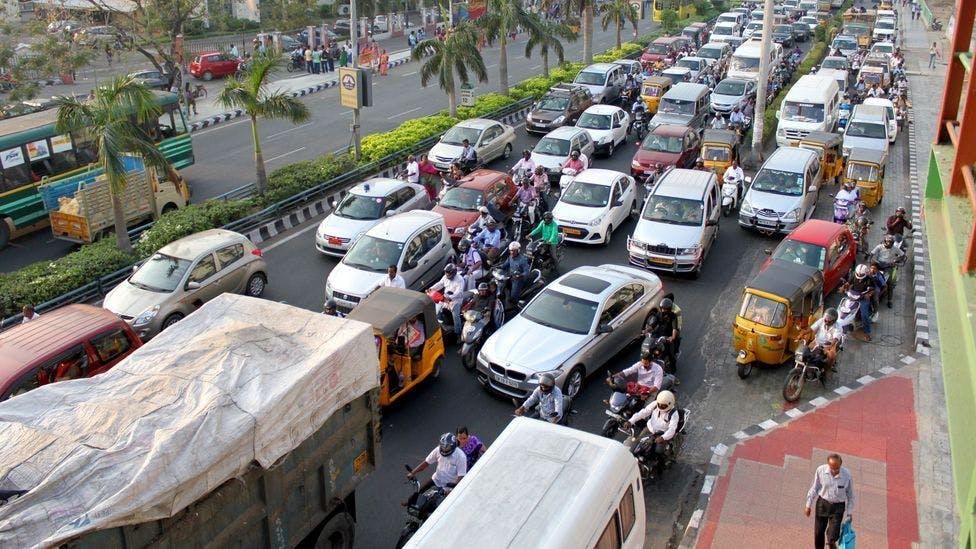
As India’s economy grows, so does the scrutiny on how quick commerce operates. Many of the country’s cities are built on old infrastructure with dangerous roads, and delivery riders working against tight deadlines add risk. In January 2026, the government ordered instant-delivery platforms, including Zepto, to drop fixed 10-minute delivery promises due to rider safety concerns, and a Blinkit rider said they feared for their life during deliveries.
Source: BBC
Automotive accidents kill 150K people per year in India, and rushed delivery riders add to that toll. Further safety rules or delivery-time caps would fall directly on the speed advantage Zepto’s model is built around, forcing it to compete more on reliability and selection than on raw delivery time.
Other regulatory challenges that the companies may increasingly face include consumer practices and food safety. India’s Central Consumer Protection Authority (CCPA) took action in August 2026 against nine digital platforms, including Zepto, for using “deceptive online practices”. Of the companies penalized, Zepto received the highest fine of just ~$7.3K. The same month, a Zepto warehouse in Bengaluru was raided and sealed by Karnataka’s Food Safety and Drug Administration after an inspection found unhygienic conditions. At the same time, a Blinkit facility had its license suspended in Mumbai following a similar inspection.
Summary
Zepto turned a lockdown experiment into a new model for Indian retail. Its founders saw early that delivery speed could change customer behavior, and built the company around vertical integration and a dense network of dark stores to make rapid delivery reliable. Over time, Zepto layered on categories like food and pharmacy to raise order frequency, and added Atom and retail media to monetize the traffic and data flowing through the platform. The trajectory shows both the promise and the fragility of quick commerce: operating leverage grows as density increases, but profitability hinges on balancing thin consumer margins, operational precision, and an evolving regulatory environment. Zepto’s future depends on whether it can scale this model while keeping both consumers and brands engaged and costs under control.
*Contrary is an investor in Zepto through one or more affiliates.


