Thesis
Short-form video, social commerce, and AI-driven content feeds have become core consumer internet primitives globally. Global short-form video app usage reached 3.5 billion monthly active users in 2023, with the average user spending 52 minutes per day on these platforms. Digital ad spend continues to shift toward mobile, video, and creator-driven formats as of 2024. The rapid growth of short-form video usage and time spent on apps like TikTok and Douyin accelerated from 2023 to 2025, with TikTok's global monthly active users growing from 639 million in 2020 to more than 1 billion by 2024.
In parallel with this, the creator economy has expanded significantly, with its global size estimated at $104 billion in 2021 and projected to reach $480 billion by 2027. Compounding this, the rise of social commerce in China has been profound, with Douyin ecommerce reaching about RMB 490 billion (approximately $69 billion) gross merchandise value in 2024. This made Douyin China's third-largest e-tailer, or online retailer selling goods directly to consumers, behind Alibaba and Pinduoduo. Aggressive adoption of AI assistants and models like Doubao in China accelerated through 2024 and early 2025, with Doubao reaching about 16.4 trillion daily token calls and over 150 million monthly active users by May 2025.
ByteDance is a Chinese technology company best known for developing and operating TikTok and Douyin, along with a portfolio of AI-driven content platforms. The company specializes in algorithmic content recommendation, powering short-form video, news aggregation, and social media products. Its multi-app portfolio includes TikTok, Douyin, Toutiao, CapCut, Lemon8, and Doubao, all powered by shared recommendation, ad, and AI infrastructure.
Douyin, ByteDance's Chinese platform, leads the country's short-form video and social commerce markets. ByteDance is also rapidly scaling TikTok Shop in Southeast Asia and other markets. By 2026, ByteDance had become the largest global social media conglomerate by revenue, surpassing Meta. The company reported about $43 billion in revenue in Q1 2025, more than Meta's roughly $42.3 billion that quarter.
On January 22, 2026, TikTok and US authorities closed a deal establishing TikTok US Data Security Joint Venture LLC, with US and allied investors owning about 80.1% and ByteDance retaining about 19.9%. This structure removes the immediate risk of a US ban but leaves ByteDance with minority economics and a licensed algorithm relationship, not full operational control. ByteDance retains full control of TikTok operations in all markets outside the United States.
ByteDance has built one of the most powerful attention and monetization engines in the world, compounding in ads, commerce, and AI. However, its long-term value realization hinges on managing geopolitical and regulatory constraints, sustaining AI and commerce execution, and defending share against Meta, Alphabet, and Chinese peers while navigating the partial loss of U.S. operational control.
Founding Story
ByteDance was founded in Beijing in 2012 by Zhang Yiming (former CEO), with early co-founding contributions from Liang Rubo and others. Zhang and Liang met while working at Kuxun, a Chinese travel search platform. Before founding ByteDance, Zhang left Kuxun to found Fanfou, a Twitter-like microblogging service that was shut down by Chinese authorities in 2009 for its use during the Ürümqi Uprising. He then founded 99fang, a real estate search platform. These early ventures gave Zhang experience in building consumer internet products and understanding the Chinese regulatory environment.
The founding thesis focused on using machine-learning recommendations to deliver personalized content on smartphones, initially for news and humor. Zhang observed that most news apps at the time were editorially curated, which limited their ability to serve personalized content at scale. He believed that algorithm-driven personalization could create a more engaging user experience by matching content to individual preferences rather than relying on editors to choose what millions of users should see. This insight would become the foundation for all of ByteDance's products.
Neihan Duanzi, a humor app focused on user‑generated jokes and memes, was one of ByteDance’s first breakout hits, growing to over 17 million monthly users by mid‑2017 and peaking at roughly 200 million registered users. However, it was shut down in 2018 after regulatory scrutiny from Chinese authorities, who deemed some content inappropriate and vulgar. The shutdown was a significant setback, but it also taught ByteDance important lessons about content moderation and regulatory compliance that would inform its approach to managing TikTok and Douyin.
Toutiao, launched in 2012, became ByteDance's first major success and proved out the company's feed-based recommendation and ad monetization model. The personalized news app used machine learning to analyze user behavior and deliver highly relevant content, creating an addictive user experience. Toutiao quickly gained traction by delivering content that users actually wanted to read rather than what editors thought they should read, reaching 1 million active users within its first year. The app's success validated Zhang's thesis about algorithm-driven content distribution and provided the revenue foundation for ByteDance to invest in new product categories.
ByteDance expanded into short-form video with Douyin in China in 2016, followed by TikTok for international markets in 2017. The short-form video format proved to be far more engaging than text-based content, with users spending significantly more time on the platform. ByteDance applied the same algorithmic recommendation approach from Toutiao to video content, creating highly personalized For You feeds that kept users scrolling for hours.
ByteDance received early institutional backing from US trading firm Susquehanna International Group in the form of a $5 million Series A in 2012. By 2014, it had raised $100 million in Series C funding led by Sequoia China, followed by a $3 billion round in 2018 at a $75 billion valuation and additional rounds that pushed its valuation above $100 billion by 2020.
ByteDance acquired Musical.ly in November 2017 for approximately $1 billion and merged it into TikTok in 2018. Musical.ly had already established a strong presence among Gen Z users in the US, with 60 million monthly active users at the time of acquisition. The acquisition gave TikTok an instant user base in Western markets and accelerated its growth trajectory. TikTok's global user growth further accelerated during the COVID-19 pandemic.
Zhang stepped down as CEO in 2021, with Liang succeeding him, while Zhang focused on long-term strategy and remained a key shareholder. Zhang's decision to step back came amid increasing regulatory pressure in China and geopolitical tensions around TikTok in the U.S. and other Western markets. As of early 2026, ByteDance remains privately held with a mix of Chinese and global investors, including HSG (formerly Sequoia China), Capital Today, and others participating in continuation vehicles and secondary transactions.
In January 2026, TikTok USDS Joint Venture LLC was formed to own and operate the US TikTok business, thereby satisfying the requirements of the 2024 Protecting Americans from Foreign Adversary Controlled Applications Act. The US and allied investors own about 80.1% of the joint venture, including Oracle, Silver Lake, and MGX, each with about 15%, and additional US investors such as Michael Dell’s family office and Vastmere holding the remaining roughly 35.1%.
ByteDance retains about 19.9% of the U.S. entity but is stripped of operational and governance control. The joint venture has a seven-member board, with a majority of American citizens approved by US authorities. Shou Chew, a Singaporean national who had been CEO of TikTok since 2021, remained CEO of TikTok global and remained on the board, while Adam Presser, formerly TikTok's head of operations and trust and safety, became CEO of the US joint venture.
Product
ByteDance operates a multi-app portfolio including Douyin (China short-form video and commerce), TikTok (international short-form video), Toutiao (news), CapCut (video editing), Lemon8 (lifestyle content), and Doubao (AI assistant), along with various niche and hardware-integrated products.
These apps are powered by shared recommendation systems, ad platforms, moderation tools, AI models, and, increasingly, hardware integrations. This shared infrastructure allows ByteDance to rapidly test new features across its portfolio and to leverage data from one app to improve others, creating a flywheel effect in which each product strengthens the others. ByteDance's ability to repurpose core technology across geographies and use cases has made its portfolio unusually defensible, as improvements to the recommendation engine or ad system compound across every surface simultaneously
TikTok
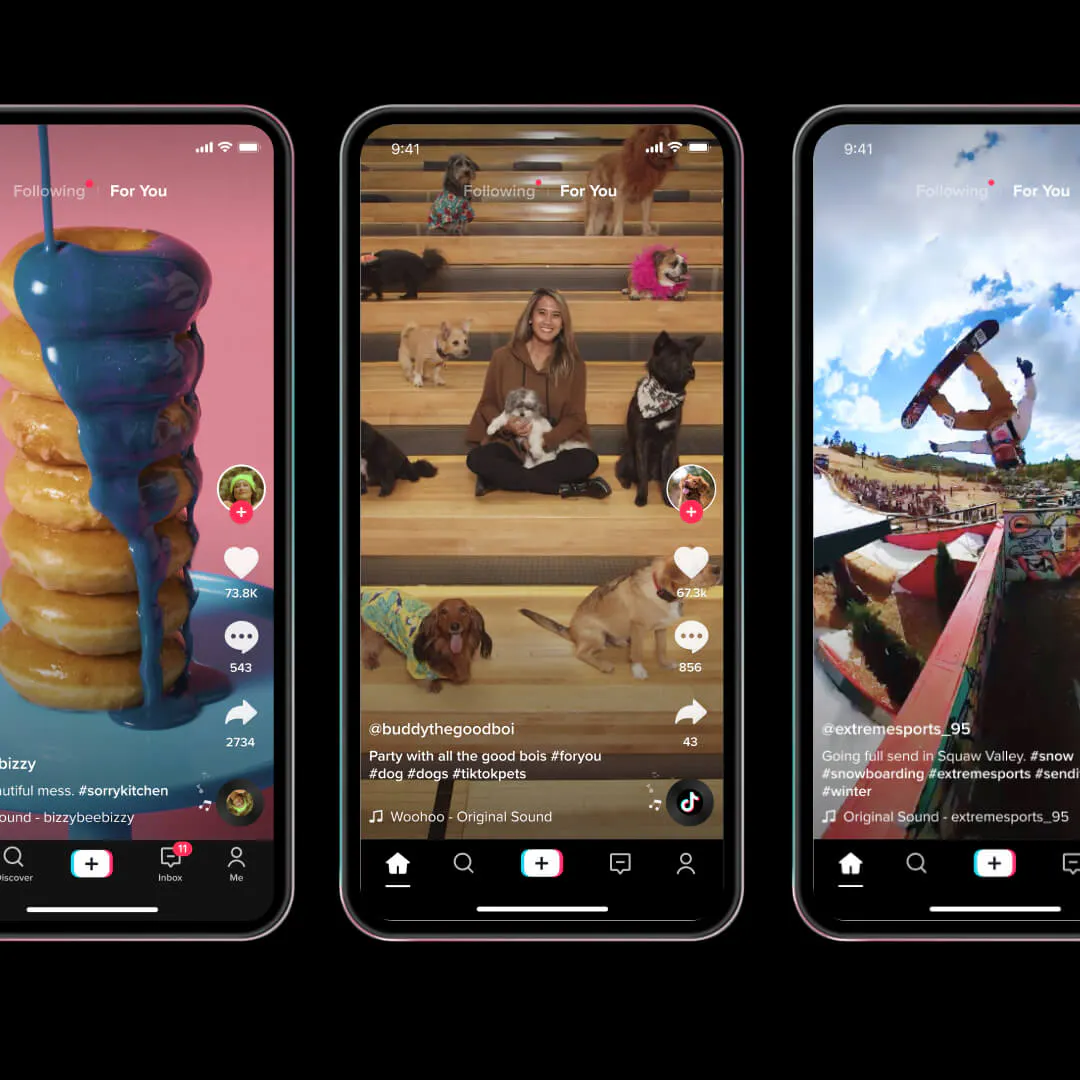
TikTok is a short-form vertical video app for international markets with algorithmic “For You” and “Following” feeds, search, live streaming, and creator tools. The For You feed uses ByteDance's recommendation algorithm to surface content based on user behavior, including watch time, likes, shares, and comments, creating a highly personalized experience that keeps users engaged for extended periods.
Unlike traditional social media platforms that primarily show content from accounts users follow, TikTok's For You feed surfaces content from creators users have never encountered, enabling rapid viral growth and discovery. This democratization of reach has made TikTok particularly attractive to emerging creators, brands, and small businesses that would otherwise struggle to build audiences on follower-dependent platforms like Instagram or YouTube.
Source: TikTok
Monetization methods include in-feed ads, branded effects, live gifts, and TikTok Shop in supported markets. In-feed ads appear between organic content in users' For You feeds, while branded effects allow companies to create custom filters and AR experiences that users can apply to their videos. Live gifts enable viewers to purchase virtual items to tip creators during live streams, with TikTok taking a commission.
TikTok Shop
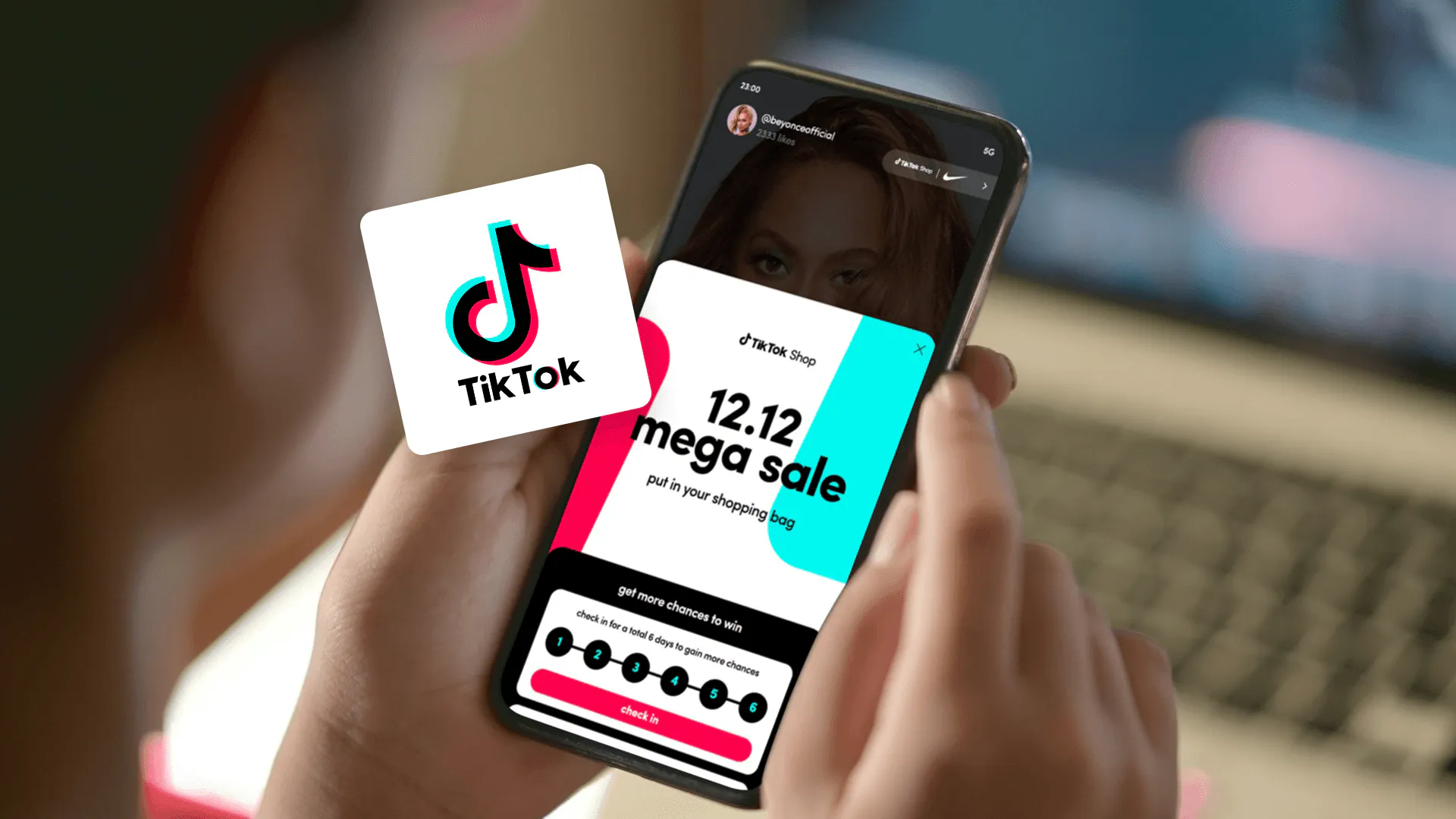
TikTok Shop, which launched in select Southeast Asian markets in 2021 and expanded to other regions, allows merchants to sell products directly within the app through product showcases, live shopping, and creator partnerships. TikTok Shop has grown rapidly in the US and UK, with ByteDance investing heavily in fulfillment infrastructure, seller incentives, and creator affiliate programs to replicate the social commerce success Douyin achieved in China. Average order values and repeat purchase rates remain a focus area, as the platform works to shift consumer perception from impulse-buy destination to trusted retail channel.
Source: ChannelEngine
Under the US restructuring, TikTok USDS licenses the core recommendation algorithm from ByteDance and retrains the code entirely on US data to produce a technically distinct For You feed. Oracle is the exclusive cloud and security provider for US TikTok, hosting US user data and performing continuous source-code review and security validation.
A former cyber defense responder at ByteDance estimated that the Oracle arrangement costs several hundred million dollars annually to run, covering compute, storage, databases, and zero-trust security. Experts note that while the structure satisfies near-term requirements, some legal advisors still view it as a potential fake divestiture risk if political attitudes shift, as ByteDance maintains significant economic interest and continues to provide the core algorithmic technology. The arrangement also introduces operational complexity, as any future algorithmic improvements developed by ByteDance must be relicensed and retrained domestically before they can be deployed to US users, potentially creating a lag in feature parity relative to Douyin.
Douyin
Douyin is a China-only app with vertical video, live streaming, in-feed commerce, mini-programs, and local services surfaces. The app has become the dominant social commerce platform in China, integrating shopping directly into the content feed in a way that Western platforms have struggled to replicate. Users can browse products, watch live shopping sessions, and complete purchases without ever leaving the app. Douyin ecommerce reached about RMB 490 billion (approximately $69 billion) GMV in 2024, surpassing JD.com and trailing only Alibaba and Pinduoduo in China, making it the third-largest e-tailer, or online retailer selling goods directly to consumers, in the country.
GMV in categories like cosmetics grew about 19% year-on-year to roughly RMB 187.4 billion in 2024, far ahead of JD.com's roughly 7% growth. Douyin has merged supermarket and hourly-delivery services to compete in an instant-retail market estimated at about RMB 279 billion. This puts Douyin in direct competition with dedicated delivery platforms like Meituan and ele.me, leveraging its user base and recommendation engine to drive local commerce. Douyin's advantage in this competition is that it can drive discovery demand at the top of the funnel through entertainment content and then fulfill that demand within the same session, a closed-loop that pure delivery platforms cannot replicate. The platform has also expanded into travel and local experiences, allowing hotels, restaurants, and attractions to sell vouchers directly through the app, encroaching on platforms like Meituan and Ctrip.
Toutiao
Toutiao is a personalized news and content aggregator using AI to recommend articles and videos based on user behavior. The app pioneered ByteDance's approach to content recommendation, which would later be applied to TikTok and Douyin. Toutiao continues to generate ad revenue and feed data into ByteDance's recommendation and ad systems. The app remains popular in China with over 410 million monthly active users as of 2024, though its growth has slowed as users shift more time to short-form video on Douyin.
Despite this maturation, Toutiao retains strategic value as a text-and-article surface that serves older demographics and professional audiences less well-served by video-first feeds. ByteDance has increasingly integrated Doubao's AI capabilities into Toutiao to offer summarization, personalized briefings, and AI-generated commentary, attempting to reposition the app as an AI-native information product rather than a legacy aggregator.
CapCut
CapCut is a video editing app with multi-track editing, templates, effects, and AI-assisted tools, tightly integrated into TikTok and Douyin creation workflows. The app allows users to create professional-looking videos with minimal effort, using features like automatic captions, background removal, and AI-generated effects. CapCut is critical to lowering the friction and cost of producing platform-native video and short-form ads.
The app reached over 300 million monthly active users globally by mid-2024. By providing free, easy-to-use editing tools, ByteDance effectively subsidizes content creation for its platforms, ensuring a steady supply of high-quality videos. CapCut has increasingly positioned itself as a competitive threat to Adobe's Premiere Rush and Canva, targeting small business owners and marketing teams that need fast, professional content at low cost.
The addition of generative AI features, including script-to-video, AI avatars powered by OmniHuman, and automated ad creative generation, is accelerating CapCut's expansion from a consumer editing tool into a full-stack creative production platform. CapCut's deep integration with TikTok Shop ad formats creates a strong value proposition for merchants who can produce, edit, and publish shoppable content within a single ecosystem.

Source: Miracamp
Lemon8 & Other Apps
Lifestyle and interest-based apps like Lemon8 focus on categories such as fashion, beauty, and home, using image- and video-centric feeds. Lemon8 combines elements of Pinterest and Instagram, targeting a demographic interested in curated lifestyle content. These apps provide additional surfaces for brand content and cross-promotion across the ByteDance ecosystem. While smaller in scale than TikTok or Douyin, these apps allow ByteDance to experiment with different content formats and monetization models.
Lemon8 saw a notable surge in US downloads during periods of TikTok uncertainty, as ByteDance pushed the app as an alternative destination for displaced creators and audiences. The app's emphasis on longer-form, aesthetically polished posts differentiates it from TikTok's algorithmic spontaneity and could serve as a hedge if short-form video regulation intensifies. ByteDance has also maintained a portfolio of B2B-facing and regional apps, including the enterprise collaboration tool Lark, which competes with Slack and Notion in Southeast Asia and serves as an internal operating system for ByteDance's own global workforce.
Doubao & AI products
The Doubao LLM family powers consumer assistant experiences and enterprise scenarios, with daily token calls reaching about 16.4 trillion by May 2025, a roughly 137-fold increase year-on-year. The Doubao chatbot had over 150 million monthly active users by mid-2025, making it one of China's most widely used AI assistants, competing directly with offerings from Alibaba, Tencent, and Baidu. The Seed-OSS-36B model serves as an open-source foundation with about 36 billion parameters and competitive benchmark performance against models like Llama and Mistral. ByteDance's open-source strategy mirrors the approach taken by Meta with its Llama series, using open releases to build developer mindshare, accelerate third-party fine-tuning, and establish Doubao's model family as an industry standard in the Chinese AI ecosystem.
Version 1.6 of Doubao reportedly reduced the blended cost per token by about 63% compared with version 1.5 and rivals like DeepSeek R1, giving ByteDance a significant cost advantage in AI inference. This cost reduction enables ByteDance to offer AI services at lower prices than competitors, potentially driving adoption across consumer and enterprise use cases. With 16.4 trillion daily token calls, even marginal per-token cost reductions translate into hundreds of millions of dollars in annualized savings, which ByteDance can reinvest into model quality, context length expansion, and multimodal capabilities.
ByteDance has also developed video and image generation tools, including Seedance for video, OmniHuman for photorealistic human avatars, and Jimeng for imaging. These tools are being integrated into ByteDance's content creation apps to help users generate AI-powered content, and are increasingly being integrated into enterprise offerings that allow brands to produce synthetic spokespersons, localized ad creative, and AI-hosted live shopping sessions at a fraction of traditional production costs.
Source: South China Morning Post
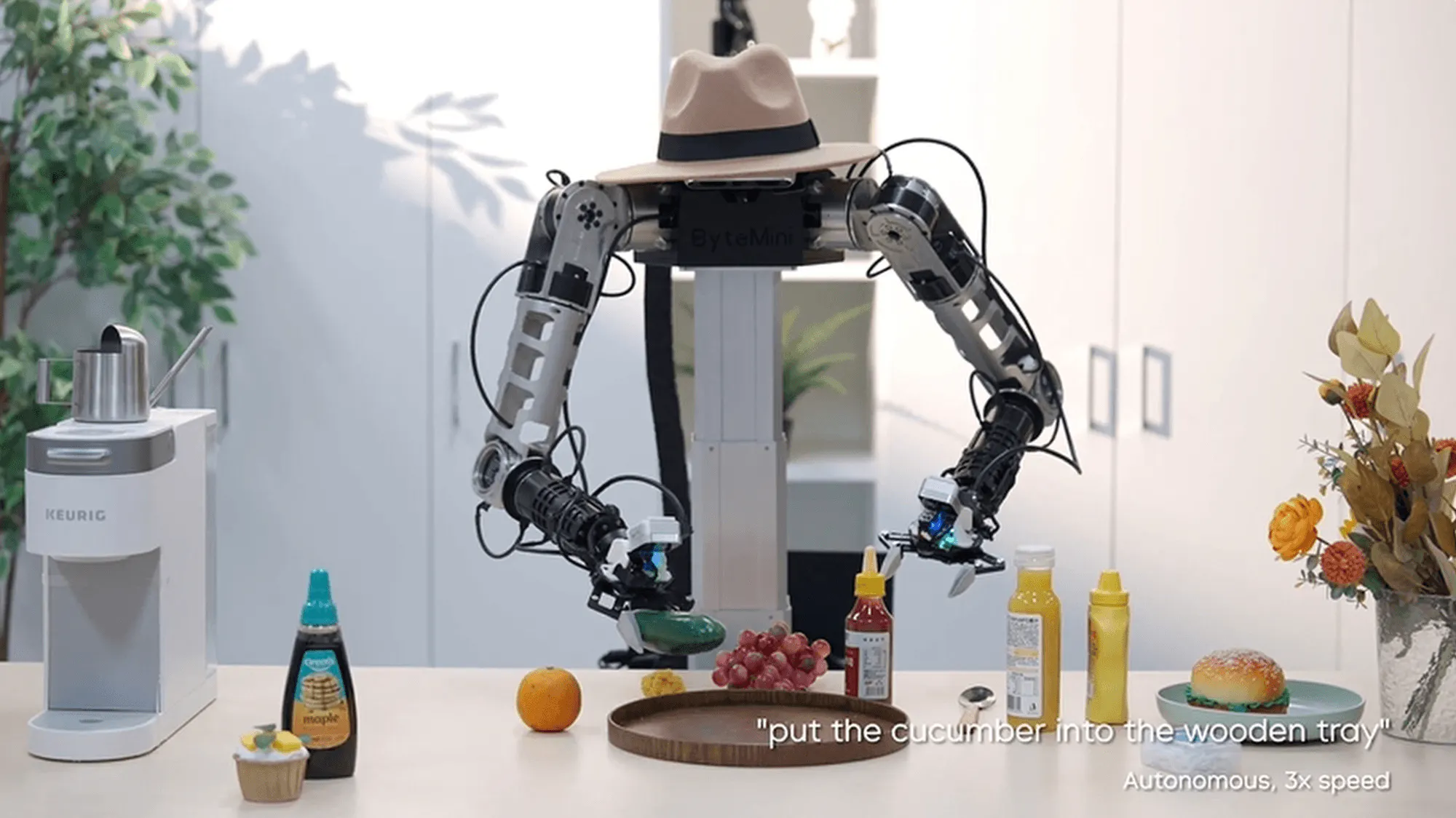
In robotics, ByteDance has developed the GR-3 vision-language-action model and the ByteMini bimanual robots, which perform tasks such as folding laundry and assisting with internal warehouse operations. Hardware integrations include a Doubao-integrated smartphone (ZTE Nubia M153) as an AI-native device and Ola Friend smart headphones with about 150-millisecond translation latency. These hardware experiments suggest ByteDance's ambitions extend beyond software into AI-powered consumer electronics.
The robotics investments are still early-stage but reflect a longer-term strategic bet that the combination of ByteDance's multimodal AI capabilities, manufacturing partnerships, and consumer distribution could enable it to compete in physical intelligence in ways that pure software companies cannot. If successful, the hardware layer would give ByteDance ambient data collection and interaction surfaces that extend well beyond the smartphone screen, deepening the data flywheel that underlies every other product in the portfolio.
Market
Customer
ByteDance serves multiple customer segments across its portfolio of products. Consumers use TikTok, Douyin, Toutiao, Doubao, and other apps across China and global markets. TikTok's global monthly active users were estimated at 1.9 billion as of early 2025, while Douyin had 766 million daily active users in China. Creators include influencers, media companies, and individuals who produce content and often monetize it through ads, tips, and commerce.
TikTok had over 200 million content creators globally as of 2024. Merchants and brands use Douyin and TikTok Shop to sell products, particularly in categories like beauty, fashion, and fast-moving consumer goods. Douyin had over $374 billion gross merchandise value as of 2023. Advertisers include global brands, agencies, and small and medium-sized businesses buying ads and experimenting with creator-led campaigns. ByteDance also had over 5 million advertisers globally as of 2024.
ByteDance's customer base is distributed globally, with significant concentrations in key markets. China accounted for approximately 70% of ByteDance's revenue in 2024, driven primarily by Douyin's e-commerce and advertising businesses. In the United States, TikTok had approximately 90 million daily active users as of early 2026, representing about 15% of ByteDance's total revenue, primarily from TikTok advertising.
In Southeast Asia, TikTok Shop has gained significant traction, with Indonesia representing the largest market, generating over 35% of TikTok Shop’s revenue, followed by Vietnam, Thailand, and the Philippines. In Europe, TikTok had approximately 150 million monthly active users across the EU as of 2024, representing about 5% of total revenue. Other regions, including Latin America, the Middle East, and Africa, collectively represented the remaining revenue.
Consumers seek highly personalized entertainment, learning, and shopping experiences delivered via short-form content and live streams. The average TikTok user spends 1 hour and 37 minutes per day on the app as of 2026. Creators need predictable reach, monetization, tools like CapCut, and platform support. Merchants focus on customer acquisition, conversion, and retention within content feeds and live commerce formats.
Advertisers balance ROI across Meta, Google, ByteDance, and others. However, experts report that some US advertisers are shifting spend back to Meta due to higher conversion efficiency and better automation tools. A co-founder of a digital marketing firm reported that TikTok cohorts in the US can show lower conversion rates than Meta cohorts, with higher creative production friction, pushing spend toward Meta's automated formats.
A client partner at Facebook noted that brands that lean fully into Meta and Google's automation are seeing the strongest ROI, putting pressure on TikTok to improve its automated ad products. Conversely, a former head of strategy at TikTok highlighted that TikTok Shop GMV in Southeast Asia has been growing at over about 40%, with about two billion monthly active users across the ByteDance ecosystem driving integrated commerce.
Market Size
ByteDance's core addressable market is global digital ads, particularly social and video. The global digital advertising market was valued at $574.8 billion in 2025, and is expected to grow to nearly $2 trillion by 2035, representing a 13.2% CAGR. The social commerce market, meanwhile, is even larger and growing more rapidly: it was valued at $1.5 trillion in 2025 and is expected to grow to $8.7 trillion by 2034, growing at an expected 21.5% CAGR.
Competition
ByteDance operates in highly competitive markets both domestically in China and internationally, facing different sets of competitors in each geography. In China, ByteDance's primary competitors are domestic internet giants that control massive user bases and offer competing services across content, commerce, and AI. The Chinese market is characterized by integrated ecosystems where companies compete across multiple verticals simultaneously. Internationally, ByteDance faces established Western tech platforms that have decades of market presence, mature advertising ecosystems, and strong developer communities. These competitors benefit from network effects, switching costs, and regulatory familiarity in their home markets.
ByteDance's key competitive advantages include its recommendation algorithm strength, engagement metrics, integrated commerce experiences on Douyin, and AI infrastructure enabling new ad and assistant experiences. However, it faces challenges including regulatory scrutiny, platform-specific ROI competition from Meta in Western ad markets, and execution complexity in scaling TikTok Shop globally.
China
Tencent: Tencent was founded in 1998 and operates WeChat, China's dominant super-app with over 1.3 billion monthly active users as of 2024. The company competes with ByteDance through WeChat video accounts, Tencent Video, and mini-program ecosystems. Tencent reported RMB 609 billion ($86 billion) in revenue for 2023 with a market cap of $566.9 billion as of March 2026. Tencent differentiates through its integrated ecosystem connecting social, payments, gaming, and commerce, creating high switching costs. However, WeChat video accounts lag Douyin in algorithm sophistication and creator monetization, struggling to replicate the addictive For You feed experience that has made Douyin dominant in short-form video.
Alibaba: Alibaba was founded in 1999 and operates Taobao and Tmall, China's leading e-commerce platforms. The company competes with ByteDance in ecommerce, advertising, and cloud services. Alibaba reported $137 billion in revenue for fiscal 2025 with a market cap of $291.4 billion as of February 2026. While Alibaba dominates traditional ecommerce with superior logistics through Cainiao and merchant infrastructure built over two decades, Douyin has captured younger consumers through content-driven discovery shopping, leading to Douyin overtaking JD.com in GMV. Alibaba has struggled to replicate Douyin's success in social commerce despite multiple attempts, including investments in video shopping features on Taobao.
JD.com: JD.com was founded in 1998 and operates one of China's largest e-commerce platforms with a focus on electronics and logistics. The company reported RMB 1.1 trillion ($154 billion) in revenue for 2023 with a market cap of $41.2 billion as of March 2026. Douyin's GMV of RMB 490 billion in 2024 has overtaken JD.com's consumer goods GMV in several categories, particularly in beauty and fashion. JD.com differentiates through its self-operated logistics network, ensuring fast, reliable delivery, often within 24 hours in major cities, while Douyin relies more on third-party logistics, which can result in longer delivery times and less consistent service quality.
Pinduoduo: Pinduoduo was founded in 2015 and pioneered group-buying and gamified commerce in China, reaching RMB 4.2 trillion ($590 billion) in GMV in 2023. The company reported $58 billion in revenue for 2025 with a market cap of $143.2 billion as of February 2026. Both Pinduoduo and Douyin compete on low prices and heavy subsidies to attract consumers and merchants. Experts argue that these subsidy-driven dynamics may challenge long-term merchant profitability for both platforms, as merchants struggle to maintain margins while participating in subsidy wars. Pinduoduo differentiates through its agricultural supply chain focus and extremely low prices enabled by direct sourcing from farmers, while Douyin leverages content and creator marketing to drive purchase decisions.
International
Meta: Meta was founded in 2004 and operates Facebook, Instagram, WhatsApp, and Threads with over 3.2 billion daily active users across its family of apps as of Q3 2024. The company reported $134.9 billion in revenue for 2023 with a market cap of $1.5 trillion as of March 2026. Meta is TikTok's main competitor in social ads, both in the US and globally. Instagram Reels competes directly with TikTok for short-form video consumption and creator attention.
Experts note that Meta currently has a stronger ROI for some advertisers due to better performance automation tools and higher conversion efficiency. Meta's Advantage+ suite, which uses machine learning to automatically optimize ad creative, targeting, and placement, has pulled ad spend back from TikTok in Western markets. However, TikTok maintains advantages in discovery-driven content and younger user engagement, with particularly strong performance among Gen Z users who often discover new brands through organic TikTok content.
Alphabet: Alphabet was founded in 1998 (as Google) and operates YouTube, which reached 2.7 billion monthly active users as of 2024. The company reported $307.4 billion in revenue for 2023 with a market cap of $3.6 trillion as of March 2026. YouTube Shorts, launched in 2020, competes with TikTok for short-form video consumption. YouTube differentiates through a mature revenue-sharing model for creators, giving creators 55% of ad revenue, and integration with Google's broader advertising ecosystem. However, YouTube Shorts has struggled to match TikTok's engagement metrics and cultural relevance among Gen Z users, who often view YouTube as a platform for longer-form content rather than short-form entertainment.
Snap: Snap was founded in 2011 and operates Snapchat with 414 million daily active users as of Q3 2024. The company reported $4.6 billion in revenue for 2023 with a market cap of $7.8 billion as of February 2026. Snap competes with TikTok for younger demographics, particularly the 13-24 age group, where it maintains strong penetration in the U.S. Snapchat Spotlight, launched in 2020, competes with TikTok in short-form video. Snap differentiates through ephemeral messaging, AR lenses, and its private sharing model versus TikTok's public discovery feed. However, TikTok has pulled away younger users and creator attention with superior virality mechanics that enable rapid growth for creators.
Business Model
Advertising remains the majority of revenue for ByteDance, including brand and performance ads across TikTok, Douyin, and other apps. ByteDance's advertising revenue reached approximately $140 billion in 2024, representing about 75% of total revenue. The company offers various ad formats, including in-feed video ads, branded hashtag challenges, branded effects, and TopView ads that appear when users open the app. ByteDance's ad platform uses machine learning to optimize ad delivery and targeting, though experts note it currently lags Meta's Advantage+ automation in conversion efficiency.
Ecommerce includes commissions, service fees, and value-added services from Douyin and TikTok Shop. ByteDance typically takes a 2-8% commission on Douyin e-commerce transactions, along with additional fees for advertising, logistics services, and merchant tools. E-commerce revenue reached approximately $35 billion in 2024, representing about 19% of total revenue and growing rapidly as TikTok Shop expands internationally.
Live gifts and virtual items provide monetization of live streaming across TikTok and Douyin. Users purchase virtual coins to tip creators during live streams, with ByteDance taking a 50% share. This revenue stream reached approximately $10 billion in 2024, representing about 5% of total revenue. AI and cloud-related services remain in their early stages, with internal use dominating while external monetization may grow. Doubao's API services for third-party developers were launched in late 2024, though revenue contribution remains minimal.
Net profit was about $33 billion in 2024, representing a 18% net margin. ByteDance was on track to generate about $50 billion in profit in 2025, with about $40 billion in net income in the first three quarters. This earnings trajectory places ByteDance within range of Meta's projected roughly $60 billion 2025 earnings, making ByteDance one of the most profitable technology companies globally despite operating primarily as a private company.
ByteDance maintains heavy capex on AI infrastructure, spending about RMB 150 billion ($21 billion) in 2025 and planning about RMB 160 billion ($23 billion) in 2026, with roughly RMB 85 billion ($12 billion) on AI processors. ByteDance pursues a dual-track chip strategy, ordering about 20K Nvidia H200 chips for about $400 million plus a roughly RMB 10 billion ($1.4 billion) deal with Huawei for domestic AI chips to hedge against U.S. export restrictions. Ongoing costs for Oracle-hosted U.S. data and Project Texas-style security are estimated in the several-hundred-million-dollar annual range, covering compute, storage, databases, and zero-trust security architecture.
ByteDance's consolidated economics from US TikTok come from its about 19.9% stake plus algorithm licensing fees. The licensing arrangement provides ByteDance with recurring revenue tied to US TikTok's performance without operational responsibilities. Oracle's stake and role as a cloud provider give it strong incentives to maintain and expand the partnership, receiving substantial recurring revenue from hosting US TikTok's infrastructure. This arrangement represents a significant strategic shift for ByteDance, converting direct operational control into a royalty-style economic model.
Traction
ByteDance's ad and related revenue reached roughly $186 billion in 2025, up about 20% from 2024, with 2024 revenue growing about 29% year-on-year. International revenue, defined as revenue generated outside of China, rose about 63% to roughly $39 billion in 2024, highlighting TikTok and other ex-China growth. These figures position ByteDance as a top-tier global digital ad and monetization platform alongside Meta and Alphabet.
Douyin e-commerce GMV reached about RMB 490 billion (approximately $69 billion) in 2024, making it China's third-largest e-tailer. The instant retail market targeted by Douyin's merged supermarket and hourly-delivery business is estimated at roughly RMB 279 billion (approximately $39 billion). TikTok Shop GMV in Southeast Asia and other markets has been growing at above 40% according to expert estimates, reaching approximately $16 billion in 2024.
ByteDance planned about RMB 160 billion (roughly $23 billion) in 2026 capex, up from about RMB 150 billion in 2025, with about RMB 85 billion earmarked for AI processors. Domestic AI capex is expected to exceed RMB 60 billion in 2026, up from about RMB 40 billion in the prior year.
ByteDance’s Q1 2025 revenue exceeded about $43 billion, surpassing Meta's $42.3 billion that quarter and marking the first time ByteDance outpaced Meta on a quarterly basis. Q2 2025 revenue reached about $48 billion, up roughly 25% year-on-year. 2024 revenue grew about 29% year-on-year, with international revenue, defined as revenue generated outside China, reaching about $39 billion, up about 63%. The company targeted about $186 billion in 2025 revenue, representing about 20% growth over 2024.
TikTok reached approximately 1.9 billion monthly active users globally as of early 2026, up from 755 million in 2022. Doubao reached about 150 million monthly active users by mid-2025, making it one of the fastest-growing AI assistants globally. Douyin maintained 750 million daily active users in China as of 2024.
Douyin e-commerce GMV reached about RMB 490 billion (approximately $69 billion) in 2024, cementing its position as China's third-largest e-commerce platform. TikTok Shop GMV in Southeast Asia was growing at more than about 40% as of 2025, with Indonesia representing the largest market at approximately $7 billion in annual GMV. The rapid growth in commerce GMV demonstrates ByteDance's ability to monetize its massive user base through integrated shopping experiences.
Valuation
ByteDance has raised a total of $9.8 billion in funding as of March 2026. Its most recent funding was a block trade in November 2025, where a Chinese firm, Capital Today, invested $300 million into ByteDance at an implied valuation of $480 billion. This was up from a valuation of about $400 billion that the company achieved in February 2025. Other notable investors include Goldman Sachs, Morgan Stanley, General Atlantic, Sequoia China (now known as HSG), Tiger Global, and SoftBank.
Key Opportunities
Global Social Commerce Expansion
ByteDance can scale TikTok Shop beyond Southeast Asia into the US, Europe, and other markets using Douyin's proven playbook. Douyin's success in China demonstrates the viability of integrating commerce directly into content feeds, with conversion rates significantly higher than traditional e-commerce. TikTok Shop launched in the US. in September 2023 and has shown early traction, though it faces challenges including merchant onboarding, logistics infrastructure, and consumer trust.
The US social commerce market reached $114 billion in 2025, presenting a significant opportunity if ByteDance can replicate even a fraction of Douyin's success. ByteDance can use AI to improve product matching, live commerce, and conversion, increasing GMV and take-rates. AI-powered recommendations can better match products to consumer preferences, while computer vision can enable features like virtual try-on and size recommendations that reduce return rates.
AI Infrastructure and Monetization
ByteDance can leverage massive capex and a dual-track chip strategy to maintain an AI cost and capability advantage in China. With RMB 160 billion ($23 billion) planned for 2026 capex, ByteDance is positioning itself as a major AI infrastructure player, investing more than many established tech giants. Doubao's 63% cost reduction per token in version 1.6 gives ByteDance a structural advantage in AI inference costs, which could drive adoption of Doubao-powered services across enterprise and consumer use cases.
ByteDance can expand Doubao and related services into more consumer and enterprise workflows, including hardware integrations. The company has already demonstrated proof of concept with the ZTE Nubia M153 AI-native smartphone and Ola Friend smart headphones, pointing to potential for AI-powered hardware ecosystems. If ByteDance can successfully integrate Doubao into consumer hardware at scale, it could create a new revenue stream while strengthening its AI moat through additional data collection.
Creator and Advertiser Tooling
ByteDance can improve automated ad offerings to close ROI gaps with Meta in Western markets. Developing comparable automation tools to Meta’s Advantage+ could help ByteDance retain and grow advertiser budgets. If TikTok can match Meta's conversion efficiency, it could recapture advertiser spending that has shifted away, potentially adding billions in annual revenue.
ByteDance can strengthen creator tools, analytics, and revenue programs to lock in high-value creators. The company's Creator Fund and expanded monetization options like subscriptions and exclusive content could help retain top creators who might otherwise migrate to YouTube or Instagram. Creator retention is critical, as top creators drive disproportionate engagement and attract both users and advertisers to the platform.
Geographic and Product Diversification
ByteDance can deepen its penetration in emerging markets, where TikTok faces lower regulatory risk and strong growth potential. Markets in Latin America, Africa, and Southeast Asia show high engagement with short-form video but lower monetization rates, presenting opportunities to grow both users and average revenue per user. ByteDance can extend AI models into robotics, wearables, and smartphones to capture value beyond apps. The company's investments in the GR-3 vision-language-action model and ByteMini robots suggest ambitions to become a major player in embodied AI, potentially opening entirely new revenue streams beyond digital advertising and e-commerce.
Key Risks
Regulatory and Geopolitical
Despite the January 2026 S restructuring, critics argue the algorithm licensing arrangement may not fully satisfy the 2024 law's requirement to end any operational relationship, leaving room for future legal and political challenges. One law firm founder described Project Texas-type constructs as potentially seen as fake divestiture. If political attitudes shift, ByteDance could face renewed pressure to further divest from US TikTok operations, potentially forcing a complete sale that would eliminate its economic interest in the lucrative US market.
Governance and Structure
The complex VIE and offshore structure create challenges for investors. Moving stakes into continuation vehicles like HSG's adds layers of complexity for investors trying to gain exposure to ByteDance. The VIE structure, common among Chinese tech companies, provides no direct legal ownership of operating entities in China, creating risks if Chinese regulators crack down on these arrangements. U.S. TikTok is now governed by a separate board and management team, creating potential coordination and strategic-alignment challenges between the U.S. entity and ByteDance's global operations
Content, Safety, and Political Influence
Ongoing concerns that TikTok can be used for foreign or domestic propaganda persist despite the new U.S. ownership structure. The new structure raises different influence concerns due to investors’ political ties. Content moderation and trust-and-safety obligations remain costly and politically sensitive across jurisdictions. ByteDance employed over 40,000 content moderators globally as of 2024. As governments worldwide increase scrutiny of social media platforms, ByteDance will face escalating compliance costs and potential restrictions on content recommendation algorithms.
Summary
ByteDance is a Beijing-founded global technology company with a portfolio spanning content, commerce, and AI. Douyin and TikTok Shop anchor a powerful social commerce franchise in China and Southeast Asia, while TikTok faces more intense ROI competition and regulatory scrutiny in Western ad markets. The January 2026 US TikTok joint venture resolves an immediate ban threat but leaves ByteDance navigating a complex mix of minority economics, algorithm licensing, geopolitical risk, and heavy AI capex while retaining control over TikTok's 1.2 billion users in markets outside the United States.