

Thesis
In 2025, the World Health Organization found that the number of people aged 60 and older worldwide is projected to rise from 1.1 billion in 2023 to 1.4 billion by 2030. The average global life expectancy at birth has also increased by 8.4 years since 1995, rising to 73.3 years in 2024. But although people are living longer on average, healthspan (i.e., the number of years people spend in good health) has not necessarily kept pace with lifespan. The estimated healthspan in the United States has dropped from 65.3 years in 2000 to 63.9 years in 2021. Simultaneously, the gap between the average global lifespan and average global healthspan rose from 8.5 years in 2000 to 9.6 years in 2019. As populations continue to age and healthspan fails to grow at the same rate as lifespan, there is greater demand for solutions that address or delay aging and extend healthy function into later life.
In 2023, Spanish biochemist Carlos Lopez-Otin proposed 12 physiological hallmarks that worsen with age, accelerate aging when stimulated, and slow aging when treated. This growing understanding of the physiological and cellular mechanisms of aging has catalyzed a scientific shift towards treating aging itself as a core biological driver of chronic disease rather than merely a risk factor. Patients over 60 years old often present with several comorbidities that interact with one another and with existing treatments. Given that aging is a leading risk factor for most chronic diseases, understanding the underlying aging process could facilitate the discovery of therapeutic targets for multiple age-related diseases. While aging is not formally recognized as a disease by regulators, there is a growing consensus around the idea that targeting aging mechanisms may prevent or delay age-related conditions, thus increasing the need for longevity technologies that directly address the biology of aging rather than treating individual diseases separately.
Retro Biosciences is a biotech company that is positioning itself to address the growing gap between healthspan and lifespan. Its mission is to “extend human lifespan by 10 years” by developing “therapies that meaningfully reverse age-related diseases.” Retro Biosciences uses cellular reprogramming and other biological therapies to attempt to reverse aging and treat diseases at a cellular level. Its advanced biotech expertise and partnership with OpenAI enable Retro Biosciences to tackle multiple therapeutic areas in parallel and pursue an aggressive development timeline, with its first human clinical trial having begun in December 2025.
Founding Story
Retro Biosciences was co-founded by Joe Betts-Lacroix (CEO), Sheng Ding, and Matt Buckley in 2021. As of May 2026, Sam Altman, CEO of OpenAI, was the company’s only angel investor.
Before co-founding Retro Biosciences, Matt Buckley was a systems integration engineer at the biotech firm Illumina. He also previously worked as a scientist in the Global Biologics Development department at Bayer Healthcare. He holds a PhD in Genetics from Stanford University and a bachelor’s degree in Bioengineering from the University of California, Berkeley.
Ding, meanwhile, is a professor of pharmaceutical chemistry at UCSF and the William K. Bowes, Jr. Distinguished Investigator at the Gladstone Institutes, as well as the founding institute director of the Global Health Drug Discovery Institute. Ding was previously the founding dean at the School of Pharmaceutical Sciences at Tsinghua University and has been a scientific co-founder of six biotech companies. His research focuses on identifying small molecules that can regulate stem cell maintenance, activation, differentiation, and reprogramming.
Betts-Lacroix’s background, on the other hand, was more unconventional than the other two co-founders. Having grown up during the 1960s counterculture movement, he recalled:
“My father taught me you can redesign anything from first principles. I was in a subculture where we considered ourselves to be redefining society. We were starting over from a blank slate and could make our own rules.”
After graduating high school with a D average, he spent six years living in a shared house with “musicians, artists and weirdos.” He set up his own electronics lab and supported himself by performing electronics, hardware, and software work for local businesses. Betts-Lacroix then spent one semester at a local college and received straight A’s before successfully transferring to Harvard University, where he studied environmental geoscience. He also conducted biophysics research at the California Institute of Technology in his spare time. Later, Betts-LaCroix received a master’s degree from the Massachusetts Institute of Technology, where he built robotics systems.
After moving to Silicon Valley, he co-founded OQO in 2000, where he built the world’s tiniest personal computer. In 2010, Betts-LaCroix joined the gene-sequencing startup Halcyon Molecular, where he learned about the biology of aging. This experience led Betts-LaCroix to create the Health Extension Foundation in 2012, a nonprofit foundation aiming to “elevate the conversation” around aging in Silicon Valley. He started a lecture series in which he invited PIs from the aging biology academic community to give talks at the Y Combinator event space. Eventually, Betts-LaCroix was invited to become a part-time partner at Y Combinator in 2017, where he met Sam Altman. While at Y Combinator, Matt Krisiloff, Altman, and Betts-LaCroix created an experimental program called YC Bio, in which they tried to adapt the Y Combinator model to the biology field, which has a slower pace of development.
Altman became interested in the rejuvenating effects of plasma dilution in the longevity space, so he asked to fund Betts-LaCroix to pursue this idea. At that time, Betts-LaCroix was already planning to start a company to pursue cellular reprogramming and autophagy with co-founder Ding, so Altman suggested that Betts-LaCroix start a company to do all of the above. And so Betts-LaCroix founded Retro Biosciences in 2021 as a multi-program company focused on adding an extra ten healthy years to human lifespan. The company officially emerged from stealth in April 2022.
Betts-LaCroix’s philosophy is to "move fast and break ignorance.” One manifestation of this philosophy is his commitment to minimizing bureaucracy. Retro Biosciences does not have a traditional board of directors; according to Betts-LaCroix, the board consists of himself and Sam Altman. In addition, Retro Biosciences’s staff writes memos each week to describe wins and failures at the lab, and Betts-LaCroix meets with Altman once a week to pass along highlights and receive Altman’s suggestions. Betts-LaCroix has previously remarked: “By essentially having zero bureaucracy above me, I also have a commitment of essentially zero bureaucracy.” The company plans to bring its first drug to market in the 2020s, an ambitious target given that traditional drug development takes an average of 10-15 years.
In 2022, Retro Biosciences recruited Alejandro Ocampo as a paid consultant. Ocampo, a University of Lausanne professor, produced landmark partial-reprogramming studies in mice that catalyzed the modern wave of longevity investment. The same year, clinical immunologist Dr. Joseph Fraietta also joined Retro Biosciences’s scientific advisory board. Fraietta is an assistant professor of microbiology at the University of Pennsylvania and was previously the director of the Center for Advanced Cellular Therapies. Other notable advisors of the company include BioAge Labs co-founder Kristen Fortney, former Pfizer CEO Jeff Kindler, and Stanford professor of immunology and rheumatology Dr. Jörg Goronzy.
Product
Retro Biosciences’s mission is to extend healthy human lifespan by 10 years. Unlike traditional biotech companies that typically target one super-promising therapy at a time, Retro Biosciences is pursuing five research tracks in parallel. These five programs focus on mechanisms that have shown the most promise in improving longevity and reversing aspects of aging, including autophagy enhancement, plasma dilution, and cellular reprogramming.
Autophagy Enhancement
Autophagy is the natural process by which human cells break down and recycle their contents to prevent the accumulation of damaged molecules. As of May 2026, Retro Biosciences is developing RTR242, a drug that targets Alzheimer’s disease by boosting autophagy. As humans age, indigestible and mutated proteins can accumulate in cells, and the normal autophagy process can begin to malfunction. RTR242 is a small molecule that can cross the blood-brain barrier and enter neuron cells to restart the autophagy process and clean up cell damage that is thought to be linked to Alzheimer’s and Parkinson’s disease.
If successful, RTR242 could offer a completely new path for treating Alzheimer’s by directly restoring cellular repair processes rather than merely slowing decline by clearing amyloid plaques, as existing Alzheimer's drugs do, an approach that has not been impactful. Retro Biosciences is developing RTR242 to target “a pathway that is upstream of the current therapies” by breaking up amyloid before it forms any plaques. Although some drugs like rapamycin and metformin have shown potential longevity benefits by improving cellular efficiency, there is currently no officially approved therapy that directly targets autophagy as of May 2026.
RTR242 has been shown to improve the molecular markers associated with several accumulation-related diseases. In December 2025, Retro Biosciences administered RTR242 to eight individuals as part of its first-ever human clinical trial. In 2026, trial participants will be given higher doses of the drug with the goal of publishing experiment results in the third quarter before potentially advancing to a second trial phase involving Alzheimer’s patients.
Plasma Dilution
In a 2005 study, scientists sewed young and old mice together so that both shared a single circulatory system. Remarkably, the old mice showed signs of tissue rejuvenation and reversed signs of aging, sparking interest in whether young blood might contain special proteins or molecules that drive this effect. However, a later 2020 study found that similar rejuvenation effects could be achieved without using any young blood by simply diluting the plasma of old mice via a process similar to Therapeutic Plasma Exchange (TPE).
Healthcare providers have traditionally used TPE to treat a variety of blood disorders, neurologic disorders, and blood cancers by removing harmful substances from patients’ plasma. In TPE, plasma is separated from the blood through a process known as plasmapheresis. Then the plasma is discarded and replaced with saline and albumin, the two most basic ingredients of plasma, before being re-infused into the patient.
In the plasma dilution study of 2020, only half of the plasma was discarded and replaced with saline and albumin. Researchers found that this dilution process can act like “a molecular reset button” by reducing the concentration of inflammatory proteins that build up with age while allowing beneficial proteins to rebound.
Retro Biosciences claims that it has "replicated and expanded upon the rejuvenating effects of plasmapheresis in academic literature” and is working on a therapy that is more scalable than plasmapheresis.
Cellular Reprogramming
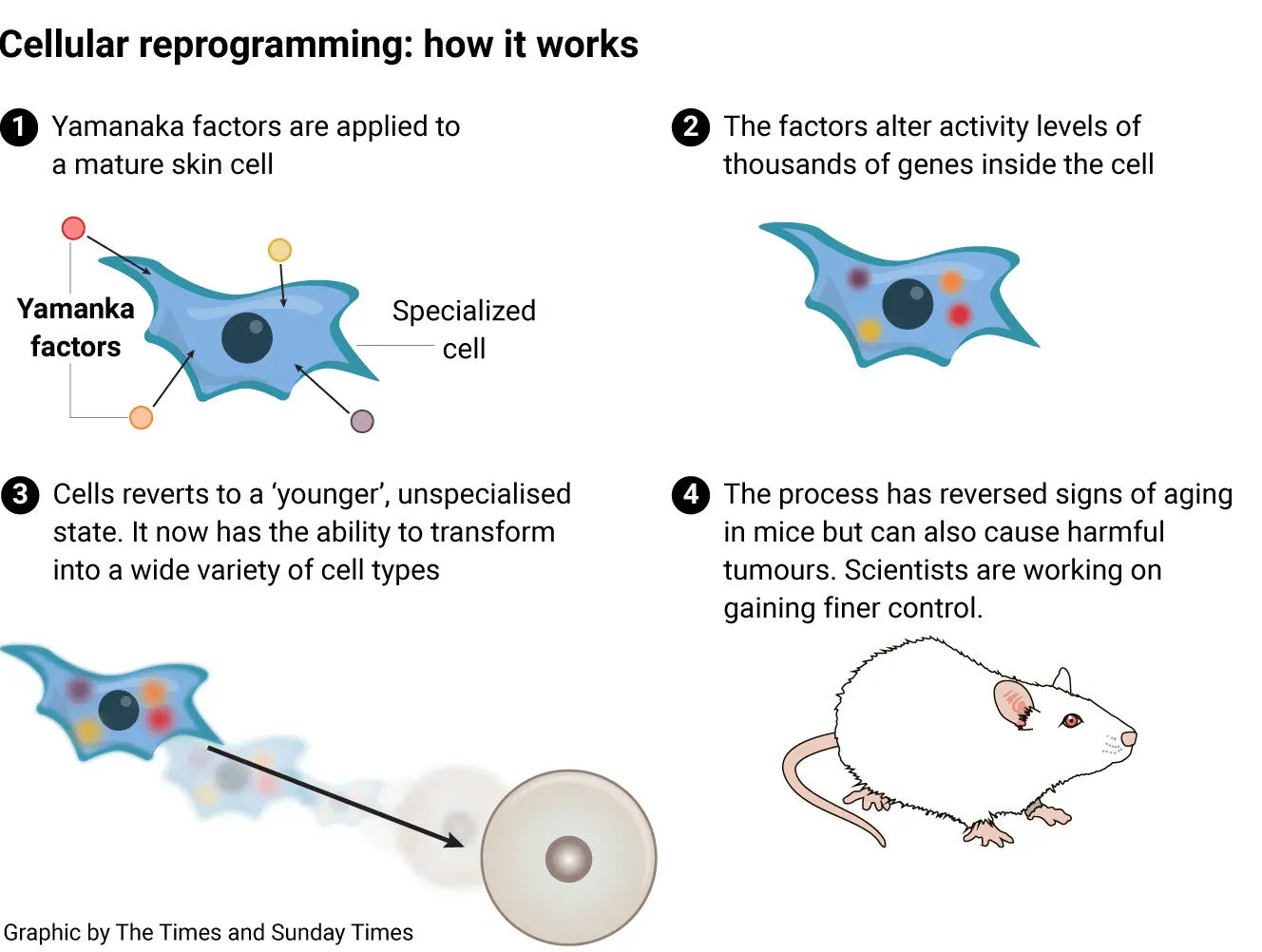
In 2012, Dr. Shinya Yamanaka won the Nobel Prize in Physiology or Medicine for discovering how to turn normal mouse cells back into stem cells. This reprogramming process was accomplished by activating four genes, Oct3/4, Sox2, Klf4, and c-Myc, that are now known as “Yamanaka factors.” Further research has demonstrated that cellular reprogramming can reverse aging markers, lengthen lifespan, and promote muscle regeneration in mice, marking a pivotal development in the field of longevity science.
A stem cell is essentially a “blank” cell that has no set role and is capable of becoming any type of cell in the body, such as a neuron or muscle cell. When adult cells are turned back into stem cells, they are known as iPSCs (induced pluripotent stem cells) because they have been “induced” or reprogrammed to a pluripotent state, meaning they can turn into many different cell types.
Source: The Sunday Times
While fully reprogramming cells back to iPSCs has shown significant promise for reversing aging at the cellular level, the approach has some limitations. Only a few cell types can be fully reprogrammed, with hematopoietic stem cells (HSCs) and microglia being the most viable candidates. Full reprogramming also requires full control of the cell environment, meaning that it cannot be performed within the human body (in vivo) or used to rejuvenate entire tissues. As a result, full cellular reprogramming can only be performed on single cells that are reverted to iPSCs in a test tube (in vitro) and then put back into the body.
Retro Biosciences is pursuing three research programs focused on the rejuvenating effects of cellular reprogramming: microglia therapeutics, HSC reprogramming, and tissue reprogramming.
Microglia Therapeutics
After exploring the restorative effects of plasmapheresis, Retro Biosciences aims to create a more scalable therapy that targets central nervous system (CNS) conditions. Patients with Alzheimer’s disease have chronically inflamed microglia, which are the immune cells of the central nervous system. The Microglia Therapeutics program leverages iPSCs to replace dysfunctional microglia with young microglia to target Alzheimer’s and related neurodegenerative conditions. Retro Biosciences plans to begin human trials of its microglia therapy in 2026.
HSC Reprogramming
Hematopoietic stem cells (HSCs) produce the body’s blood cells in the bone marrow. The HSC Reprogramming program targets blood disorders such as leukemia and aplastic anemia by using cellular reprogramming to replace old HSCs with young ones. While it is well established that new blood stem cells can replace diseased or aging ones, an approach used for decades in leukemia treatment, traditional blood stem cell transplants carry significant risks when donors and recipients are not perfectly matched. Retro Biosciences seeks to address this challenge by using iPSC reprogramming to create new blood stem cells from a patient’s own cells, eliminating the need for donor transplants.
In 2024, scientists at the Murdoch Children’s Research Institute (MCRI) in Melbourne made a stem cell breakthrough when they successfully reprogrammed a human cell into a blood stem cell for transplantation. As a result, Retro Biosciences entered into a $35 million research and commercial licensing agreement with MCRI in May 2025 to become the exclusive licensee for this generation of patient-specific therapies. MCRI has stated in May 2025 that the two organizations would work together to create personalized, patient-specific blood stem cells to treat patients with blood diseases, with a goal to run their first human clinical trials within the next five years. Retro Biosciences plans to begin human trials of its HSC reprogramming therapy in 2027.
Tissue Reprogramming
In 2016, Professor Alejandro Ocampo and colleagues explored whether cellular reprogramming could rejuvenate living organisms, but were concerned that fully reverting cells to a stem cell state might increase cancer risk or cause organ failure. Their work revealed that a partial reprogramming approach could avoid these risks while still reversing cellular signs of aging. Unlike full reprogramming, which requires prolonged exposure to the Yamanaka factors over several weeks, partial reprogramming uses only a few days of exposure, allowing cells to maintain their original identity while still gaining rejuvenation benefits. This approach enabled in vivo cellular reprogramming, successfully demonstrated in mice in 2022.
Through its Tissue Reprogramming program, Retro Biosciences is developing gene therapies to target osteoarthritis and age-related hearing loss by delivering reprogramming factors into cells for in vivo rejuvenation. According to Betts-LaCroix, partial reprogramming represents a major opportunity but is also “harder and more complicated,” which is why the Tissue Reprogramming program still remains outside a clinical setting as of May 2026. The team may begin by extracting cells from the ear or knee joint, partially reprogramming them to reduce their age, and then re-implanting them once the approach is shown to be safe.
Market
Customer
As of May 2026, Retro Biosciences had few commercial customers, as it was still in the early stages of clinical development. However, based on the company’s target therapies, its customer base would most likely include health systems, patients with diseases of aging and hematologic disorders, biohackers, longevity-focused consumers, research institutions, academic labs, and other pharmaceutical companies that may want to license its therapies.
In terms of partnerships, Betts-LaCroix stated in June 2023 that Reto Biosciences had partnered with Alphabet subsidiary Calico Labs to run longevity experiments on mice. In May 2025, Retro Biosciences also entered a research and commercial licensing agreement with Murdoch Children’s Research Institute.
Market Size
Source: CB Insights
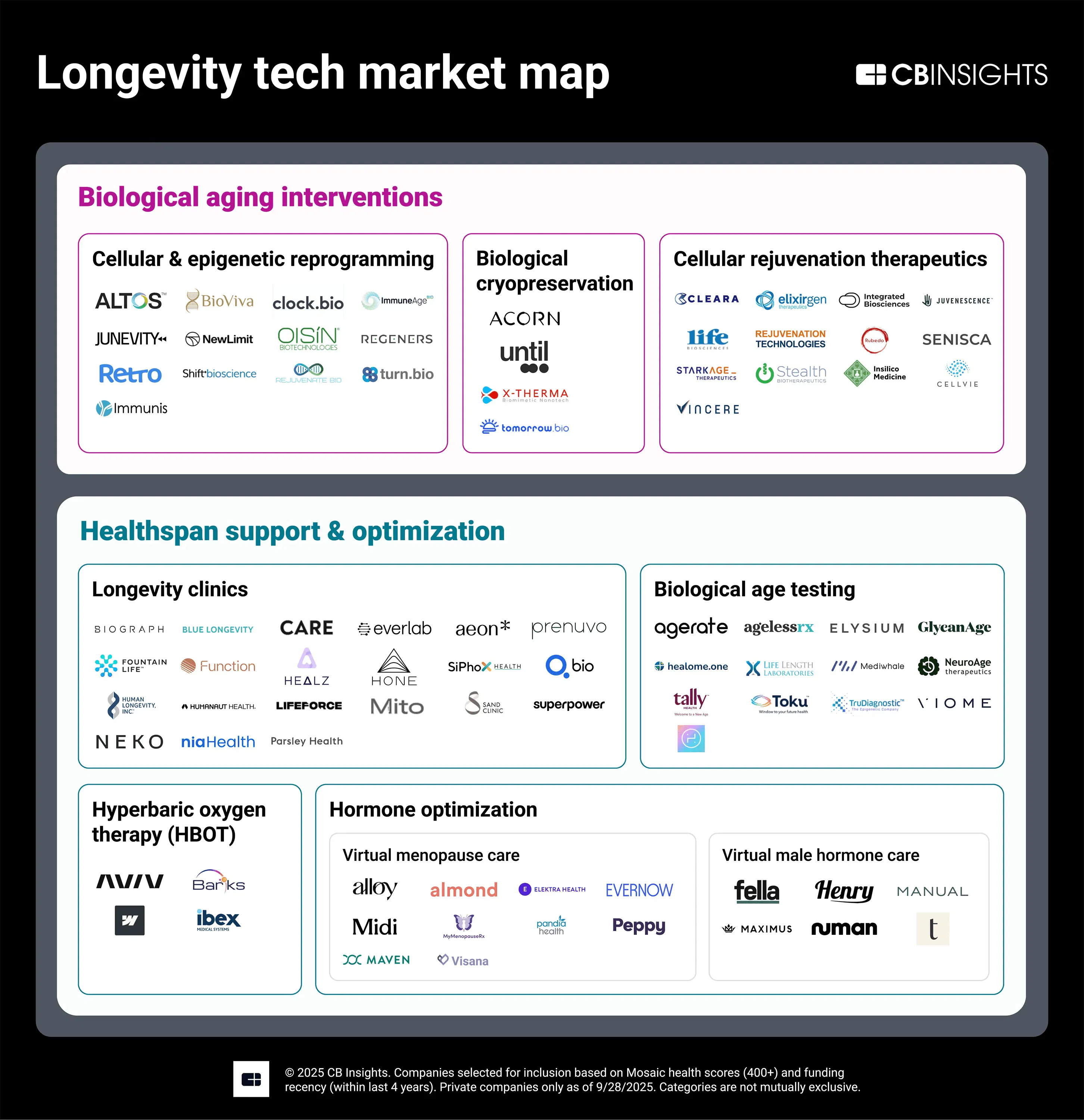
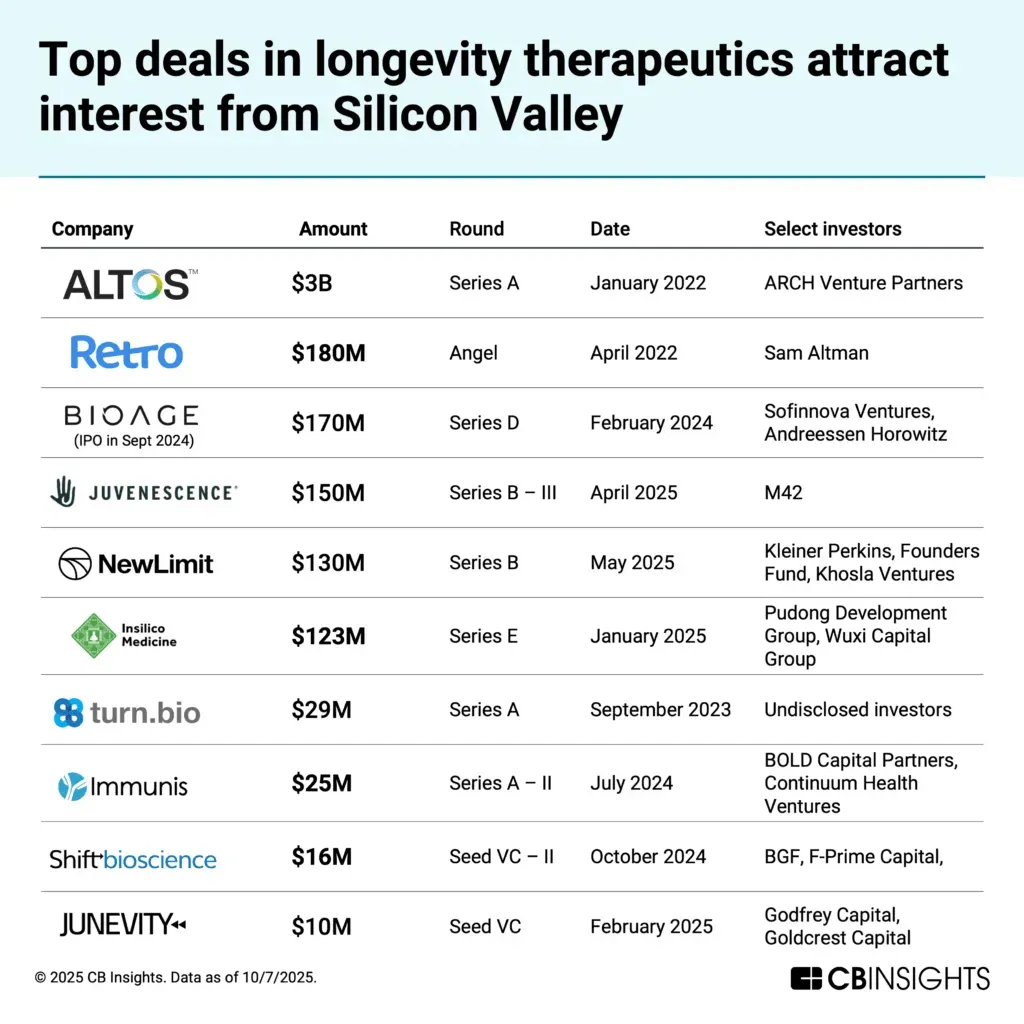
The longevity tech landscape spans longevity clinics, biological age testing services, hormone health platforms, hyperboxic oxygen therapy, and longevity biotech companies. As of July 2025, the longevity biotech sector is about 10 years old and is still an emerging market in terms of funding size. The 2023 Longevity Investment Report found that investments in longevity average about $200 million to $300 million per quarter after excluding outliers like Altos Labs. In April 2025, Pitchbook estimated that longevity biotech companies had raised a total of $4.8 billion since 2021, $3 billion of which was invested in just one company, Altos Labs.
Source: CB Insights
One reason for this relatively low funding amount is due to a lack of investment from traditional pharmaceutical companies. The pharmaceutical sector has been hesitant to invest in longevity due to the relatively recent and potentially disruptive nature of scientific advances in the longevity field, thus creating significant market uncertainty. However, investment and interest in longevity have been steadily growing. The global longevity market was valued at $28.3 billion in 2024 and is expected to grow to at least $38.5 billion by 2025 with a CAGR of 6.3%.
In 2022, the Saudi Arabian government announced the creation of the Hevolution Foundation, a not-for-profit organization that would provide $1 billion in annual grants to support research into the biology of aging and to find ways to increase human healthspan. The Hevolution Foundation has agreed to provide one-third of the funding needed for a trial known as “Targeting Aging with Metformin” (TAME), which would be the first large-scale study of a drug aimed at delaying aging in humans. In 2024, the US government allocated $1.5 billion to the Advanced Research Projects Agency for Health (ARPA-H), recommending that ARPA-H fund research on the biological drivers of aging.
Competition
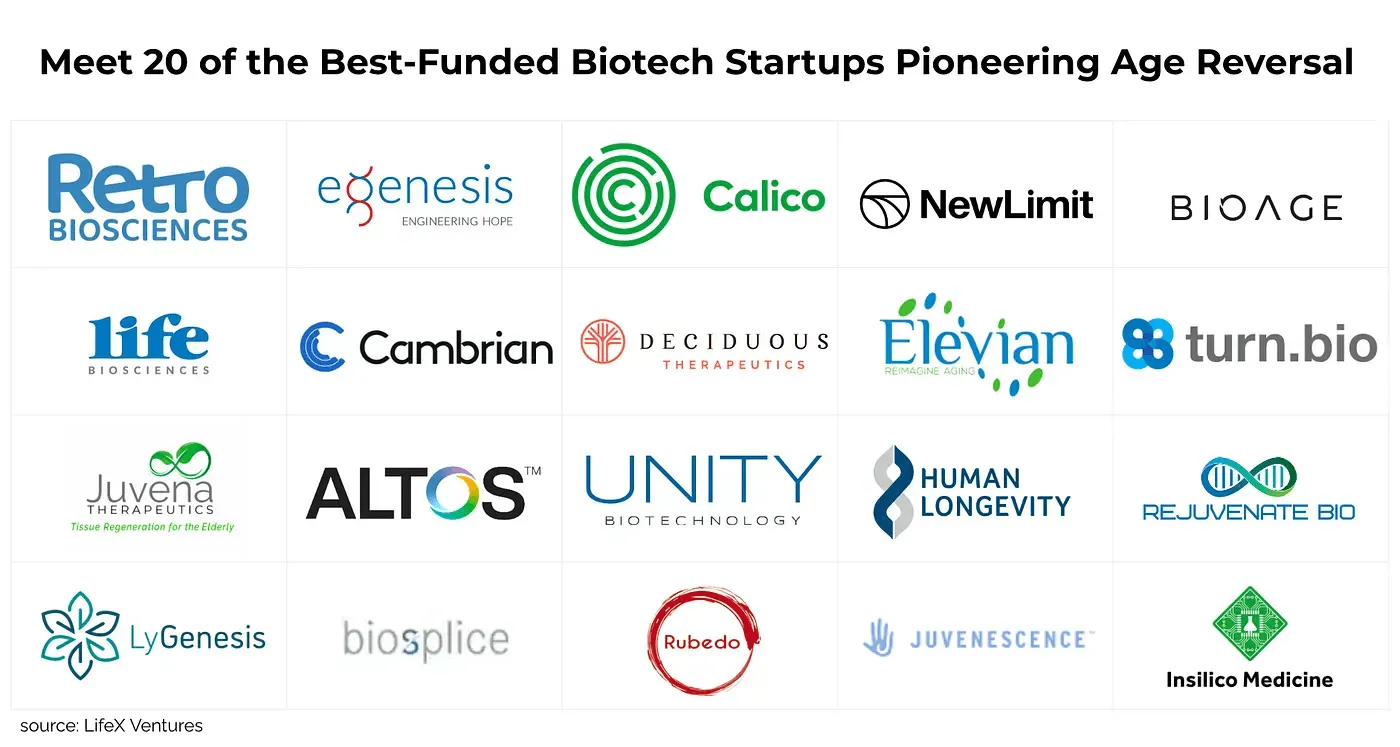
Source: LifeX Ventures
Altos Labs: Founded in 2021, Altos Labs is a biotech company focused on cellular rejuvenation to reverse disease, injury, and disabilities. Unlike Retro Biosciences, Altos Labs does not target specific diseases and thinks of disease reversal as almost being disease-agnostic. As of May 2026, it was the most well-funded longevity biotech startup, having raised more than $3 billion to date from prominent figures like Jeff Bezos, Arch Venture founder Robert Nelson, Yuri Milner, and Palantir cofounder Joe Lonsdale (via his investment firm 8VC). Altos Labs’s $3 billion Series A round was funded by Arch Venture Partners.
Calico: Calico is a research and development company that aims to understand the biology of aging and develop drugs to target age-related diseases. Founded in 2013, Calico is a subsidiary of Alphabet and has received at least $3.5 billion in funding as of January 2025. Its first-ever drug, fosigotifator, was designed to treat ALS but failed its clinical trial in January 2025. However, in November 2025, the FDA provided a special designation for ABBV-CLS-628, Calico’s investigational therapy for the treatment of Autosomal Dominant Polycystic Kidney Disease (ADPKD), to fast-track its drug development process.
BioAge Labs: BioAge Labs (BIOA) is a public biotech company founded in 2015 that leverages the biology of aging to develop therapies for metabolic diseases like obesity. As of May 2026, it has a market cap of $744.1 million and has raised a total of $408.9 million in funding from investors like Andreessen Horowitz, Pear VC, RA Capital Management, Khosla Ventures, and OrbiMed. BioAge Labs’s $170 million Series D round in 2024 was led by Sofinnova Investments. In December 2024, BioAge Labs halted its Phase 2 drug trials for its obesity drug due to safety concerns and refocused on building its longevity pipeline by entering a $550 million multi-year research collaboration with Novartis to identify and validate drug targets related to aging.
NewLimit: NewLimit is a biotech company that is building an engine to discover epigenetic reprogramming therapies at an industrial scale. While it is also pursuing cellular reprogramming like Retro Biosciences, NewLimit focuses on the therapeutic areas of liver metabolism, immune cell rejuvenation, and vascular health. It was founded in 2022 by Coinbase CEO Brian Armstrong and has raised $247.2 million of funding from investors, including Khosla Ventures, Valor Equity Partners, Founders Fund, Kleiner Perkins, and Abstract as of May 2026. In May 2025, NewLimit raised $130 million in its Series B round led by Kleiner Perkins and later received a convertible note of $45 million in October 2025.
Cambrian Bio: Cambrian Bio is a distributed company with a portfolio of pipeline programs focused on advancing treatment for age-related diseases and extending human lifespan. Founded in 2019, it develops a wide range of age-reversal therapies at various startups, including treatments for obesity-associated diseases, oncology, respiratory infections, and autoimmune disease. As of May 2026, Cambrian Bio has raised a total of $190.8 million in funding from investors like Alumni Ventures, Catalio Capital Management, FJ Labs, Future Ventures, and Apeiron Investment Group. Its $100 million Series C round was led by Anthos Capital and SALT Fund.
Gero: Gero is a biotech company that leverages AI to target the physics of aging with the goal of doubling healthy human lifespan within a generation. It was founded in 2018 and has raised $18.7 million in funding as of May 2026 from VitaDAO, Bulba Ventures, Melnichek Investments, and Leo Lozner. Its $6 million Series A round in 2023 was led by Melnichek Investments. Gero focuses on using human data, physical models, and machine learning to understand aging and entered a $250 million deal with Chugai Pharmaceutical in July 2025 to develop antibodies against age-related disease targets identified by Gero’s AI platform.
Business Model
Retro Biosciences is pursuing a traditional R&D business model, though at a highly accelerated pace. Developing a new drug is estimated to take over 10 years and cost upwards of $6.1 billion, with failure rates exceeding 90%, but Retro Biosciences aims to have its first drug out within the 2020s.
For biotech companies like Retro Biosciences, revenue typically comes from (1) pharma partnerships that generate licensing and royalties, (2) joint ventures that share development and trial costs, and (3) monetizing proprietary datasets through sales or consulting. While these strategies can promise large returns, they also require long timelines and high capital intensity.
Acceleration is central to Retro Biosciences’s business strategy, both for demonstrating traction to future investors and for advancing therapies toward approval. This emphasis on speed and efficiency has shaped the company’s operations from day one. Shortly after the company was founded in 2021, Betts-LaCroix and his team built their own lab in Redwood City in just two months, using shipping containers and building the heating, AC, and air-filtration systems by hand. Betts La-Croix explained why they built the lab from scratch rather than outsourcing:
“I was told by a nearby developer that’s been building a similar-sized lab for more than a year that they’re going to spend $15 million on it. […] I probably spent, I don’t know, $200,000. I’d just rather figure out how to do it and do it in a way that works.”
This commitment to speed also shapes the company’s partnerships, as exemplified by Retro Biosciences’s $85 million agreement with Multiply Labs in May 2024 to leverage Multiply Labs’s robotic manufacturing system for fast, scalable production of individualized therapies.
Talent acquisition and retention are also crucial for staying ahead in the biotech race. In 2023, Retro Biosciences launched a graduate research fellowship that serves as an alternative to a traditional PhD, offering three years of hands-on scientific training within the company. As of May 2026, the Retro Biosciences team has expanded to over 60 people, though Betts-LaCroix believes the team would be 10-20K people at full capacity.
Traction
First Human Clinical Trial
Retro Biosciences launched its first human clinical trial of RTR242 in December 2025. The company chose the trial site to be in Australia because its vibrant R&D ecosystem makes initiating Phase 1 trials faster and easier. If successful, Retro Biosciences aims to have its first prescribable drug on the market by the end of the 2020s.
Enhanced Yamanaka Factors
One of the biggest limitations of the original Yamanaka factors has been their low efficiency: typically, less than 0.1% of cells exposed to the Yamanaka factors convert into iPSCs, and the entire process can take three weeks or more. This efficiency drops even further when the cells come from older people or people with diseases, who are often the targets of regenerative cell therapy. Unfortunately, optimizing these factors is difficult due to combinatorial complexity — for example, the Sox2 factor contains 317 amino acids and the Klf4 factor contains 513, meaning that there could be 10^1000 possible variants. Scientists have used traditional methods to test a few thousand variations of Sox2 and only found modest improvements.
To address this challenge, OpenAI developed GPT-4b micro, a miniature version of GPT-4o that is specialized for protein engineering and trained on a rich dataset of protein sequences, biological text, and tokenized 3D structure data, which are not included in most protein language models. This model can also handle proteins that have intrinsically disordered regions, such as the Yamanaka factors, that lack a stable shape. GPT-4b micro also sets a new standard in context size for protein models by supporting prompts as large as 64K tokens.
Retro Biosciences partnered with OpenAI to use a special screening platform and human fibroblast cells to confirm that the designs generated by GPT-4b micro actually worked as intended without additional side effects. This collaboration resulted in the development of enhanced Yamanaka factors in 2025 that achieved more than a 50-fold increase in expression of stem cell reprogramming markers compared to the original factors, marking a huge breakthrough for cellular reprogramming. These redesigned proteins also demonstrated enhanced DNA damage repair capabilities and thus greater rejuvenation potential. This finding has since been replicated across many different delivery methods, cell types, and donors.
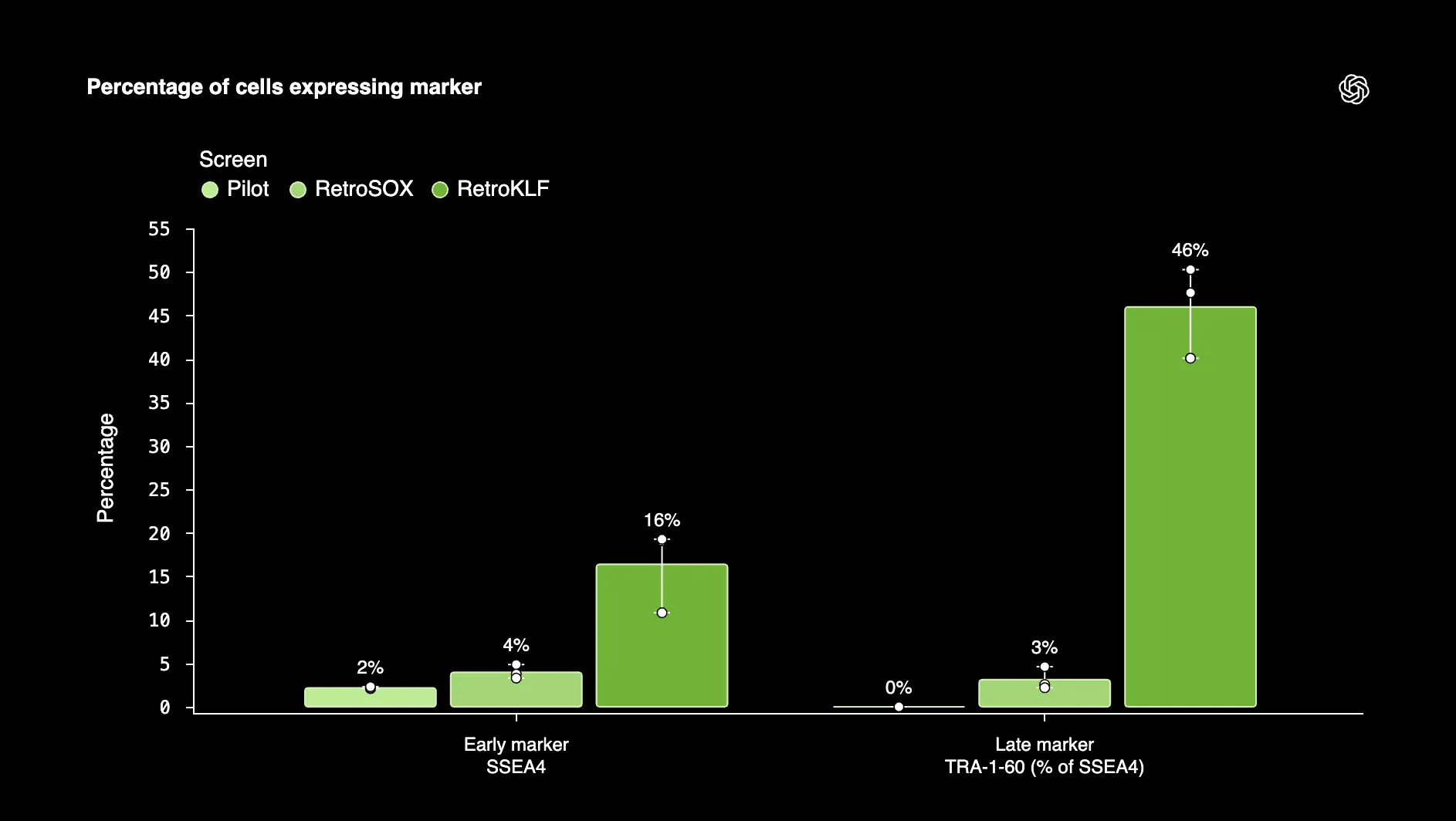
Source: OpenAI
Valuation
In April 2022, Retro Biosciences received $180 million in seed funding from Sam Altman. According to Altman, in 2023, he emptied his bank account to fund Retro Biosciences and the fusion power startup Helion Energy. In 2023, Retro Biosciences co-founder Buckley estimated that the company would likely have until about 2030 to run with Altman's investment, after which it would need to either go public or find more investors. In January 2025, reports emerged that the company was in the process of raising a $1 billion Series A round and had hired Italian financier Sandro Salsano to lead the fundraising effort, although as of May 2026, the round had not yet been formally announced.
Key Opportunities
Robotics and AI-Assisted Development
Pharmaceutical companies are increasingly incorporating AI and robotics to improve speed and efficiency in their workflows. A Reuters report in 2025 predicted that using AI to reduce animal testing in drug trials could reduce timelines and cost by at least 50% over the next 3-5 years, while the McKinsey Global Institute estimated that generative AI could unlock $60-110 billion a year in economic value for the pharmaceutical industry by accelerating the identification of new drug compounds and speeding up the process of development and approval.
The benefits of an AI-enabled discovery process can already be seen in Retro Biosciences’s scientific breakthrough with OpenAI, in which they used a specialized GPT-4 model to develop enhanced cellular reprogramming factors that promise greater efficiency and rejuvenation potential. In May 2024, Retro Biosciences also partnered with robotics company Multiply Labs to further automate cell-therapy manufacturing for age-related diseases. As AI and robotics become central to drug development, Retro is well-positioned to benefit from faster iteration cycles and structurally lower development costs.
Favorable Regulatory Changes
Administrative and regulatory shifts have expanded access to longevity therapies and created a more permissive operating environment. In 2018, President Trump signed the Right to Try Act into law, allowing terminally ill patients to access treatments that have not yet been approved by the FDA but have passed a Phase I trial. In 2025, Health and Human Services Secretary Robert F. Kennedy Jr. promised to increase access to alternative medicine and stated his support for increasing access to experimental drugs.
In 2023, Montana extended its own “Right to Try” law to non-terminal patients; in 2025, the state also established a licensing framework for experimental treatment centers. The 2025 legislation was spearheaded by the Alliance for Longevity Initiatives, a lobbying group that is sponsored by Retro Biosciences and other longevity biotech companies. As a result of this legislation, longevity companies are increasingly exploring investments in Montana to open up treatment centers and potentially turn it into a medical tourism hub. These policy shifts create a meaningful opportunity for Retro Biosciences and other longevity companies to accelerate early clinical deployment and broaden patient access ahead of full FDA approval.
Key Risks
Clinical Safety
Safety remains a top concern in cellular reprogramming, as it is still a very new biological technique whose side effects have not been widely explored. As of March 2025, no therapeutic cell reprogramming has yet been successfully performed on humans; all prior successful studies have been done on human cells or animal models.
Studies have found that poorly controlled cellular reprogramming can result in tumor development in mice, highlighting the cancer risk associated with reverting cells fully back to an iPSC state. Professor Ocampo’s 2016 study on partial cellular reprogramming avoided this issue, but further research is still needed.
Other safety concerns revolve around immunogenicity, or the ability of a substance like a drug or vaccine to trigger an immune response against foreign proteins like the Yamanaka factors. Betts-LaCroix has acknowledged this risk, noting that “the safest way is to use these initial proteins on cells outside the body, where they’re not exposed to a systemic immune system.”
High Financial Investment Needs
Drug development is inherently a risky venture that comes with great financial investment and high risk of failure. Estimates find that developing a new drug can cost up to $6.1B and that only about 8% of drugs that enter clinical development are ultimately approved.
Retro Biosciences co-founder Ding has stated that Sam Altman will not be able to fund Retro Biosciences’s entire drug development journey and that at some point, Retro Biosciences will need to find investors and go public. Retro Biosciences is already in the process of finding investors for its $1 billion Series A round. This reliance on large, ongoing capital infusions represents a material risk, as Retro Biosciences’s ability to advance its pipeline will depend on securing substantial external financing.
Talent Acquisition Challenges
Having the right scientific credentials and skillset is essential in the biotech space, making talent acquisition and retention crucial for staying ahead in the biotech race. As of May 2026, the Retro Biosciences team has expanded to over 60 people, though Betts-LaCroix believes the team would be 10-20K people at full capacity. To attract more scientific talent, Retro Biosciences launched a graduate research fellowship in 2023 that originally served as an alternative to a traditional PhD, offering three years of hands-on scientific training within the company. Retro Biosciences later announced in 2024 that they were officially offering an accredited 3-year PhD program.
Longevity biotech companies are actively competing to hire the best talent in the field. In 2023, Altos Labs recruited half of the leading scientists in reprogramming, including around two dozen university professors, by offering highly competitive million-dollar salaries, among other benefits. Retro Biosciences’s long-term success will depend heavily on its ability to navigate this intense talent market.
Summary
Retro Biosciences is an ambitious longevity biotech company that targets the cellular drivers of aging, including autophagy enhancement, stem-cell rejuvenation, and in-vivo reprogramming, to extend human healthspan by 10 years and ultimately “reduce human misery.” The company is well-positioned at the intersection of AI-driven discovery, cell-therapy manufacturing, and aging biology, but it still remains to be seen whether Retro Biosciences can successfully reverse human aging and bring humanity closer to defying death itself.